• HOME
  • NEWS
  • EXPLORE
    • CAREER
      • Companies
      • Jobs
    • EVENTS
    • iGEM
      • News
      • Team
    • PHOTOS
    • VIDEO
    • WIKI
  • BLOG
  • COMMUNITY
    • FACEBOOK
    • INSTAGRAM
    • TWITTER
Sunday, April 5, 2026
BIOENGINEER.ORG
No Result
View All Result
  • Login
  • HOME
  • NEWS
  • EXPLORE
    • CAREER
      • Companies
      • Jobs
        • Lecturer
        • PhD Studentship
        • Postdoc
        • Research Assistant
    • EVENTS
    • iGEM
      • News
      • Team
    • PHOTOS
    • VIDEO
    • WIKI
  • BLOG
  • COMMUNITY
    • FACEBOOK
    • INSTAGRAM
    • TWITTER
  • HOME
  • NEWS
  • EXPLORE
    • CAREER
      • Companies
      • Jobs
        • Lecturer
        • PhD Studentship
        • Postdoc
        • Research Assistant
    • EVENTS
    • iGEM
      • News
      • Team
    • PHOTOS
    • VIDEO
    • WIKI
  • BLOG
  • COMMUNITY
    • FACEBOOK
    • INSTAGRAM
    • TWITTER
No Result
View All Result
Bioengineer.org
No Result
View All Result
Home NEWS Science News Health

Scientists discover a variation of the genome predisposing to Alzheimer’s disease

Bioengineer by Bioengineer
May 14, 2018
in Health
Reading Time: 2 mins read
0
Share on FacebookShare on TwitterShare on LinkedinShare on RedditShare on Telegram
IMAGE

Credit: IDIBELL

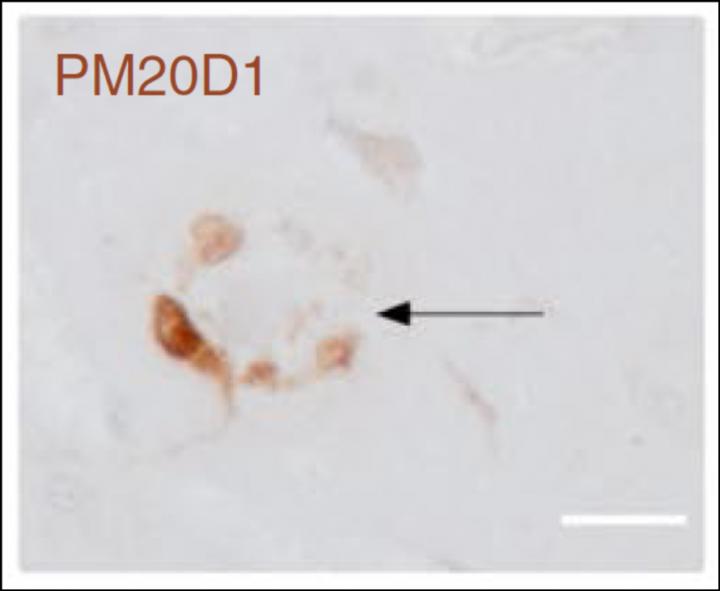
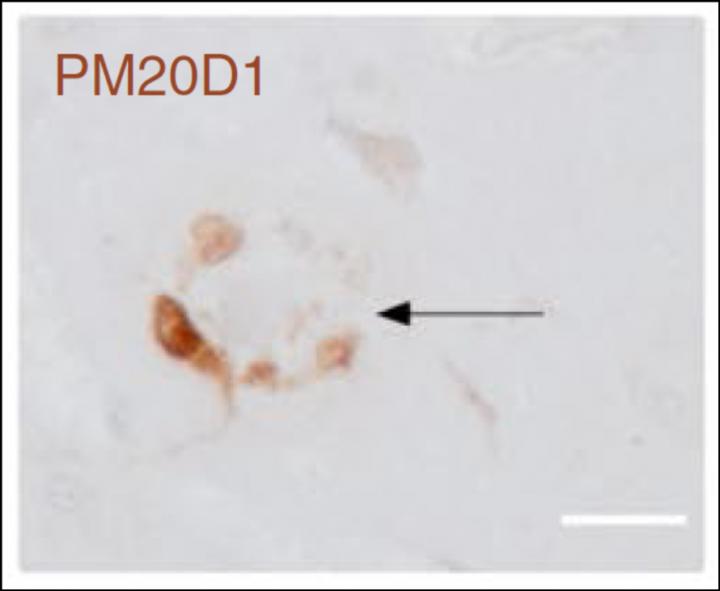
An article published in Nature Medicine with the collaboration of the research group of Dr. Manel Esteller, director of the Epigenetics and Cancer Biology Program of the Bellvitge Biomedical Research Institute (IDIBELL), ICREA Researcher and Professor of Genetics of the University of Barcelona, and Drs. Dave Monk and Isidre Ferrer, from the same center, shows that the inheritance of small changes in DNA alters the expression of the PM20D1 gene and is associated with an increased risk of developing Alzheimer's disease.

"Over the last seven years, we have created a detailed map of the epigenetic alterations that occur in the brain of people affected by Alzheimer's and other dementias such as those associated with the so-called Lewy bodies or Parkinson's disease. That allowed us to collaborate with Dr Johannes Gräff's group in Lausanne, who noticed how one of the molecular lesions we had discovered was caused by inheriting a variation in the DNA sequence"- states Dr. Manel Esteller, co-author of the Nature Medicine study.

"This variation is associated with the loss of activity of a neuroprotective gene called PM20D1; whoever possesses the variation has a greater probability of suffering from Alzheimer's disease, so people carrying these variants could be excellent candidates for clinical prevention trials of the disease in the future"- adds the IDIBELL researcher.

"The results obtained demonstrate the need for international scientific collaboration, mixing the different areas of experience in epigenetics, genetics, bioinformatics and neurosciences of each group. We are looking at an example of the usefulness of multidisciplinary research to tackle diseases as complex and devastating as dementia", concludes Esteller.

Alzheimer's disease is a neurodegenerative pathology increasingly frequent due to the progressive aging of the population in Western countries. There are no effective treatments for its cure and only certain drugs are able to relatively slow the progression of the disease if they are administered in the early stages. Beyond advanced age, the factors that cause it are unknown. The hereditary factor associated with high risk constitutes a minimum proportion of cases, but there appears to be a certain aggregation of cases in the same family higher than what would be expected by chance.

###

Media Contact

Gemma Fornons
[email protected]
0034-638-685-074
@idibell_en

Inicio

Related Journal Article

http://dx.doi.org/10.1038/s41591-018-0013-y

Share12Tweet8Share2ShareShareShare2

Related Posts

Frailty, Nutrition, Depression Impact Elderly Quality of Life

April 5, 2026

Real-World Safety of Second-Line Diabetes Drugs in Elderly

April 4, 2026

Protein Monitoring Enhances EASO Obesity Care Timing

April 4, 2026

Measuring Fitness: Insights on Individual Phage Particles

April 4, 2026
Please login to join discussion

POPULAR NEWS

  • blank

    Revolutionary AI Model Enhances Precision in Detecting Food Contamination

    97 shares
    Share 39 Tweet 24
  • Imagine a Social Media Feed That Challenges Your Views Instead of Reinforcing Them

    1008 shares
    Share 398 Tweet 249
  • Promising Outcomes from First Clinical Trials of Gene Regulation in Epilepsy

    51 shares
    Share 20 Tweet 13
  • Popular Anti-Aging Compound Linked to Damage in Corpus Callosum, Study Finds

    44 shares
    Share 18 Tweet 11

About

We bring you the latest biotechnology news from best research centers and universities around the world. Check our website.

Follow us

Recent News

Frailty, Depression, Social Participation Linked in Older Adults

Seismic Impact on Integrated Slope Stabilization: Numerical Study

Clinical Outcomes and Risks in Post-Ibrutinib Transplant

Subscribe to Blog via Email

Success! An email was just sent to confirm your subscription. Please find the email now and click 'Confirm' to start subscribing.

Join 78 other subscribers
  • Contact Us

Bioengineer.org © Copyright 2023 All Rights Reserved.

Welcome Back!

Login to your account below

Forgotten Password?

Retrieve your password

Please enter your username or email address to reset your password.

Log In
No Result
View All Result
  • Homepages
    • Home Page 1
    • Home Page 2
  • News
  • National
  • Business
  • Health
  • Lifestyle
  • Science

Bioengineer.org © Copyright 2023 All Rights Reserved.