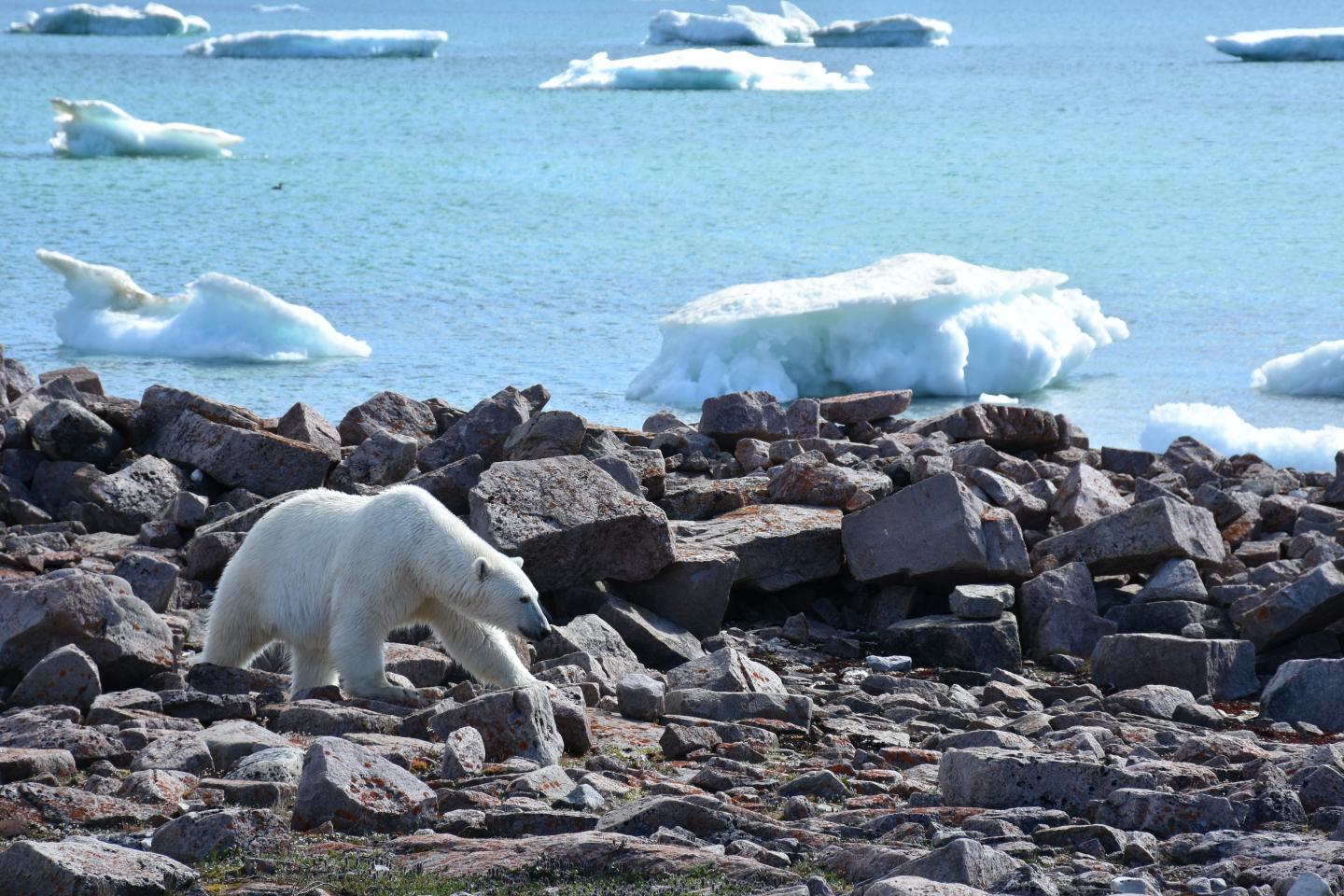
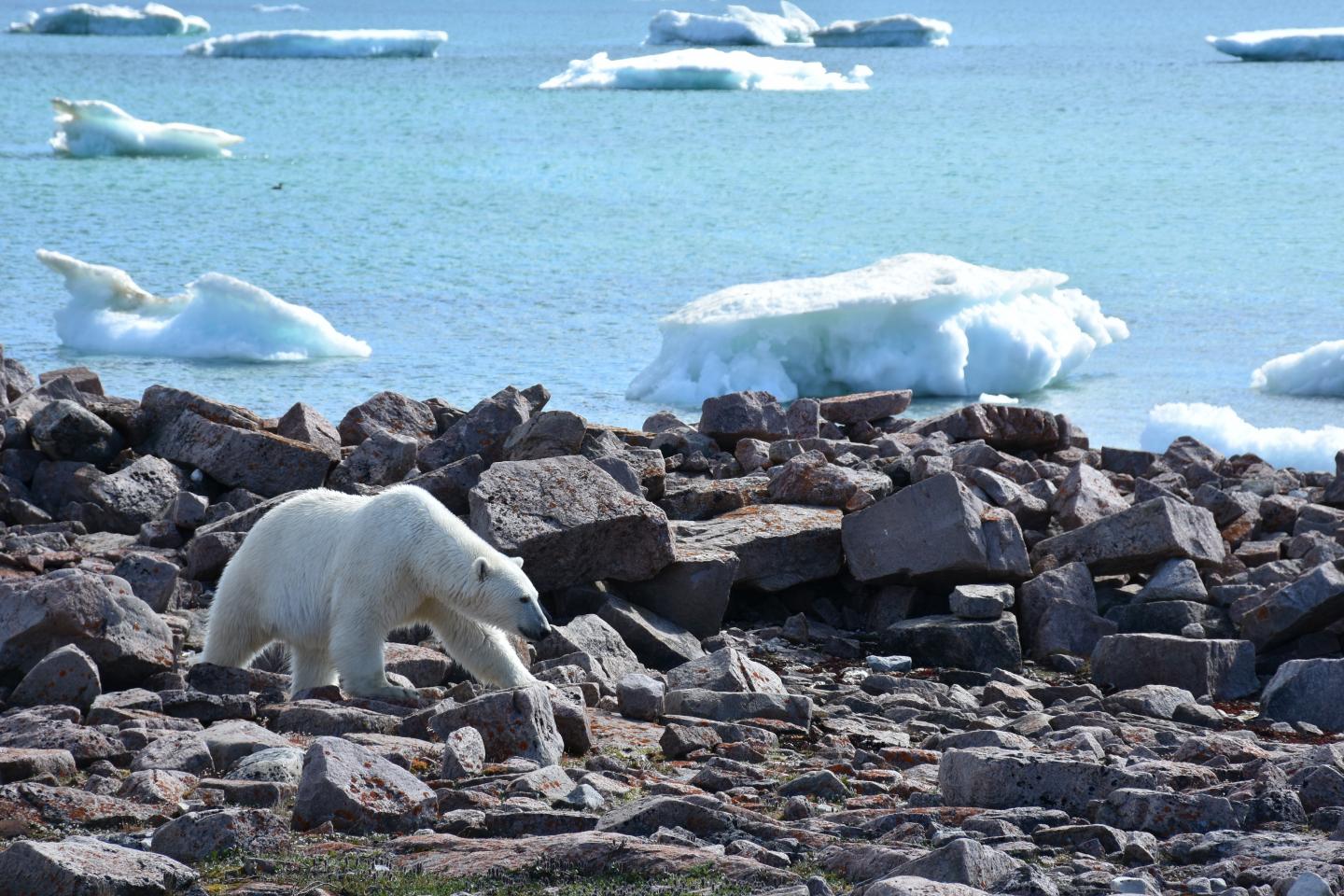
Credit: Evan Richardson
Location, location, location is not just a buzzword for homebuyers.
A new study, by 17 conservation scientists and environmental scholars, say the exact location of protective wild spaces is just as vital as committing to set these areas aside.
"Where Canada protects land is a significant decision," says UBC Okanagan researcher Laura Coristine, the study's lead author. "We wouldn't build a school in the highest traffic density area in a city–especially if few children live there. Selecting a site for a protected area similarly needs to guard against current threats to species and safeguard biodiversity into the future."
The research provides a first-ever framework to identify geographical hotspots that have the ecological potential to protect wild places and species from biodiversity loss associated with the global extinction crisis. The study, "Informing Canada's Commitment to Biodiversity Conservation" uses five key ecological principles to guide the creation of the next generation of Canada's protected areas: preserve habitat for species at risk, represent Canada's diverse ecosystems, conserve remaining wilderness, ensure landscape connectivity, and protect areas that are more resilient to climate changes.
"Canada is a country rich and diverse in natural beauty, wildlife and resources," says Coristine. "As one of the largest countries in the world, Canada's commitment to protect 17 per cent of our land and inland water areas by 2020 is of global consequence. However, the Canadian government currently has no systematic, scientific way of accomplishing this goal to maximize conservation benefits."
Coristine is a Liber Ero postdoctoral researcher at UBC's Okanagan campus. She works out of the Wildlife Restoration Ecology research lab with Assistant Professor Adam T. Ford, who teaches biology in the Irving K. Barber School of Arts and Sciences.
"The world's wildlife is in rapid decline," says Ford, a Canada Research Chair in Wildlife Restoration Ecology. "Decisions about where land is protected and the extent of protection are of paramount importance."
Canada and 167 other countries are signatories to the international Convention on Biological Diversity, which pledges to reverse trends in species decline. Increasing the amount of protected lands is one way to do this.
"The framework provides a first step in the broader process of protected area decision-making and is intended to help identify the best ecological opportunities to protect Canada's rich natural heritage," explains Ford.
"Our research brings into focus the tough choices that need to be made–do we protect species at risk or pristine environments? Do we focus on the present day or ensure connectivity in a changing world?" says study co-author, Sally Otto, at UBC's Vancouver campus. "Or, as presented in our paper, do we strive to balance each of these needs?"
The paper states that Canada, a diverse land with 194 unique ecoregions, is home to much of the world's remaining intact wilderness. But most of this country's at-risk species live in the highly-populated south. Hundreds of bird, mammal and fish species have declined in population–in many cases due to habitat loss–and more than 735 species are at risk of extinction. Because climate change is causing additional problems, the report stresses the importance of connecting areas for migration while also protecting areas that are more resilient to climate change.
"Now is a critical time for the country to decide what is it that we most want to protect," says Coristine. "What we choose not to protect, we risk losing; what we protect remains a legacy for the future."
The study provides maps where protected areas would best meet conservation goals and an online tool where people can identify protected area sites using their own criteria.
Coristine is one of 13 of the 17 co-authors who are members of the Liber Ero Fellowship Program, which supports emerging environmental leaders and their research. Details can be found at: http://liberero.ca/
The study is funded by the program and will be published Monday, May 15 in the Canadian journal FACETS.
###
Media Contact
Patty Wellborn
[email protected]
250-317-0293
http://ok.ubc.ca/welcome.html
Original Source
https://news.ok.ubc.ca/2018/05/15/new-research-says-location-of-protected-areas-vital-to-wildlife-survival