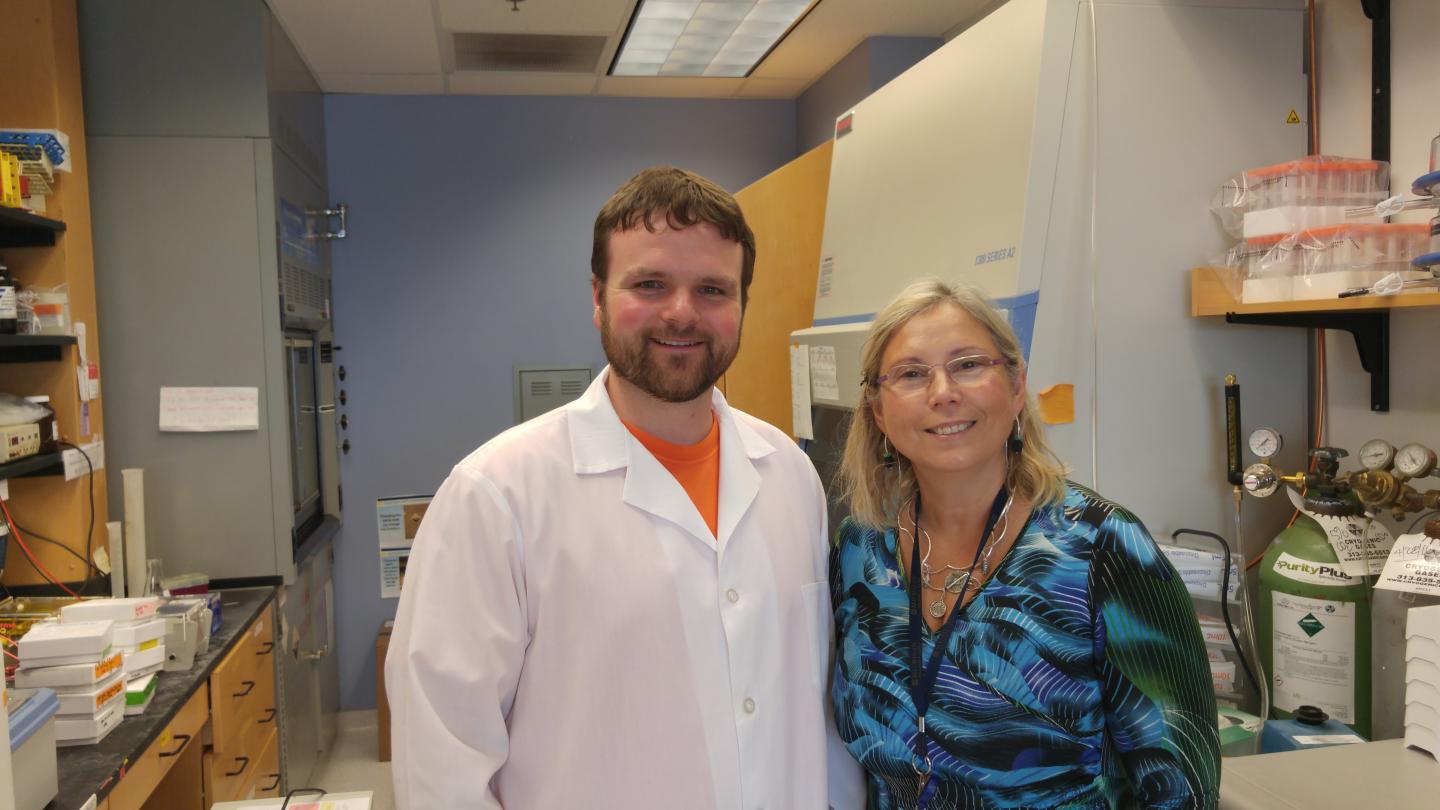
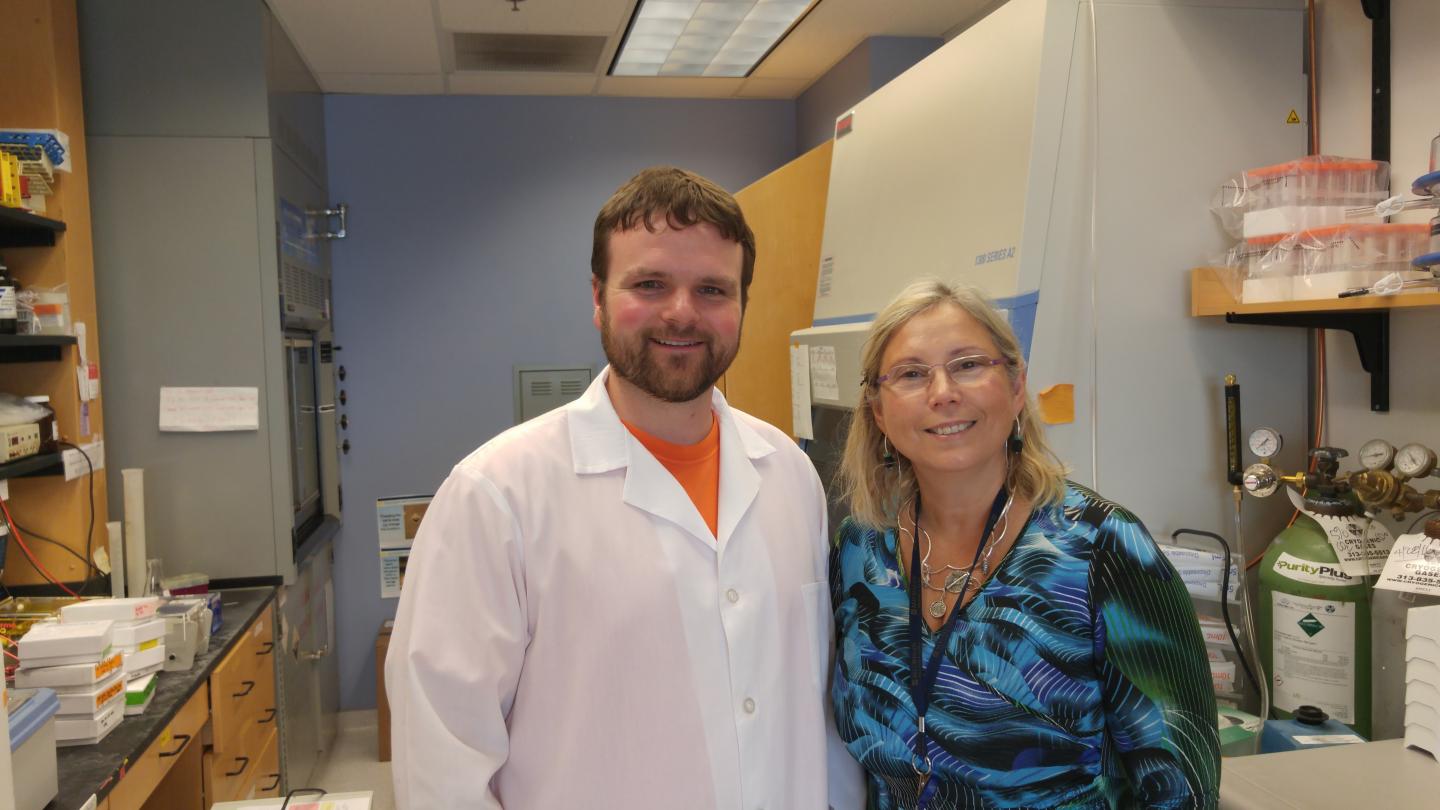
Credit: Michigan Medicine
ANN ARBOR, Michigan — The outside of a cancer cell is bombarded by signals. They come from the immune system, supporting tissues and other structures. But how do those signals impact cancer?
A new study provides a surprising model of the process by which those signals enter and influence the cell. The finding could open up a potential new avenue to pursue new therapies against cancer.
"How those signals enter the inside of the cell influences major aspects of what makes a cell a cancer cell: its responses and its ability to respond by proliferating and moving. We have found a connection between the cancer cell 'swallowing' certain molecules and its ability to activate tumor suppressor genes," says study author Sofia Merajver, M.D., Ph.D., professor of internal medicine and epidemiology at the University of Michigan.
Merajver's lab at the Rogel Cancer Center worked with a Michigan Engineering team led by Allen Liu, Ph.D., and postdoctoral researcher Luciana Rosselli-Murai, Ph.D. They focused on a protein called clathrin, which impacts how metabolites, hormones and other proteins enter into a cell. Clathrin-coated pits form little indentations inwards on the surface of cells that fold in on themselves and internalize these molecules.
In this study, published in the Journal of Cell Science, researchers looked at breast cancer cells that did not express PTEN, a protein known to be mutated or deleted in about a third of breast cancers. They found PTEN played a role in the dynamics of clathrin-coated pits. Changing these dynamics by deleting PTEN resulted in shorter-lived pits.
"The clathrin-coated pits that don't live longer than 20 seconds have historically been thought to be non-important. But we found that those are the ones important for bringing signals from outside the cell into the cell," says study author Joel Yates, Ph.D., a research scientist in Merajver's lab.
Many cancers develop because of cell signaling problems. Signals must get from outside the cell into its nucleus to produce proteins. If the signal is altered, it alters what the cell makes, which then alters how the cell grows. This study finds that the short-lived clathrin-coated pits are used to help control the signals that enter the cell. Additionally, PTEN alters the signaling of the clathrin-coated pits that make cancer more aggressive.
"Our work provides evidence that challenges the current paradigm that short-lived clathrin-coated pits are abortive structures, finding that instead they can be capable of driving signaling," says Liu, assistant professor of mechanical engineering and biomedical engineering at U-M.
PTEN and other tumor suppressor genes are desirable targets for cancer therapy, but they have proven elusive: no drugs have yet been found to restore function of these mutated or deleted genes. The researchers hope that by understanding the role of PTEN at a mechanistic level – what are the steps that cause PTEN to modulate how cancer cells communicate with the outside – it could provide a new approach to targeting the consequences of decreased function of this critical tumor suppressor.
"This finding opens a new view to the potential role of PTEN on how cancers modulate the outside world and how aggressive they get. It potentially opens new lines of thinking about how to attack the cancer and prevent it from becoming more aggressive," Merajver says.
The researchers plan to look at the signaling in other types of cancer where PTEN plays a role to gain a better understanding of the signaling impact.
###
Additional authors: Luciana K. Rosselli-Murai, Sei Yoshida, Julia Bourg, Kenneth K.Y. Ho, Megan White, Julia Prisby, Xinyu Tan, Megan Altemus, Liwei Bao, Zhi-Fen Wu, Sarah Veatch, Joel Swanson
Funding: University of Michigan MCubed, Elsa U. Pardee Foundation, Breast Cancer Research Foundation, Metavivor Foundation, National Institutes of Health grants GM-110215 and P30 CA046592
Disclosure: None
Reference: Journal of Cell Science, doi: 10.1242/jcs.208926
Resources:
University of Michigan Rogel Cancer Center, http://www.rogelcancercenter.org
Michigan Engineering, http://www.engin.umich.edu
Michigan Health Lab, http://www.MichiganHealthLab.org
Michigan Medicine Cancer AnswerLine, 800-865-1125
Media Contact
Nicole Fawcett
[email protected]
734-764-2220
@umichmedicine
http://www.med.umich.edu
Original Source
https://labblog.uofmhealth.org/lab-report/how-signals-get-inside-cancer-cells-and-spur-aggressive-growth http://dx.doi.org/10.1242/jcs.208926