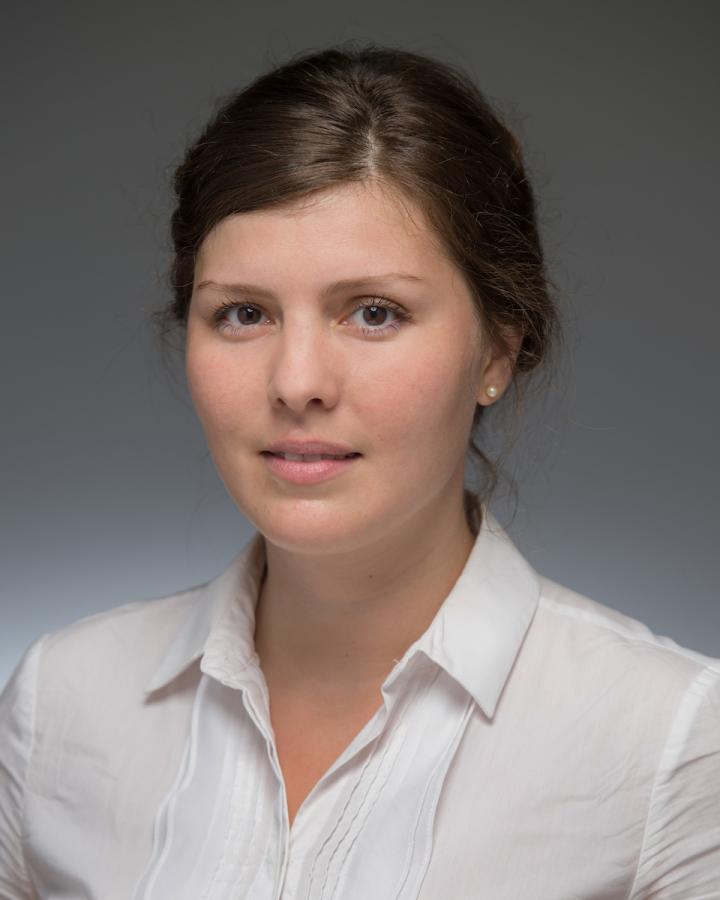
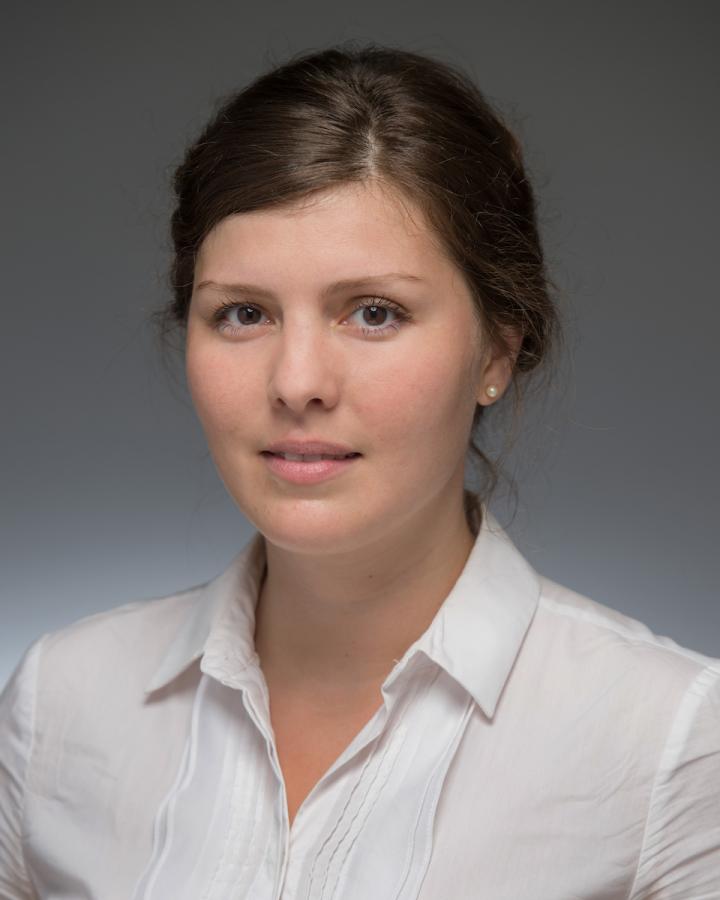
Credit: Matt Cashore/University of Notre Dame
Stiffer breast tissue creates an environment more prone to cancer by enabling the disease to interfere with the surrounding healthy cells, according to a recent study published in Biomaterials.
Scientists studying tumor growth and metastasis at the University of Notre Dame fabricated a human tissue model to examine how cancer cells interact with connective tissue in the breast. The model allowed the team to control the stiffness of the tissue, mimicking both healthy and cancerous breast tissue structures. They found manipulation of fat cells to be stiffness-dependent.
"One of the interesting things we're looking at is how cancer interacts with surrounding cells and how it manipulates those cells to its own benefit," said Pinar Zorlutuna, assistant professor in the Department of Aerospace and Mechanical Engineering and the Harper Cancer Research Institute at the University of Notre Dame. "The goal of these tissue engineered cancer models is to mimic the physiological environment of the tumor, so we can use them as a platform to study breast cancer in the human tissue microenvironment."
Fat cells, collagen fibers and epithelial cells make up the microenvironment of breast tissue. Cancer typically appears around the epithelial cells. Previous studies looking at differences between healthy and cancerous tissue found that the cancerous tissue differed in stiffness. According to Zorlutuna's study, stiff tissue can present a microenvironment susceptible to tumor growth by enabling the cancer cells to modulate its surrounding connective tissue cells.
"If you have a stiffer environment, the cancer cell can do more manipulation of its immediate microenvironment," Zorlutuna said. "The model allowed us to study varying levels of stiffness in the tissue. In tissue with normal stiffness, the cancer cells did not interfere with the state of the surrounding stromal cells. In tests where the tissue was stiffer, the cancer halted the differentiation process of the surrounding fat stem cells, favoring a more stem cell-like state creating a microenvironment that favors a tumor to grow."
Researchers have typically conducted similar studies using animal models. While these tests can help advance an understanding of the disease, Zorlutuna said they could also pose a challenge.
"Animals and humans are quite different," she said. "If you're looking at tissue environment, mobility and the immune system, mouse models, for example, are as different to human models as the pancreas is to the lung."
Those models can also pose a challenge to drug discovery. A fraction of the drugs proven effective in mice actually makes it through clinical trials when tested on humans, Zorlutuna said. The results of this study could help make the case for tissue engineered human disease models to be used as part of a parallel approach to drug screening before administering those drugs in clinical trials.
###
Co-authors of the study include Trung Dung Nguyen, Xiaoshan Yue, Victoria Zellmer and Siyuan Zhang at Notre Dame.
The American Cancer Society, Walther Cancer Foundation Cancer Cure Ventures and the Harper Cancer Research Institute's Notre Dame Day Pilot Fund funded the study.
Media Contact
Jessica Sieff
[email protected]
574-631-3933
@ND_news
http://www.nd.edu
Original Source
https://news.nd.edu/news/cancer-cells-thrive-in-stiff-tissue-according-to-new-study/