Credit: UTA
Researchers at The University of Texas at Arlington are investigating the link between ovarian hormones and the blood cholesterol balance in the body, itself a key determinant of cardiovascular health or disease.
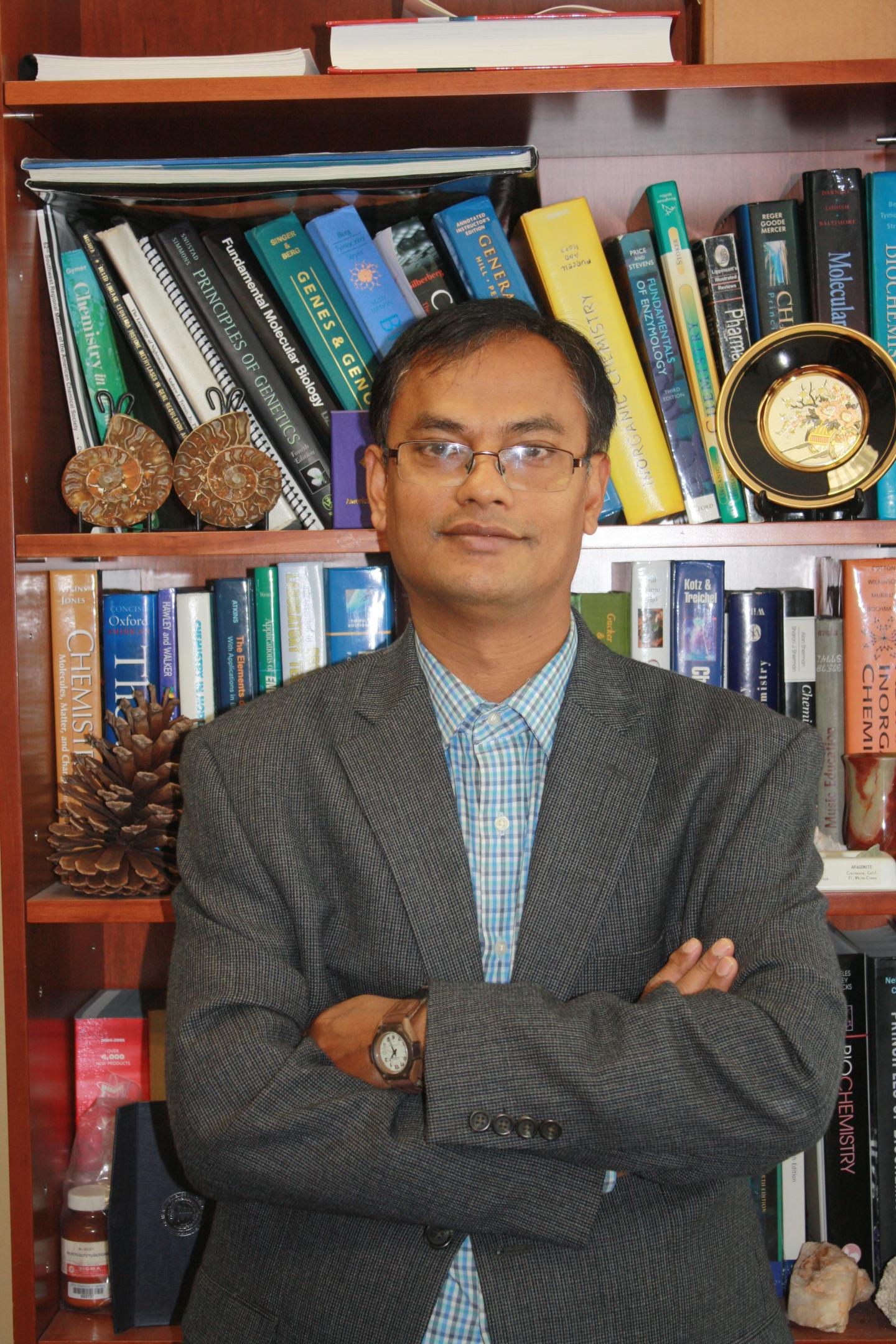
"Pre-menopausal women are less likely to develop heart disease than their male peers, but this difference disappears after menopause," said Subhrangsu Mandal, UTA associate professor of chemistry and biochemistry and leader of the project.
"We are investigating the biochemical mechanism associated with the role of ovarian hormones in regulating the cholesterol balance in the blood, with an aim to open up new therapeutic avenues for the treatment of cardiovascular disease," he added.
Mandal and his co-investigator, UTA neuroscientist and associate professor of psychology Linda Perrotti, recently received a $439,360 grant from the National Institutes of Health to support this work, after presenting preliminary data showing the role of the ovarian hormone estradiol in the activation of a receptor that regulates the balance of cholesterol in the liver.
"Our studies will focus on the chemical reactions associated with the role of estradiol in this process," Mandal said. "These studies will also advance understanding around the delivery and metabolism of fat in the liver as well as the regulation of cholesterol levels, and could open doors for the discovery of new preventive treatments as well as customized therapies for cardiovascular disease."
Perrotti added the new grant will also provide numerous opportunities for student research. "These experiments will provide meaningful and high quality training opportunities, and increase the prospects for our students to pursue future careers in health-related fields," she said.
Frederick MacDonnell, UTA chair of chemistry and biochemistry, underlined that this innovative work could potentially generate a real impact on the leading cause of death for both men and women worldwide, which is cardiovascular disease.
"Malfunction in the metabolism of fat and elevated levels of plasma cholesterol are known causes of cardiovascular disease and about half of all Americans are likely to have at least one of these risk factors, so this work has real implications for improving quality of life for many patients," he said.
"The project also is an example of how interdisciplinary projects among the sciences can generate new ideas and discoveries, in this case one that links directly to UTA's strategic theme of health and the human condition," he added.
UTA has a strong focus on cardiovascular research, with interdisciplinary projects across kinesiology, bioengineering, nursing and science. Pinpointing what makes the cardiovascular system falter and finding ways to intervene is the goal of UTA researchers in this area, with projects around nanomaterials, 3-D printing of new blood vessels, battling hypertension among African-Americans and seeking to improve heart health through exercise.
###
Media Contact
Louisa Kellie
[email protected]
817-524-8926
@utarlington
http://www.uta.edu
Original Source
https://www.uta.edu/news/releases/2018/05/Mandal%20ovarian%20hormones.php