• HOME
  • NEWS
  • EXPLORE
    • CAREER
      • Companies
      • Jobs
    • EVENTS
    • iGEM
      • News
      • Team
    • PHOTOS
    • VIDEO
    • WIKI
  • BLOG
  • COMMUNITY
    • FACEBOOK
    • INSTAGRAM
    • TWITTER
Sunday, May 24, 2026
BIOENGINEER.ORG
No Result
View All Result
  • Login
  • HOME
  • NEWS
  • EXPLORE
    • CAREER
      • Companies
      • Jobs
        • Lecturer
        • PhD Studentship
        • Postdoc
        • Research Assistant
    • EVENTS
    • iGEM
      • News
      • Team
    • PHOTOS
    • VIDEO
    • WIKI
  • BLOG
  • COMMUNITY
    • FACEBOOK
    • INSTAGRAM
    • TWITTER
  • HOME
  • NEWS
  • EXPLORE
    • CAREER
      • Companies
      • Jobs
        • Lecturer
        • PhD Studentship
        • Postdoc
        • Research Assistant
    • EVENTS
    • iGEM
      • News
      • Team
    • PHOTOS
    • VIDEO
    • WIKI
  • BLOG
  • COMMUNITY
    • FACEBOOK
    • INSTAGRAM
    • TWITTER
No Result
View All Result
Bioengineer.org
No Result
View All Result
Home NEWS Science News Health

How do cells sense glutamine and control their autophagy and activation?

Bioengineer by Bioengineer
May 2, 2018
in Health
Reading Time: 2 mins read
0
Share on FacebookShare on TwitterShare on LinkedinShare on RedditShare on Telegram
IMAGE

Credit: Osaka University

The human body consists of about 35 trillion cells, so it could be said that overall body growth is the growth of individual cells. One essential nutrient for cells are amino acids, the building blocks of proteins (one of the three major nutrients). The presence or absence of amino acids regulates cell growth.

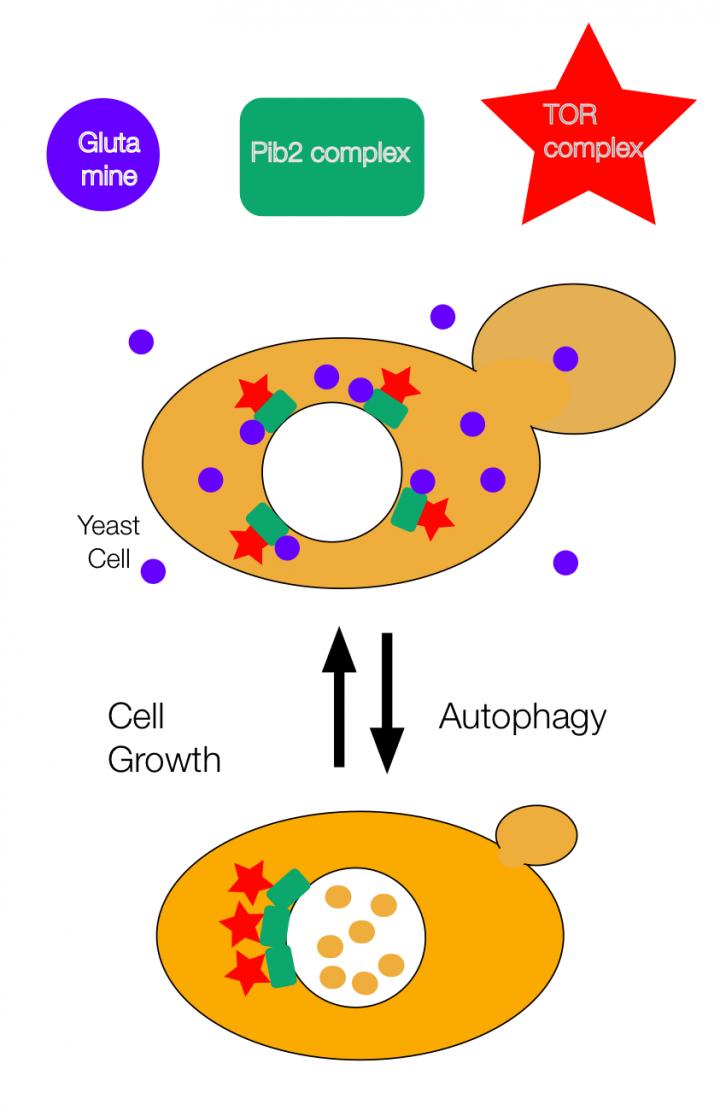
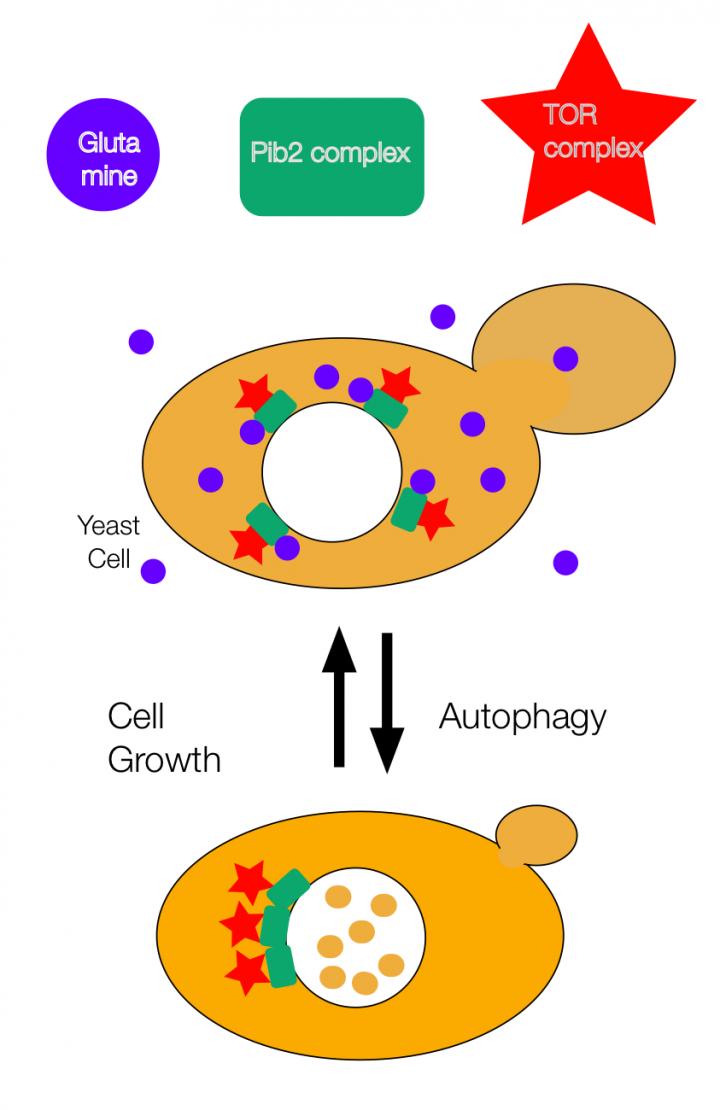
A research group at Osaka University led by Takeshi Noda discovered that TOR (Target of Rapamycin), an enzyme complex that played a central role in cell growth, controlled autophagy. However, how information of amino acids was transmitted to the TOR complex and which amino acid was detected were not well understood.

This group noticed that Pib2 interacted with the TOR complex and examined its detailed mechanisms in budding yeast. Specifically, they examined the role of Pib2 molecules in a cell by cell biological methods, mutations of Pib2 by genetic analysis, and the binding of Pib2 complex to glutamine labeled with a radioactive isotope.

In fact, both the Pib2 complex and the TOR complex were present on the vacuole in cells and bound or unbound according to the presence of glutamine. From these findings, the researchers found that the Pib2 complex bound directly to glutamine, activated TOR complexes, and regulated cell growth and autophagy. Their study results were published in PLOS Genetics.

Hirofumi Ukai, the lead author of the paper, said "When I visited Ghana in West Africa as part of the Graduate Minor Program 'Cross-Boundary Innovation Program,' I learned about retarded growth in infants in developing countries due to deficiency of amino acids, such as lysine and threonine. After returning to Japan, I pursued my study while questioning which of the 20 kinds of amino acids were necessary for cell growth, verifying that glutamine was of particular importance."

It is expected that the application of amino acids to nutritional science will bring triumph over cancer and other diseases as well as long-term survival.

###

Osaka University was founded in 1931 as one of the seven imperial universities of Japan and now has expanded to one of Japan's leading comprehensive universities. The University has now embarked on open research revolution from a position as Japan's most innovative university and among the most innovative institutions in the world according to Reuters 2015 Top 100 Innovative Universities and the Nature Index Innovation 2017. The university's ability to innovate from the stage of fundamental research through the creation of useful technology with economic impact stems from its broad disciplinary spectrum.

Website: http://resou.osaka-u.ac.jp/en/top

Media Contact

Saori Obayashi
[email protected]
81-661-055-886
@osaka_univ_e

http://www.osaka-u.ac.jp/en

Original Source

http://resou.osaka-u.ac.jp/en/research/2018/20180427_1 http://dx.doi.org/10.1371/journal.pgen.1007334

Share12Tweet8Share2ShareShareShare2

Related Posts

RBM20 Isoform Control Shapes Splicing in Health

May 24, 2026

ZNF274 Blocks Lineage Switch, Fuels CDK7 Drug Resistance

May 24, 2026

Evaluating School Policies During COVID-19 Pandemic

May 24, 2026

Deep Phenotyping Reveals Skin Remodeling in Sclerosis Treatment

May 24, 2026
Please login to join discussion

POPULAR NEWS

  • ESMO 2025: mRNA COVID Vaccines Enhance Efficacy of Cancer Immunotherapy

    313 shares
    Share 125 Tweet 78
  • New Study Reveals Plants Can Detect the Sound of Rain

    734 shares
    Share 293 Tweet 183
  • Research Indicates Potential Connection Between Prenatal Medication Exposure and Elevated Autism Risk

    847 shares
    Share 339 Tweet 212
  • Common Food Preservatives Associated with Elevated Blood Pressure and Increased Heart Disease Risk

    55 shares
    Share 22 Tweet 14

About

We bring you the latest biotechnology news from best research centers and universities around the world. Check our website.

Follow us

Recent News

Nanofiber Self-Adhesive Electrode with PEDOT, Polyurethane

RBM20 Isoform Control Shapes Splicing in Health

Pediatric Weight Management: Insights from Primary Care Providers

Subscribe to Blog via Email

Enter your email address to subscribe to this blog and receive notifications of new posts by email.

Join 83 other subscribers
  • Contact Us

Bioengineer.org © Copyright 2023 All Rights Reserved.

Welcome Back!

Login to your account below

Forgotten Password?

Retrieve your password

Please enter your username or email address to reset your password.

Log In
No Result
View All Result
  • Homepages
    • Home Page 1
    • Home Page 2
  • News
  • National
  • Business
  • Health
  • Lifestyle
  • Science

Bioengineer.org © Copyright 2023 All Rights Reserved.