

• HOME
  • NEWS
  • EXPLORE
    • CAREER
      • Companies
      • Jobs
    • EVENTS
    • iGEM
      • News
      • Team
    • PHOTOS
    • VIDEO
    • WIKI
  • BLOG
  • COMMUNITY
    • FACEBOOK
    • INSTAGRAM
    • TWITTER
Thursday, April 9, 2026
BIOENGINEER.ORG
No Result
View All Result
  • Login
  • HOME
  • NEWS
  • EXPLORE
    • CAREER
      • Companies
      • Jobs
        • Lecturer
        • PhD Studentship
        • Postdoc
        • Research Assistant
    • EVENTS
    • iGEM
      • News
      • Team
    • PHOTOS
    • VIDEO
    • WIKI
  • BLOG
  • COMMUNITY
    • FACEBOOK
    • INSTAGRAM
    • TWITTER
  • HOME
  • NEWS
  • EXPLORE
    • CAREER
      • Companies
      • Jobs
        • Lecturer
        • PhD Studentship
        • Postdoc
        • Research Assistant
    • EVENTS
    • iGEM
      • News
      • Team
    • PHOTOS
    • VIDEO
    • WIKI
  • BLOG
  • COMMUNITY
    • FACEBOOK
    • INSTAGRAM
    • TWITTER
No Result
View All Result
Bioengineer.org
No Result
View All Result
Home NEWS Science News Biology

NUS engineers pioneer greener and cheaper technique for biofuel production

Bioengineer by Bioengineer
April 6, 2018
in Biology
Reading Time: 2 mins read
0
Share on FacebookShare on TwitterShare on LinkedinShare on RedditShare on Telegram
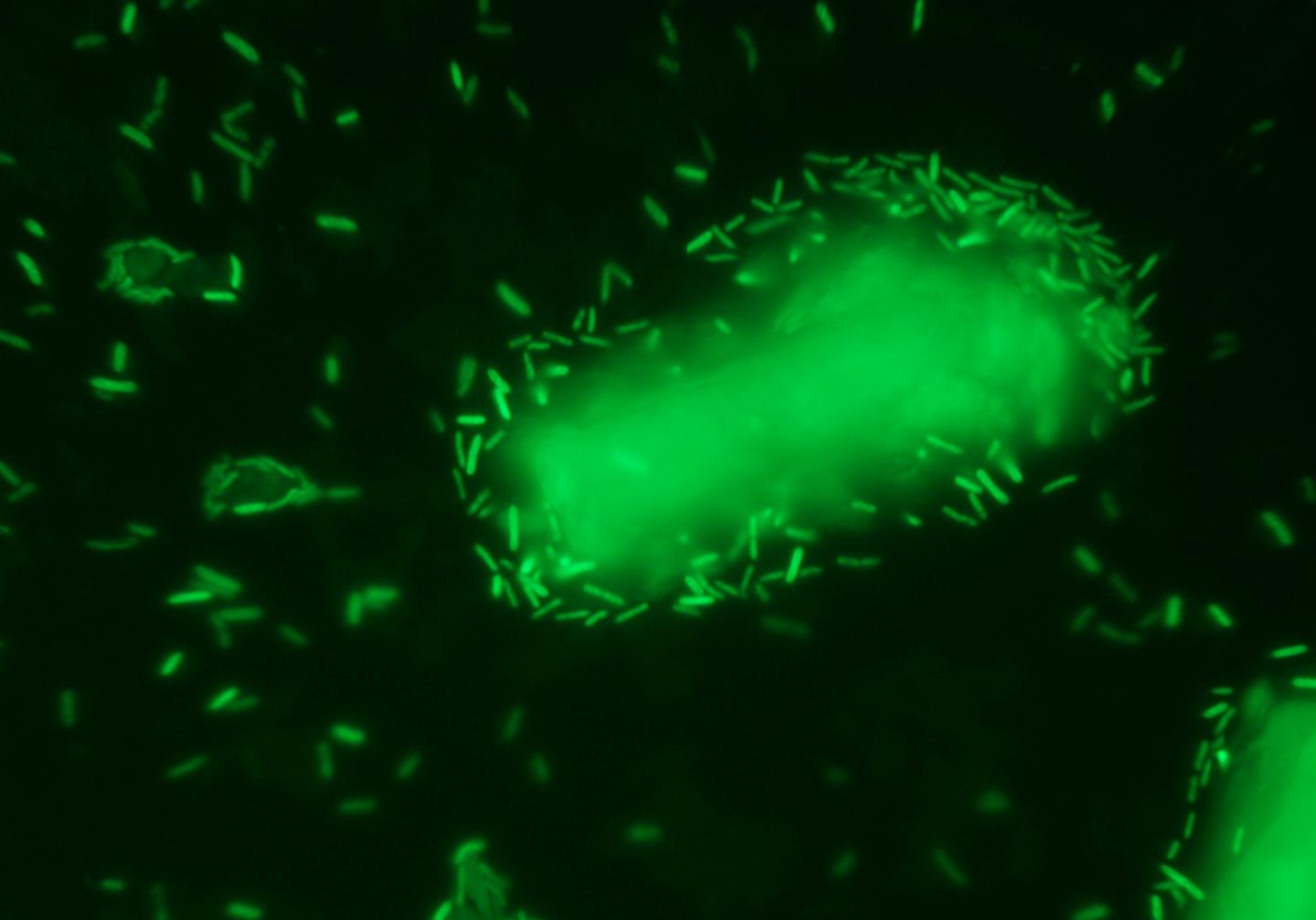
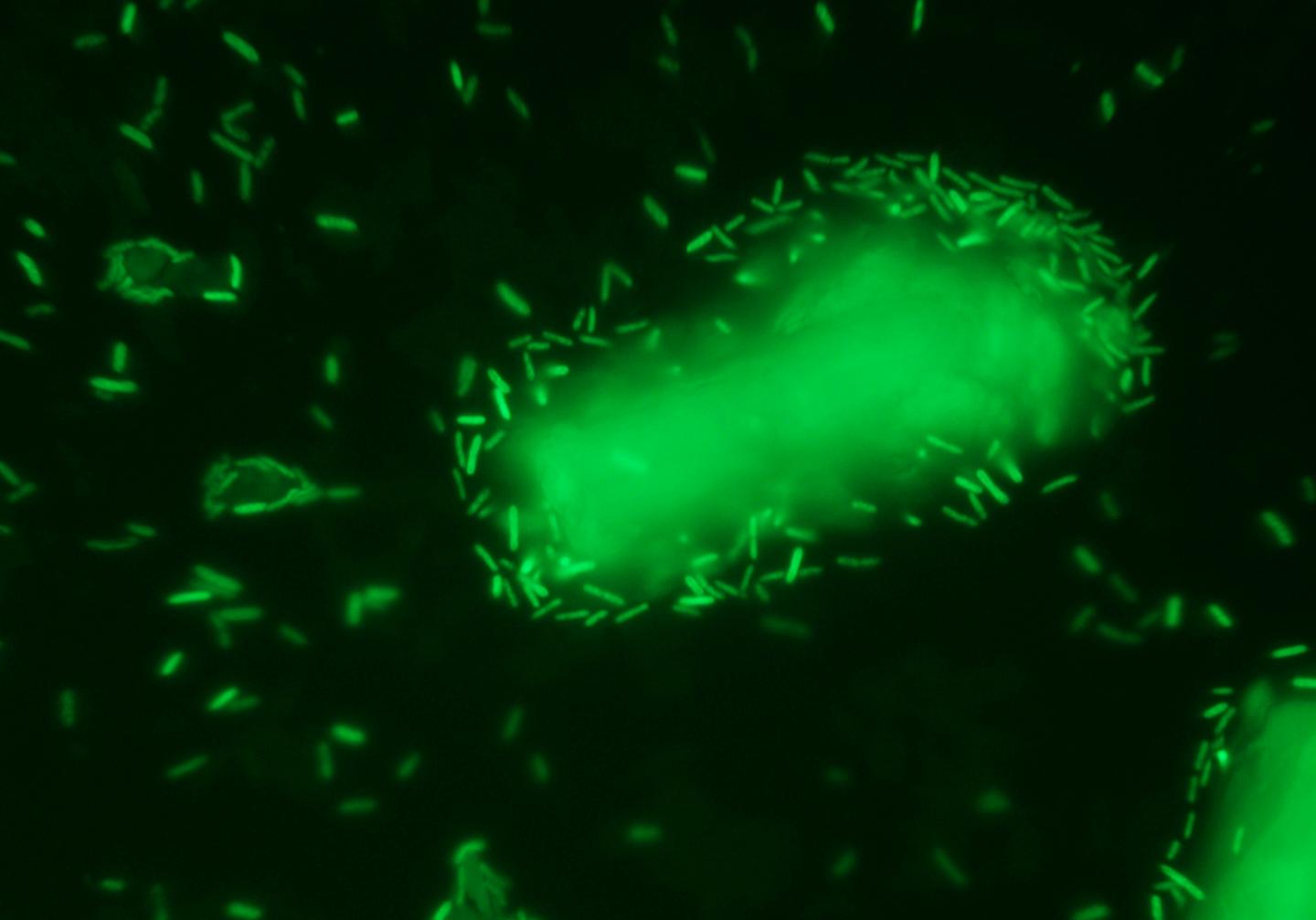
IMAGE

Credit: National University of Singapore

A team of engineers from the National University of Singapore (NUS) recently discovered that a naturally occurring bacterium, Thermoanaerobacterium thermosaccharolyticum TG57, isolated from waste generated after harvesting mushrooms, is capable of directly converting cellulose, a plant-based material, to biobutanol.

A research team led by Associate Professor He Jianzhong from the Department of Civil and Environmental Engineering at NUS Faculty of Engineering first discovered the novel TG57 strain in 2015. They went on to culture the strain to examine its properties.

Assoc Prof He explained, "The production of biofuels using non-food feedstocks can improve sustainability and reduce costs greatly. In our study, we demonstrated a novel method of directly converting cellulose to biobutanol using the novel TG57 strain. This is a major breakthrough in metabolic engineering and exhibits a foundational milestone in sustainable and cost-effective production of renewable biofuels and chemicals."

Biobutanol – An attractive biofuel

Traditional biofuels are produced from food crops. This approach is highly costly and competes with food production in the use of land, water, energy and other environmental resources.

Biofuels produced from unprocessed cellulosic materials such as plant biomass, as well as agriculture, horticultural and organic waste, are expected to meet growing energy demands without increasing greenhouse gas emissions resulting from the burning of fossil fuels. These cellulosic materials are in great abundance, environmentally friendly, and economically sustainable.

Among various types of biofuels, biobutanol offers a great promise as petrol substitute because of its high energy density and superior properties. It can directly replace gasoline in car engines without any modification. However, commercial production of biobutanol has been hampered by the lack of potent microbes capable of converting cellulosic biomass into biofuels. The current technique is costly and also requires complicated chemical pre-treatment.

Producing biofuel the green way

The novel technique developed by the NUS team could potentially be a game-changing technology for cost effective and sustainable biofuel production.

Spent mushroom compost – typically composed of wheat straw and saw dust – is the residual compost waste generated by mushroom farming. The microorganisms in the waste are left to evolve naturally for more than two years to obtain the unique TG57 strain.

The fermentation process is simple, and no complicated pre-treatment or genetic modification of the microorganisms is required. When cellulose is added, the bacterium simply digests it to produce butanol as the main product.

Moving forward, the research team will continue to optimise the performance of the TG57 strain, and further engineer it to enhance biobutanol ratio and yield using molecular genetic tools.

###

The team published the findings of the study in the scientific journal Science Advances on 23 March 2018.

Media Contact

Goh Yu Chong
[email protected]
656-601-1653
@NUSingapore

http://www.nus.edu.sg/

Original Source

https://news.nus.edu.sg/press-releases/biobutanol-mushroom-crop-residue http://dx.doi.org/10.1126/sciadv.1701475


Share12Tweet8Share2ShareShareShare2

Related Posts

Dragonflies and Humans Detect Red Light Using the Same Mechanism

Dragonflies and Humans Detect Red Light Using the Same Mechanism

April 9, 2026
Leucine-Rich Repeat Receptor-Like Kinase AhZAR1 Controls Early Seed Development in Peanut

Leucine-Rich Repeat Receptor-Like Kinase AhZAR1 Controls Early Seed Development in Peanut

April 9, 2026

“’Stemness Checkpoint’ Key to Regulating Stem Cell Identity”

April 9, 2026

Temperate Region Studies Lead in Robustness Despite Majority of Discoveries in Tropical Mammals

April 8, 2026
Please login to join discussion

POPULAR NEWS

  • blank

    Revolutionary AI Model Enhances Precision in Detecting Food Contamination

    98 shares
    Share 39 Tweet 25
  • Imagine a Social Media Feed That Challenges Your Views Instead of Reinforcing Them

    1012 shares
    Share 400 Tweet 250
  • Popular Anti-Aging Compound Linked to Damage in Corpus Callosum, Study Finds

    44 shares
    Share 18 Tweet 11
  • Revolutionary Theory Transforms Quantum Perspective on the Big Bang

    40 shares
    Share 16 Tweet 10

About

We bring you the latest biotechnology news from best research centers and universities around the world. Check our website.

Follow us

Recent News

Fc-Free Single-Chain Antibody mRNA Treats Resistant Pseudomonas

Why Anti-Cancer Drugs Often Fall Short of Expectations

Bar-Ilan University Study Reveals Single DNA Letter Can Cause Complete Sex Reversal

Subscribe to Blog via Email

Enter your email address to subscribe to this blog and receive notifications of new posts by email.

Join 78 other subscribers
  • Contact Us

Bioengineer.org © Copyright 2023 All Rights Reserved.

Welcome Back!

Login to your account below

Forgotten Password?

Retrieve your password

Please enter your username or email address to reset your password.

Log In
No Result
View All Result
  • Homepages
    • Home Page 1
    • Home Page 2
  • News
  • National
  • Business
  • Health
  • Lifestyle
  • Science

Bioengineer.org © Copyright 2023 All Rights Reserved.