• HOME
  • NEWS
  • EXPLORE
    • CAREER
      • Companies
      • Jobs
    • EVENTS
    • iGEM
      • News
      • Team
    • PHOTOS
    • VIDEO
    • WIKI
  • BLOG
  • COMMUNITY
    • FACEBOOK
    • INSTAGRAM
    • TWITTER
Sunday, February 8, 2026
BIOENGINEER.ORG
No Result
View All Result
  • Login
  • HOME
  • NEWS
  • EXPLORE
    • CAREER
      • Companies
      • Jobs
        • Lecturer
        • PhD Studentship
        • Postdoc
        • Research Assistant
    • EVENTS
    • iGEM
      • News
      • Team
    • PHOTOS
    • VIDEO
    • WIKI
  • BLOG
  • COMMUNITY
    • FACEBOOK
    • INSTAGRAM
    • TWITTER
  • HOME
  • NEWS
  • EXPLORE
    • CAREER
      • Companies
      • Jobs
        • Lecturer
        • PhD Studentship
        • Postdoc
        • Research Assistant
    • EVENTS
    • iGEM
      • News
      • Team
    • PHOTOS
    • VIDEO
    • WIKI
  • BLOG
  • COMMUNITY
    • FACEBOOK
    • INSTAGRAM
    • TWITTER
No Result
View All Result
Bioengineer.org
No Result
View All Result
Home NEWS Science News Biology

‘Sleeping’ stem cells could aid brain repair

Bioengineer by Bioengineer
April 5, 2018
in Biology
Reading Time: 2 mins read
0
Share on FacebookShare on TwitterShare on LinkedinShare on RedditShare on Telegram
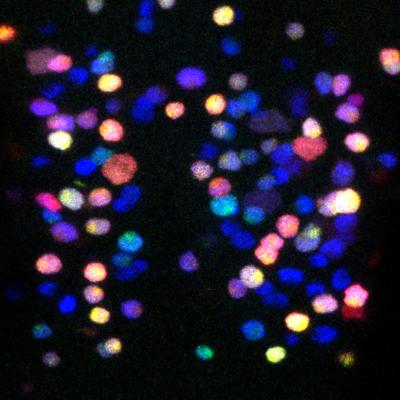
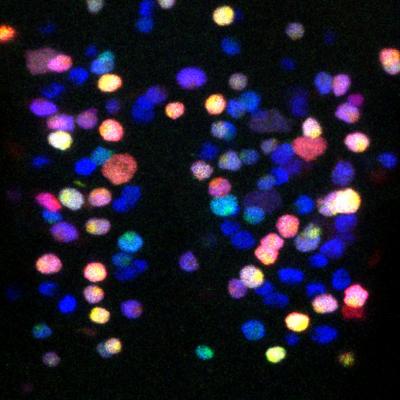
IMAGE

Credit: Andrea Brand/Leo Otsuki

Scientists at the Wellcome Trust/ Cancer Research UK Gurdon Institute, University of Cambridge, have identified a new type of stem cell in the brain which they say has a high potential for repair following brain injury or disease.

A major goal of regenerative research is to repair the brain efficiently following injury, for example due to stroke, Alzheimer's disease or head trauma, disease or ageing. The brain is poor at repairing itself; however, it may become possible to improve repair without surgery by targeting stem cells residing in patients' brains. Stem cells have the unique capacity to produce all of the cells in the brain but are normally kept inactive in a form of cellular 'sleep' known as quiescence. Quiescent cells do not proliferate or generate new cells. Thus, any regenerative therapy targeting stem cells must first awaken them from quiescence.

In a study published today in the journal Science, PhD student Leo Otsuki and his supervisor Professor Andrea Brand report the discovery in the brain of a new type of quiescent stem cell (known as 'G2 quiescent stem cell') with higher regenerative potential than quiescent stem cells identified previously. Importantly, G2 quiescent stem cells awaken to make the key types of cell in the brain – neurons and glia – much faster than known quiescent stem cells, making them attractive targets for therapeutic design.

"The brain is not good at repairing itself, but these newly-discovered stem cells suggest there may be a way to improve its ability," says Professor Brand. "These stem cells are in a dormant state, but once awake, they have the ability to generate key brain cells."

By studying the fruit fly (Drosophila), the authors identified a gene known as tribbles that selectively regulates G2 quiescent stem cells. The DNA of fruit flies has many similarities with that of humans, making them a useful model to understand human biology, and 60% of human genes associated with disease are also found in Drosophila. The tribbles gene has counterparts in the mammalian genome that are expressed in stem cells in the brain. The researchers believe that drugs that target tribbles might be one route to awakening G2 quiescent stem cells.

"We've found the gene that directs these cells to become quiescent," adds Otsuki. "The next step is to identify potential drug-like molecules that block this gene and awaken a person's stem cells.

"We believe there may be similar quiescent stem cells in other organs, and this discovery could help improve or develop new regenerative medicines."

###

This study was funded by the Royal Society and Wellcome Trust, and core funding to the Gurdon Institute from the Wellcome Trust and Cancer Research UK.

Reference

Leo Otsuki and Andrea H Brand. Cell cycle heterogeneity directs the timing of neural stem cell activation from quiescence. Science (6 April) doi: 10.1126/science.aan8795

Media Contact

Craig Brierley
[email protected]
44-122-376-6205
@Cambridge_Uni

http://www.cam.ac.uk

Related Journal Article

http://dx.doi.org/10.1126/science.aan8795
Share12Tweet7Share2ShareShareShare1

Related Posts

Florida Cane Toad: Complex Spread and Selective Evolution

Florida Cane Toad: Complex Spread and Selective Evolution

February 7, 2026
New Study Uncovers Mechanism Behind Burn Pit Particulate Matter–Induced Lung Inflammation

New Study Uncovers Mechanism Behind Burn Pit Particulate Matter–Induced Lung Inflammation

February 6, 2026

DeepBlastoid: Advancing Automated and Efficient Evaluation of Human Blastoids with Deep Learning

February 6, 2026

Navigating the Gut: The Role of Formic Acid in the Microbiome

February 6, 2026
Please login to join discussion

POPULAR NEWS

  • Robotic Ureteral Reconstruction: A Novel Approach

    Robotic Ureteral Reconstruction: A Novel Approach

    82 shares
    Share 33 Tweet 21
  • Digital Privacy: Health Data Control in Incarceration

    63 shares
    Share 25 Tweet 16
  • Breakthrough in RNA Research Accelerates Medical Innovations Timeline

    53 shares
    Share 21 Tweet 13
  • Mapping Tertiary Lymphoid Structures for Kidney Cancer Biomarkers

    50 shares
    Share 20 Tweet 13

About

We bring you the latest biotechnology news from best research centers and universities around the world. Check our website.

Follow us

Recent News

Evaluating a Self-Care App for Chest Trauma Patients

Anesthesia Method’s Impact on Elderly Hip Fracture Recovery

Menopause Care: Insights from Workforce Review and Consultation

Subscribe to Blog via Email

Enter your email address to subscribe to this blog and receive notifications of new posts by email.

Join 73 other subscribers
  • Contact Us

Bioengineer.org © Copyright 2023 All Rights Reserved.

Welcome Back!

Login to your account below

Forgotten Password?

Retrieve your password

Please enter your username or email address to reset your password.

Log In
No Result
View All Result
  • Homepages
    • Home Page 1
    • Home Page 2
  • News
  • National
  • Business
  • Health
  • Lifestyle
  • Science

Bioengineer.org © Copyright 2023 All Rights Reserved.