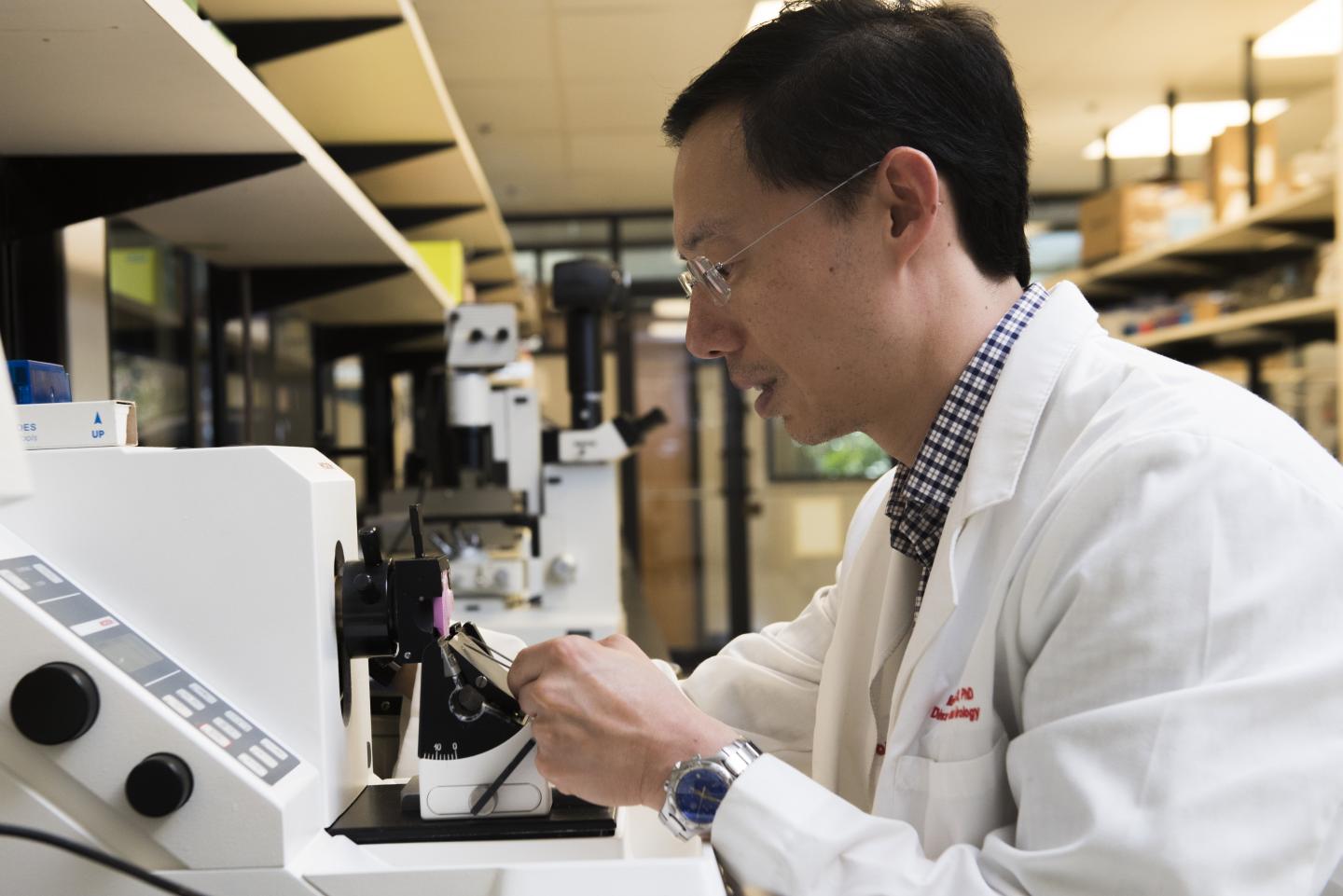
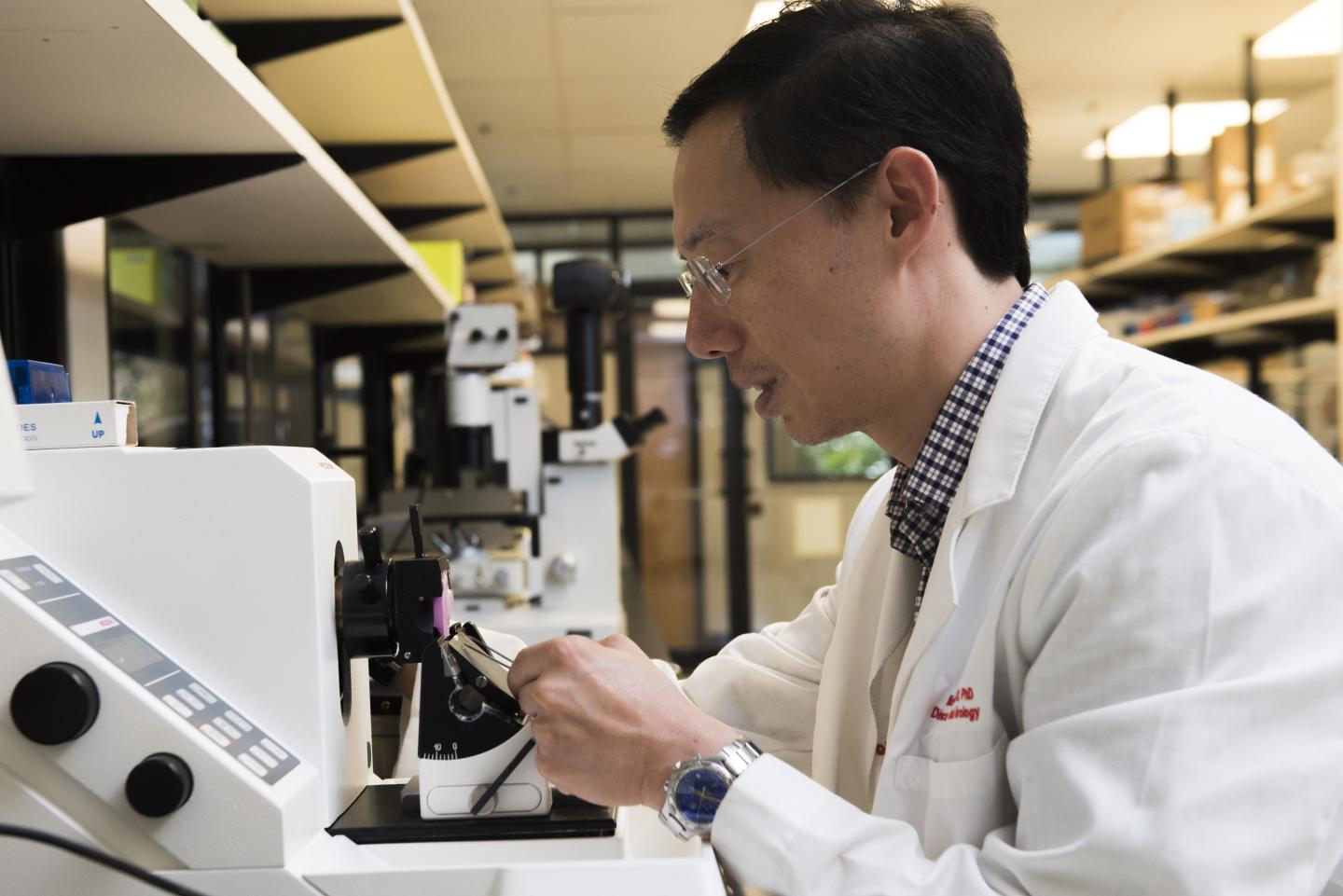
Credit: Children's National Health System
WASHINGTON-(April 5, 2018)-More sensitive cultivation methods and precise 16S rRNA gene sequencing techniques have revealed that the human bladder hosts a significant microbiome and those diverse bacteria inside the bladder impact pediatric urologic diseases.
As recently as one decade ago, the human bladder was thought to be a sterile landscape. In recent years that view has shifted radically, opening brand-new fields of research aimed at clarifying the role the microbiome plays in common urologic diseases that affect children, according to a review article published online Feb. 22, 2018, by Current Urology Reports.
"There is a growing appreciation for the role of diverse bacteria in contributing to improved health as well as triggering disease processes or exacerbating illness," says Michael H. Hsieh, M.D., Ph.D., director of the Clinic for Adolescent and Adult Pediatric Onset Urology (CAPITUL) at Children's National Health System and study senior author. "Already, we know that probiotics and dietary modifications have the potential to play powerful roles in preventing urinary diseases that commonly occur among pediatric patients," Dr. Hsieh says. This underscores the importance of conducting even more studies to improve our understanding and to identify new therapies for health conditions that resist current treatment options."
The review conducted by Dr. Hsieh and co-authors highlights the effects of the microbiome on a number of urologic diseases that affect children, including:
- Urinary tract infection A number of studies point to the association between decreased microbial diversity and the incidence of what is commonly called urinary tract infection (UTI) or "dysbiosis." This relationship suggests that using probiotics to replace or supplement antibiotics could favorably alter the urinary microbiome. Future research will focus on the pathophysiological role of the microbiome to determine whether it can be manipulated to prevent or treat UTIs.
- Urge urinary incontinence While data vary by study, the presence of bacteria in the urine, especially certain bacterial species–such as Gardnerella, Staphylococcus, Streptococcus, Actinomyces, Aerococcus, Corynebacterium and Oligella–are linked to the incidence and severity of urge urinary incontinence (UUI) as well as treatment success. Most studies find an association between greater genitourinary biodiversity and reduced incidence and lessened severity of UUI as well as improved treatment response. Future research will focus on further clarifying this relationship.
- Urolithiasis Calcium oxalate stones, the most common type of kidney stone, have a microbiome that differs from the urinary microbiome leading researchers to question whether the stone's own bacterial makeup could help to predict recurrence of future kidney stones. What's more, Oxalobacter formigenes, a gram-negative bacterium, lowers oxalate levels in the blood and are associated with a 70 percent reduction in the risk of kidney stones forming. In an experimental model, fecal transplants with the full microbiome represented had a pronounced and persistent effect on oxalate production. Patients who receive some antibiotics often have reduced rates of O. formigenes colonization. However, the bacteria are resistant to amoxicillin, augmentin, ceftriaxone and vancomycin, which could point to preferential use of these antibiotics to stave off disease and ward off kidney stone formation.
###
Additional authors include Daniel Gerber, study lead author, The Georgetown University School of Medicine and Health Sciences; and Catherine Forster, M.D., study co-author, Children's National.
Media Contact
Diedtra Henderson
[email protected]
443-610-9826
http://www.childrensnational.org/
Related Journal Article
http://dx.doi.org/10.1007/s11934-018-0763-6