• HOME
  • NEWS
  • EXPLORE
    • CAREER
      • Companies
      • Jobs
    • EVENTS
    • iGEM
      • News
      • Team
    • PHOTOS
    • VIDEO
    • WIKI
  • BLOG
  • COMMUNITY
    • FACEBOOK
    • INSTAGRAM
    • TWITTER
Sunday, August 2, 2026
BIOENGINEER.ORG
No Result
View All Result
  • Login
  • HOME
  • NEWS
  • EXPLORE
    • CAREER
      • Companies
      • Jobs
        • Lecturer
        • PhD Studentship
        • Postdoc
        • Research Assistant
    • EVENTS
    • iGEM
      • News
      • Team
    • PHOTOS
    • VIDEO
    • WIKI
  • BLOG
  • COMMUNITY
    • FACEBOOK
    • INSTAGRAM
    • TWITTER
  • HOME
  • NEWS
  • EXPLORE
    • CAREER
      • Companies
      • Jobs
        • Lecturer
        • PhD Studentship
        • Postdoc
        • Research Assistant
    • EVENTS
    • iGEM
      • News
      • Team
    • PHOTOS
    • VIDEO
    • WIKI
  • BLOG
  • COMMUNITY
    • FACEBOOK
    • INSTAGRAM
    • TWITTER
No Result
View All Result
Bioengineer.org
No Result
View All Result
Home NEWS Science News Biology

New underwater geolocation technique takes cues from nature

Bioengineer by Bioengineer
April 5, 2018
in Biology
Reading Time: 2 mins read
0
Share on FacebookShare on TwitterShare on LinkedinShare on RedditShare on Telegram
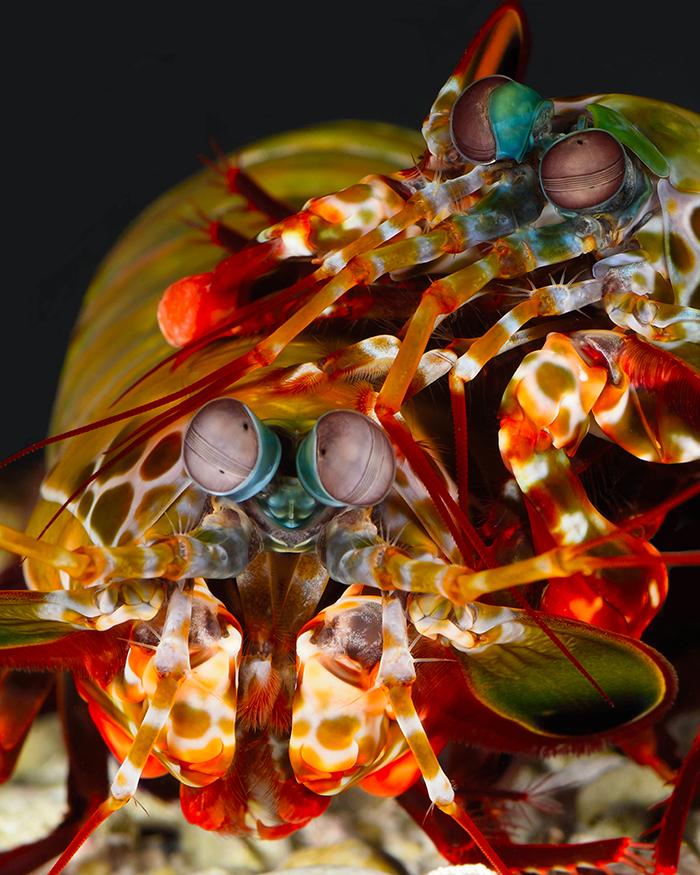
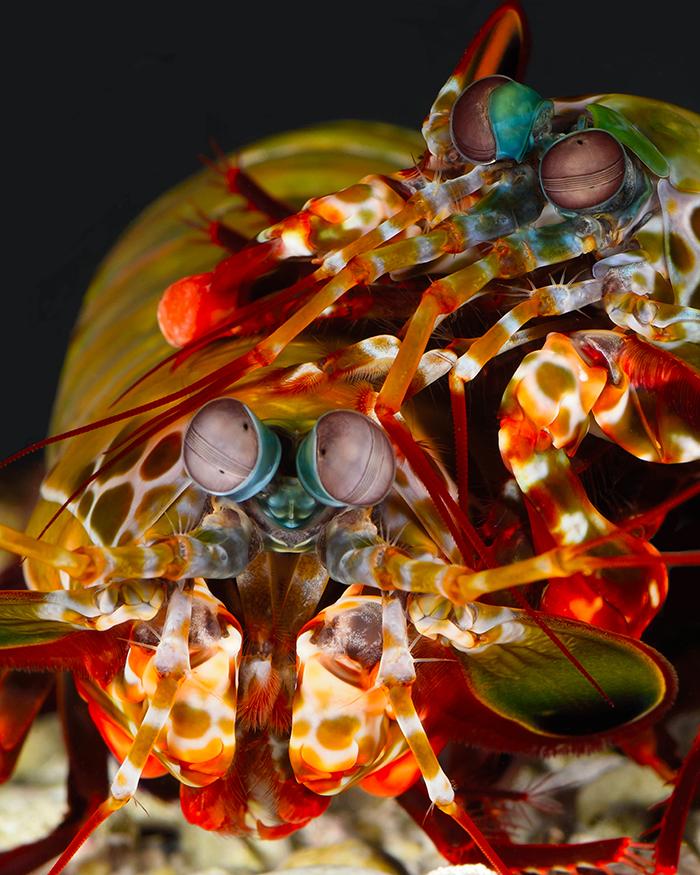
IMAGE

Credit: Marshall laboratory / The University of Queensland

Marine animals such as mantis shrimp and squid have inspired a new mode of underwater navigation that allows for greater accuracy.

University of Queensland Queensland Brain Institute (QBI) scientists are part of a group of researchers who have developed the technique using imaging equipment that was sensitive to polarising light.

The researchers built polarisation sensors that were able to determine the sun's position in the sky based on patterns of light underwater.

Dr Samuel Powell said the discovery took inspiration from marine animals including mantis shrimp and cephalopods (squid, cuttlefish and octopus), which use polarisation to communicate.

"We studied marine animals as we believe some species could be using the polarisation of light to navigate, and our new study is a proof of concept that this is possible," he said.

People cannot perceive polarised light without the help of special lenses, which are often found in sunglasses.

The new method would enable more accurate and cost-effective long-distance navigation.

"Most modern navigation techniques don't work underwater. Satellite-based GPS, for example, only works to a depth of about 20centimetres," Dr Powell said.

"Underwater, visibility is also limited, so relatively old technology such as lighthouses don't work, because the farthest distance you can see is around 100 metres."

"Currently, research submarines use GPS systems at the surface, and when they descend–for example, to measure salinity at different depths–they rely on dead reckoning to calculate their position.

"The error in this case is unbounded–that is, the longer without GPS, the more erroneous your calculation can be."

"Using polarisation sensors, our method would allow for real-time geolocalisation underwater with more accurate long-distance results, without the need to resurface periodically."

The technique could enable navigation at depths up to 200m below the ocean's surface.

The research was done in collaboration with colleagues at Washington University, and Viktor Gruev at the University of Illinois at Urbana-Champaign.

The study, "Bioinspired polarization vision enables underwater geolocalization", is published in Science Advances.

###

Media Contact

Donna Lu
[email protected]
61-405-661-856
@uq_news

http://www.uq.edu.au

Related Journal Article

http://dx.doi.org/10.1126/sciadv.aao6841

Share13Tweet8Share2ShareShareShare2

Related Posts

Nationwide Study Tracks Hepatitis B Reactivation and Liver Dysfunction During Infliximab Treatment

Nationwide Study Tracks Hepatitis B Reactivation and Liver Dysfunction During Infliximab Treatment

August 1, 2026
Imaging Reveals How Brain–Body Interactions Shape Systemic Disease

Imaging Reveals How Brain–Body Interactions Shape Systemic Disease

August 1, 2026

Targeting Vascular–Musculoskeletal Links May Treat Sarcopenia and Osteoporosis

August 1, 2026

Supergene solves evolutionary mystery by controlling mirror-image flower development

August 1, 2026
Please login to join discussion

POPULAR NEWS

  • Bentham Science Launches International Journal of Wireless and Communication Engineering Innovation

    29 shares
    Share 12 Tweet 7
  • Study explores long-term care residents’ experiences transitioning to emergency departments

    29 shares
    Share 12 Tweet 7
  • KAIST develops treatment targeting cancer cachexia, a debilitating wasting syndrome

    29 shares
    Share 12 Tweet 7
  • What Long-Term Evidence Reveals About Hypoglycemia in Late-Preterm Infants

    29 shares
    Share 12 Tweet 7

About

We bring you the latest biotechnology news from best research centers and universities around the world. Check our website.

Follow us

Recent News

Bentham Science Launches International Journal of Wireless and Communication Engineering Innovation

Study explores long-term care residents’ experiences transitioning to emergency departments

KAIST develops treatment targeting cancer cachexia, a debilitating wasting syndrome

Subscribe to Blog via Email

Enter your email address to subscribe to this blog and receive notifications of new posts by email.

Join 85 other subscribers
  • Contact Us

Bioengineer.org © Copyright 2023 All Rights Reserved.

Welcome Back!

Login to your account below

Forgotten Password?

Retrieve your password

Please enter your username or email address to reset your password.

Log In
No Result
View All Result
  • Homepages
    • Home Page 1
    • Home Page 2
  • News
  • National
  • Business
  • Health
  • Lifestyle
  • Science

Bioengineer.org © Copyright 2023 All Rights Reserved.