Credit: UMass Amherst
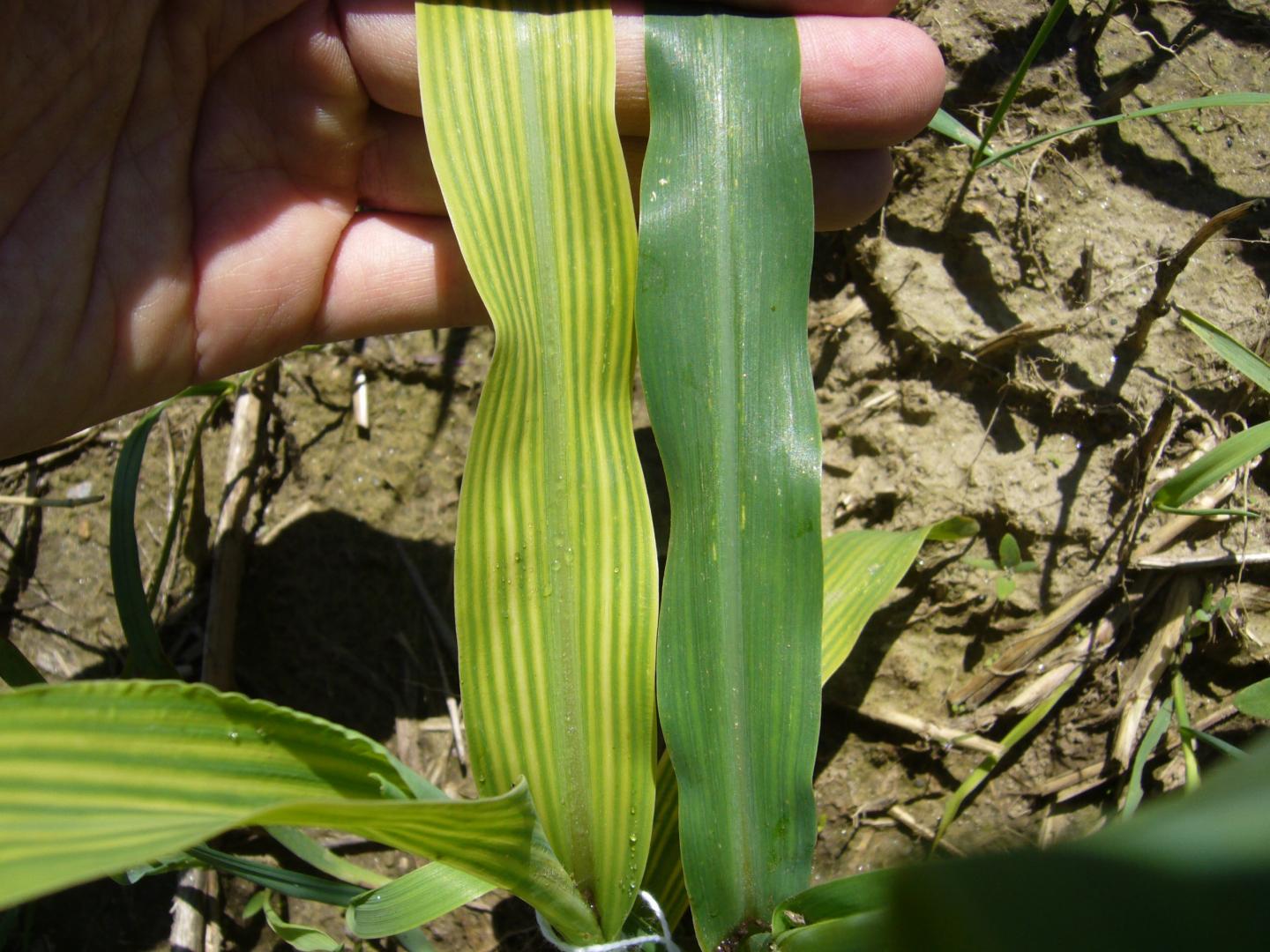
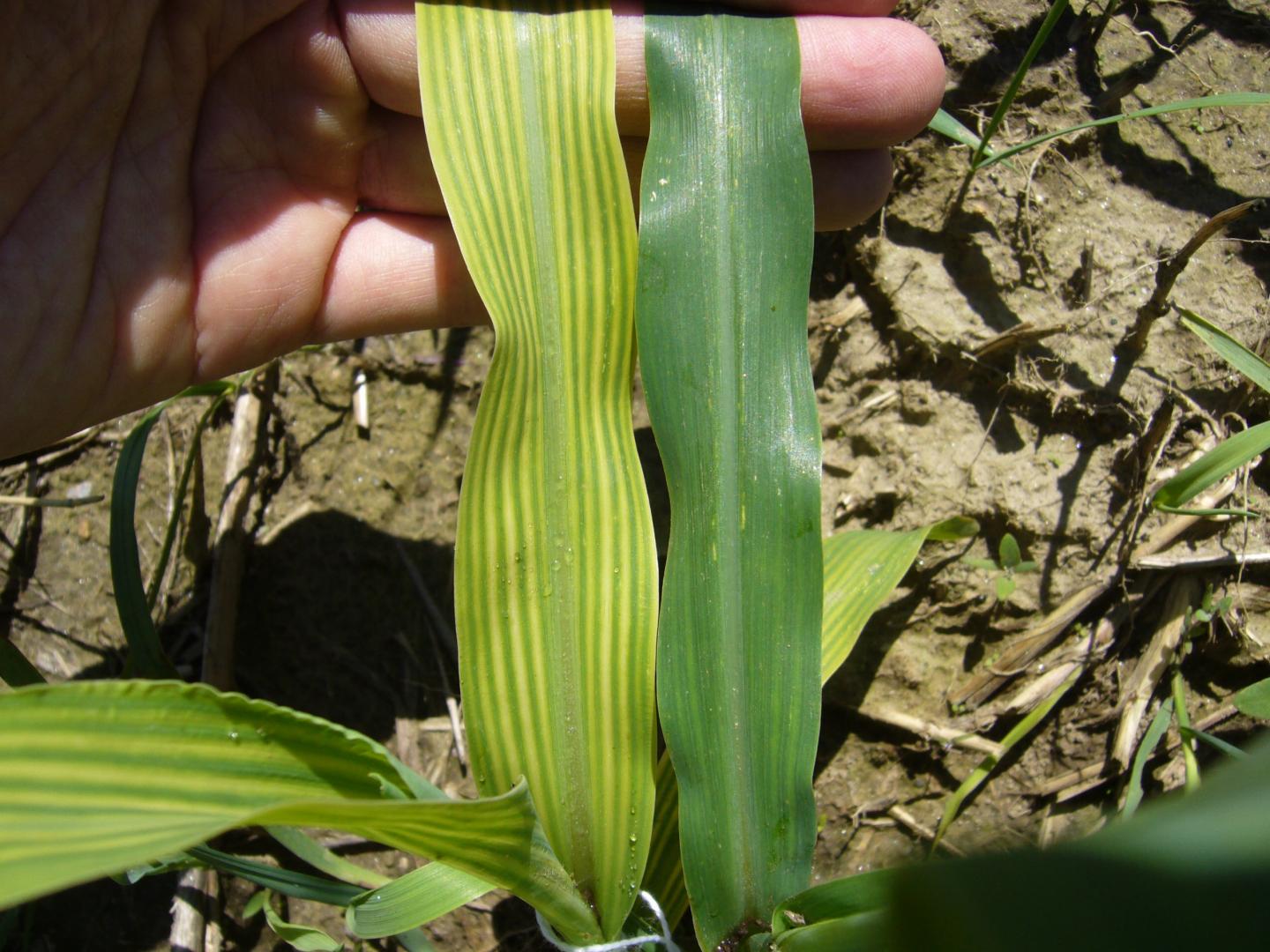
AMHERST, Mass. – A decade or so ago, scientists discovered genes they thought could be turned on to make plants take up more iron from the soil, enriching cereals, grains and other staple foods that feed millions of people around the world an iron-poor diet leading to iron deficiency anemia, says molecular biologist Elsbeth Walker at the University of Massachusetts Amherst. "But it didn't work," she adds. "Somehow the plants downregulated our efforts, and we don't understand how."
Now Walker has a three-year, $870,000 grant from the National Science Foundation's Physiological Mechanisms and Biomechanics program to learn how plants thwarted those past efforts and further, how plants firmly control iron in their systems. They have good reason for this, she adds, because iron is a highly reactive metal that can damage their tissues.
Walker points out, "Part of this control is a mechanism to allow the plant's growing shoot, where iron is most heavily needed, to signal iron status to the roots, where primary iron uptake occurs. The molecular details of this shoot-to-root signaling mechanism are unknown, but are likely to be essential for future successful engineering of plants to accumulate additional bioavailable iron in their edible parts."
"We are interested in this problem that affects a billion people worldwide because most people get iron from their diet, but about 20 percent can't get enough because the diet is limited. Some of the consequences are children's failure to thrive, maternal mortality and people who are weak, tired and less productive. They go through life feeling crummy, and if you've ever had it you know how awful it feels," she says.
Walker will work with two collaborators, Olena Vatamaniuk at Cornell University and Miguel Piñeros at Boyce Thompson Institute, both in Ithaca, N.Y. Vatamaniuk's laboratory has sophisticated ways to measure metal content in very specific cell types and places in the plant, while Piñeros is an expert in identifying transporter proteins that move molecules across biological membranes, Walker notes.
One of their target study areas will build upon earlier work by Walker and Vatamaniuk, who last year reported their discovery that plant shoots and leaves exert an enormous influence on how much iron the roots take up.
As Walker explains, the iron signaling mechanism uses the plant's circulatory system, known as phloem, and a group called "phloem companion cells" are a key in iron regulation. "We've now developed a system to detect that signal, so for the very first time we have a way to test for it. That means we now hope to precisely identify that signal. Early assays suggest it is probably a small RNA, and this new grant will help us test that idea."
Working in a mutant plant, the researchers found that the plant was paying attention to only a few, select cells to get information on iron levels while ignoring most other cells. "It was as if you lost the nerve that tells your brain you're hungry," Walker says. "You would never feel hungry and the danger is that you'll never eat enough again. That's what these mutant plants have in relation to iron."
This work may eventually lead to techniques that plant breeders could use to enhance available iron in cornmeal, rice and other cereals that millions of people rely on as daily food staples.
"But our research is completely basic," Walker points out. "We study how plants decide how much iron goes into the seed, the kernels, the parts that we eat, whereas right now the iron may all be found in the corn plant leaves or the rice fronds. Our task is literally trying to understand the mechanisms, but this basic work should give someone else the tools to move this forward by breeding or by genetic manipulation."
###
Media Contact
Janet Lathrop
[email protected]
413-545-2989
@umassscience
http://www.umass.edu