• HOME
  • NEWS
  • EXPLORE
    • CAREER
      • Companies
      • Jobs
    • EVENTS
    • iGEM
      • News
      • Team
    • PHOTOS
    • VIDEO
    • WIKI
  • BLOG
  • COMMUNITY
    • FACEBOOK
    • INSTAGRAM
    • TWITTER
Saturday, February 7, 2026
BIOENGINEER.ORG
No Result
View All Result
  • Login
  • HOME
  • NEWS
  • EXPLORE
    • CAREER
      • Companies
      • Jobs
        • Lecturer
        • PhD Studentship
        • Postdoc
        • Research Assistant
    • EVENTS
    • iGEM
      • News
      • Team
    • PHOTOS
    • VIDEO
    • WIKI
  • BLOG
  • COMMUNITY
    • FACEBOOK
    • INSTAGRAM
    • TWITTER
  • HOME
  • NEWS
  • EXPLORE
    • CAREER
      • Companies
      • Jobs
        • Lecturer
        • PhD Studentship
        • Postdoc
        • Research Assistant
    • EVENTS
    • iGEM
      • News
      • Team
    • PHOTOS
    • VIDEO
    • WIKI
  • BLOG
  • COMMUNITY
    • FACEBOOK
    • INSTAGRAM
    • TWITTER
No Result
View All Result
Bioengineer.org
No Result
View All Result
Home NEWS Science News Biology

Using water molecules to read electrical activity in lipid membranes

Bioengineer by Bioengineer
April 2, 2018
in Biology
Reading Time: 2 mins read
0
Share on FacebookShare on TwitterShare on LinkedinShare on RedditShare on Telegram
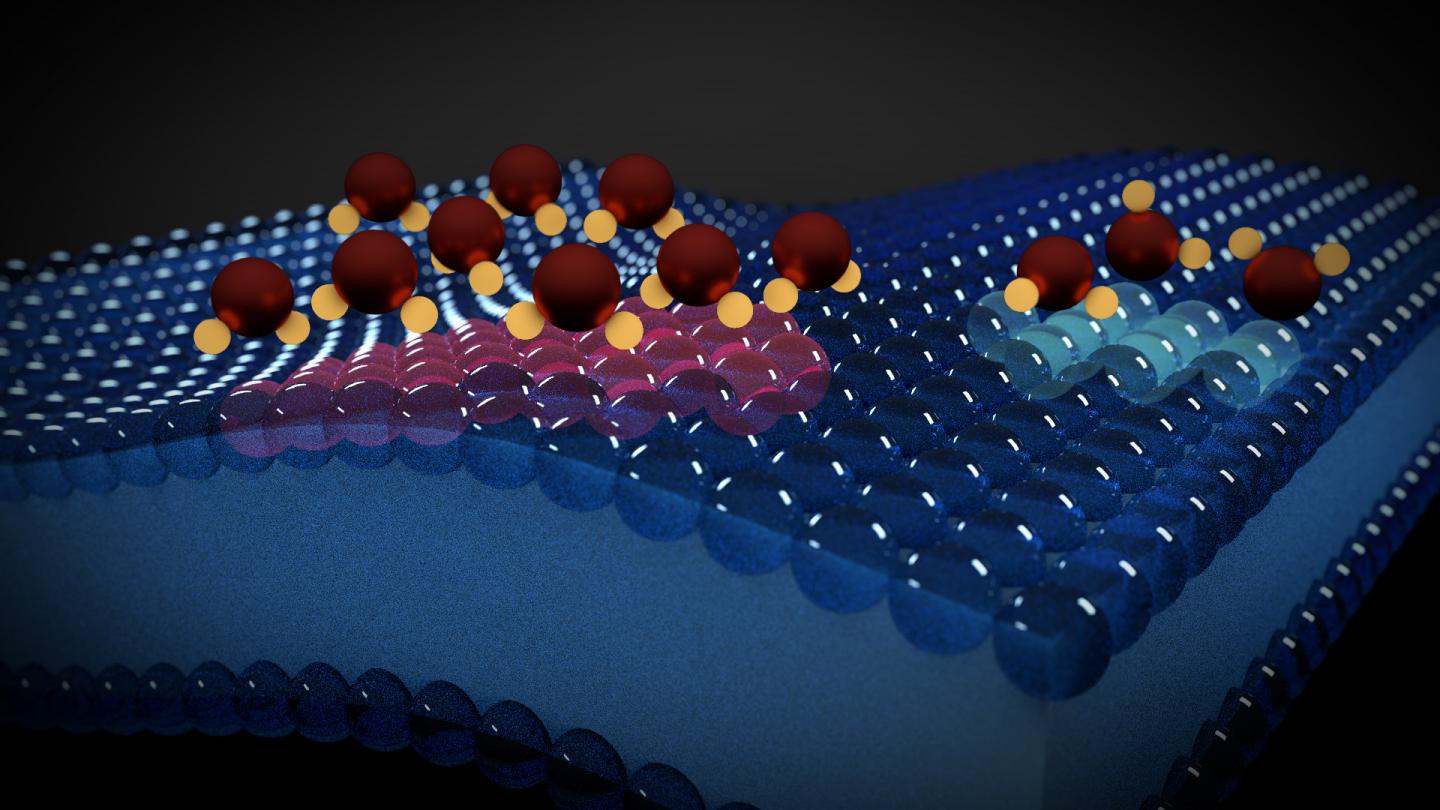
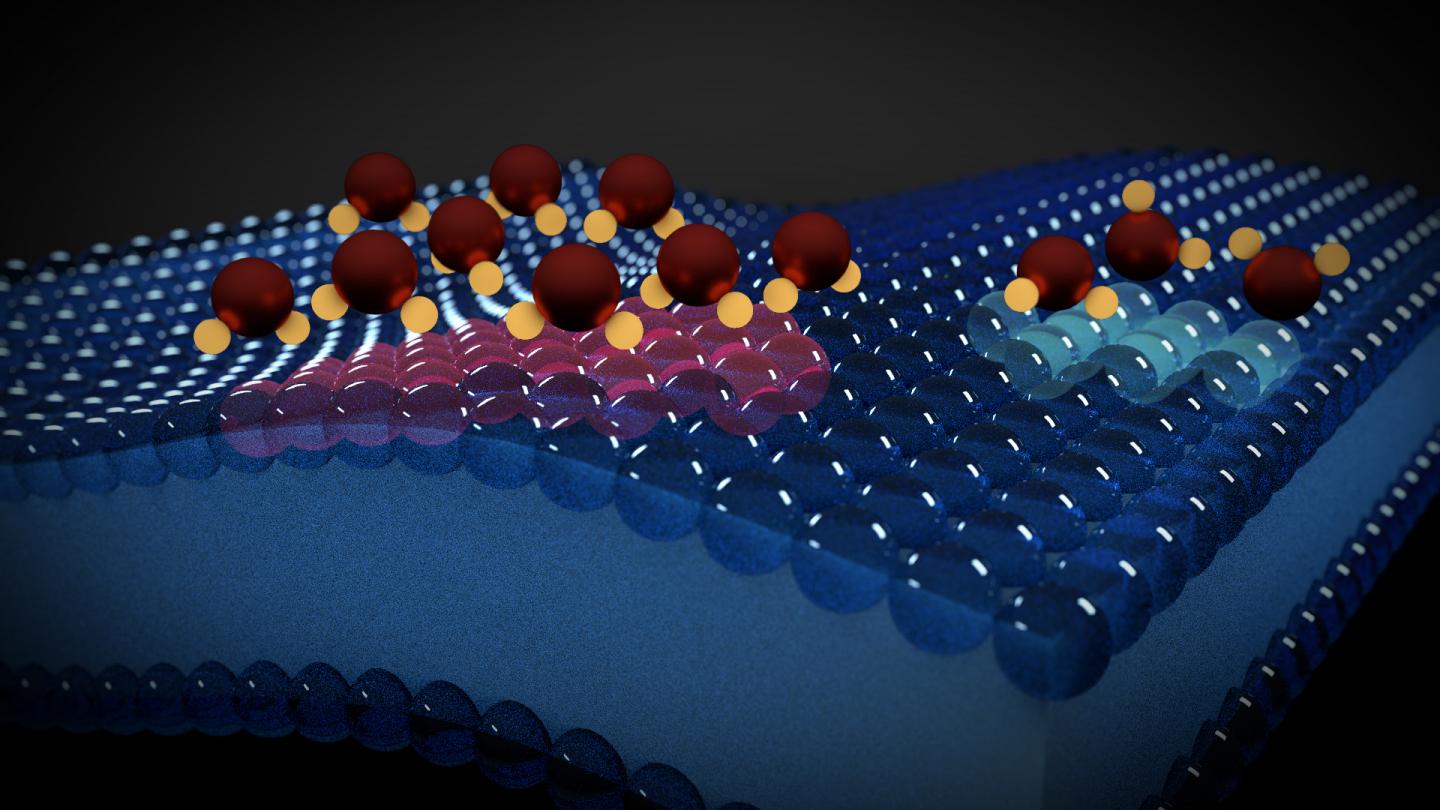
IMAGE

Credit: Jamani Caillet/EPFL

Every human cell is encased in a five-nanometer-thick lipid membrane that protects it from the surrounding environment. Like a gatekeeper, the membrane determines which ions and molecules can pass through. In so doing, it ensures the cell's well-being and stability and allows it to communicate via electrical signals.

Researchers from the Laboratory for fundamental BioPhotonics (LBP) in EPFL's School of Engineering were able to track these moving charges in real time in a completely non-invasive manner. Rather than observing the membranes themselves, they looked at the surrounding water molecules, which, in addition to keeping the membrane intact, change orientation in the presence of electrical charges. So by 'reading' their position, the researchers were able to create a dynamic map of how charges are transported across a membrane.

The researchers' method has just been published in the journal Proceedings of the National Academy of Sciences (PNAS). It could shed light on how ion channels function, along with other processes at work in membranes. This clinically viable method could potentially also be used to directly track ion activity in neurons, which would deepen researchers' knowledge of how nerve cells work. "Water molecules can be found wherever there are lipid membranes, which need these molecules to exist," says Sylvie Roke, head of the LBP. "But until now, most studies on membranes didn't look at these molecules. We've shown that they contain important information."

The researchers did this by using a unique second-harmonic microscope that was invented at the LBP. The imaging efficiency of this microscope is more than three orders of magnitude greater than that of existing second-harmonic microscopes. With this microscope, the researchers obtained images of water molecules at a time scale of 100 milliseconds.

To probe the lipid membranes' hydration, the researchers combine two lasers of the same frequency (femtosecond pulses) in a process that generates photons with a different frequency: this is known as second-harmonic light. It is generated only at interfaces and reveals information on the orientation of water molecules. "We can observe what's happening in situ, and we don't need to modify the environment or use bulky markers like fluorophores that would disturb water molecules' movement" says Orly Tarun, the publication's lead author.

Unexpected charge fluctuations are observed

With this method, the researchers observed charge fluctuations in membranes. Such fluctuations were previously unknown and hint at much more complex chemical and physical behavior than is currently considered.

###

Reference: O. Tarun, C. Hannesschläger, P. Pohl, and S. Roke, A label-free and charge-sensitive dynamic imaging of lipid membrane hydration on millisecond time scales, PNAS

Laboratory of fundamental BioPhotonics (LBP) – Julia Jacobi Chair of Photomedicine

Media Contact

Sylvie Roke
[email protected]
41-216-931-191
@EPFL_en

http://www.epfl.ch/index.en.html

Share16Tweet8Share2ShareShareShare2

Related Posts

Florida Cane Toad: Complex Spread and Selective Evolution

Florida Cane Toad: Complex Spread and Selective Evolution

February 7, 2026
New Study Uncovers Mechanism Behind Burn Pit Particulate Matter–Induced Lung Inflammation

New Study Uncovers Mechanism Behind Burn Pit Particulate Matter–Induced Lung Inflammation

February 6, 2026

DeepBlastoid: Advancing Automated and Efficient Evaluation of Human Blastoids with Deep Learning

February 6, 2026

Navigating the Gut: The Role of Formic Acid in the Microbiome

February 6, 2026
Please login to join discussion

POPULAR NEWS

  • Robotic Ureteral Reconstruction: A Novel Approach

    Robotic Ureteral Reconstruction: A Novel Approach

    82 shares
    Share 33 Tweet 21
  • Digital Privacy: Health Data Control in Incarceration

    63 shares
    Share 25 Tweet 16
  • Study Reveals Lipid Accumulation in ME/CFS Cells

    57 shares
    Share 23 Tweet 14
  • Breakthrough in RNA Research Accelerates Medical Innovations Timeline

    53 shares
    Share 21 Tweet 13

About

We bring you the latest biotechnology news from best research centers and universities around the world. Check our website.

Follow us

Recent News

Phage-Antibiotic Combo Beats Resistant Peritoneal Infection

Boosting Remote Healthcare: Stepped-Wedge Trial Insights

Barriers and Boosters of Seniors’ Physical Activity in Karachi

Subscribe to Blog via Email

Enter your email address to subscribe to this blog and receive notifications of new posts by email.

Join 73 other subscribers
  • Contact Us

Bioengineer.org © Copyright 2023 All Rights Reserved.

Welcome Back!

Login to your account below

Forgotten Password?

Retrieve your password

Please enter your username or email address to reset your password.

Log In
No Result
View All Result
  • Homepages
    • Home Page 1
    • Home Page 2
  • News
  • National
  • Business
  • Health
  • Lifestyle
  • Science

Bioengineer.org © Copyright 2023 All Rights Reserved.