

• HOME
  • NEWS
  • EXPLORE
    • CAREER
      • Companies
      • Jobs
    • EVENTS
    • iGEM
      • News
      • Team
    • PHOTOS
    • VIDEO
    • WIKI
  • BLOG
  • COMMUNITY
    • FACEBOOK
    • INSTAGRAM
    • TWITTER
Friday, May 15, 2026
BIOENGINEER.ORG
No Result
View All Result
  • Login
  • HOME
  • NEWS
  • EXPLORE
    • CAREER
      • Companies
      • Jobs
        • Lecturer
        • PhD Studentship
        • Postdoc
        • Research Assistant
    • EVENTS
    • iGEM
      • News
      • Team
    • PHOTOS
    • VIDEO
    • WIKI
  • BLOG
  • COMMUNITY
    • FACEBOOK
    • INSTAGRAM
    • TWITTER
  • HOME
  • NEWS
  • EXPLORE
    • CAREER
      • Companies
      • Jobs
        • Lecturer
        • PhD Studentship
        • Postdoc
        • Research Assistant
    • EVENTS
    • iGEM
      • News
      • Team
    • PHOTOS
    • VIDEO
    • WIKI
  • BLOG
  • COMMUNITY
    • FACEBOOK
    • INSTAGRAM
    • TWITTER
No Result
View All Result
Bioengineer.org
No Result
View All Result
Home NEWS Science News Biology

Inherent feminizing effect of germ cells: New insights into sex determination

Bioengineer by Bioengineer
March 30, 2018
in Biology
Reading Time: 2 mins read
0
Share on FacebookShare on TwitterShare on LinkedinShare on RedditShare on Telegram
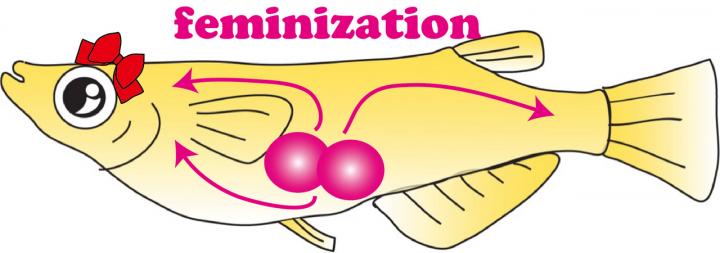
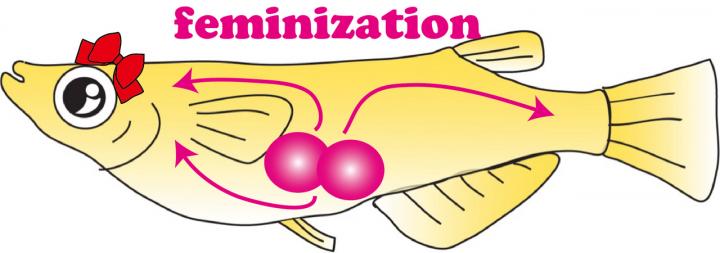
IMAGE

Credit: © Toshiya Nishimura

Nagoya University-led study shows for the first time germ cells have an inherent property to feminize the body in teleost fish, medaka

Nagoya, Japan – The gender of living organisms is determined either by genetic factors and/or by environmental factors. Interestingly, however, a team of researchers led by Nagoya University previously found that the occurrence of more germ cells — biological cells capable of uniting with one from the opposite sex to form a new individual — in female medaka (teleost fish) gonads is essential for female differentiation of gonads. When germ cells are removed in medaka, XX (female) fish show female-to-male sex reversal, while XY (male) fish with excessive germ cells, which is usually associated with egg production, exhibit male-to-female sex reversal.

"This finding implies that, in addition to the most well- known role of germ cells developing into eggs or sperm and produce the next generation, germ cells have a unique and surprising potential to change their surrounding environment," says Toshiya Nishimura, first author of the current study. "However, the molecular basis of, and the stage of gametogenesis critical for, feminization remain unknown."

This question set the researchers to delve deeper into the topic. In their latest study, they generated three different medaka mutants to demonstrate that the feminizing effect of germ cells is not a result of the progression of gametogenesis or a sexual fate decision of germ cells. They found the different stages of germ cells in XX mutants have an ability to feminize the gonads, resulting in the formation of gonads with ovarian structures. In addition to normal ovarian development, the increased number of gonocytes (fetal and neonatal germ cells) is sufficient for male-to-female sex reversal in XY medaka.

What these results mean is that the mechanism underlying the feminizing effect of germ cells is activated before the sexual fate decision of germ cells and meiosis, probably by the time of gonocyte formation in medaka. The study was published in PLOS Genetics.

"Our analyses using medaka collectively also suggest that germ cells acquire the feminizing effect before committing to gametogenesis, while male germ cells undergo a quiescent state before the initiation of spermatogenesis," corresponding author Minoru Tanaka says. "Why do male germ cells need to be quiescent? One possible answer for the biological meaning of the quiescent state of male germ cells may be to prevent the gonad from being feminized until masculinization of somatic cells is established."

###

The article, "Germ cells in the teleost fish medaka have an inherent feminizing effect", was published in PLOS Genetics at DOI: 10.1371/journal.pgen.1007259.

Media Contact

Koomi Sung
[email protected]
@NU__Research

http://www.nagoya-u.ac.jp/en/

Original Source

http://en.nagoya-u.ac.jp/research/activities/news/2018/03/inherent-feminizing-effect-of-germ-cells.html http://dx.doi.org/10.1371/journal.pgen.1007259

Share12Tweet8Share2ShareShareShare2

Related Posts

Supercomputer Simulations Uncover How Bacterial Enzyme Pumps Sodium Ions, Opening Doors to Novel Antibiotics — Biology

Supercomputer Simulations Uncover How Bacterial Enzyme Pumps Sodium Ions, Opening Doors to Novel Antibiotics

May 15, 2026
New Astrobiology Special Collection Highlights Emerging Evidence Supporting Land-Based Origins of Life — Biology

New Astrobiology Special Collection Highlights Emerging Evidence Supporting Land-Based Origins of Life

May 14, 2026

Revolutionizing Textiles: Engineered Protein Fibers Pave the Way for Sustainable, Recyclable Fabrics

May 14, 2026

URI Master’s Student Emilio Pedroza Lopez Awarded Prestigious NSF Graduate Research Fellowship

May 14, 2026
Please login to join discussion

POPULAR NEWS

  • Research Indicates Potential Connection Between Prenatal Medication Exposure and Elevated Autism Risk

    843 shares
    Share 337 Tweet 211
  • New Study Reveals Plants Can Detect the Sound of Rain

    729 shares
    Share 291 Tweet 182
  • Salmonella Haem Blocks Macrophages, Boosts Infection

    62 shares
    Share 25 Tweet 16
  • Breastmilk Balances E. coli and Beneficial Bacteria in Infant Gut Microbiomes

    58 shares
    Share 23 Tweet 15

About

We bring you the latest biotechnology news from best research centers and universities around the world. Check our website.

Follow us

Recent News

Digital Health Fear Patterns in Older Cancer Patients

A*STAR Scientists Unveil Novel Technique to Decipher RNA Structure’s Impact on Health and Disease

Smart Hydrogels Revolutionize Information Security with Photo-Patterning and Multi-Stimuli Responsive Structural Colors

Subscribe to Blog via Email

Enter your email address to subscribe to this blog and receive notifications of new posts by email.

Join 82 other subscribers
  • Contact Us

Bioengineer.org © Copyright 2023 All Rights Reserved.

Welcome Back!

Login to your account below

Forgotten Password?

Retrieve your password

Please enter your username or email address to reset your password.

Log In
No Result
View All Result
  • Homepages
    • Home Page 1
    • Home Page 2
  • News
  • National
  • Business
  • Health
  • Lifestyle
  • Science

Bioengineer.org © Copyright 2023 All Rights Reserved.
