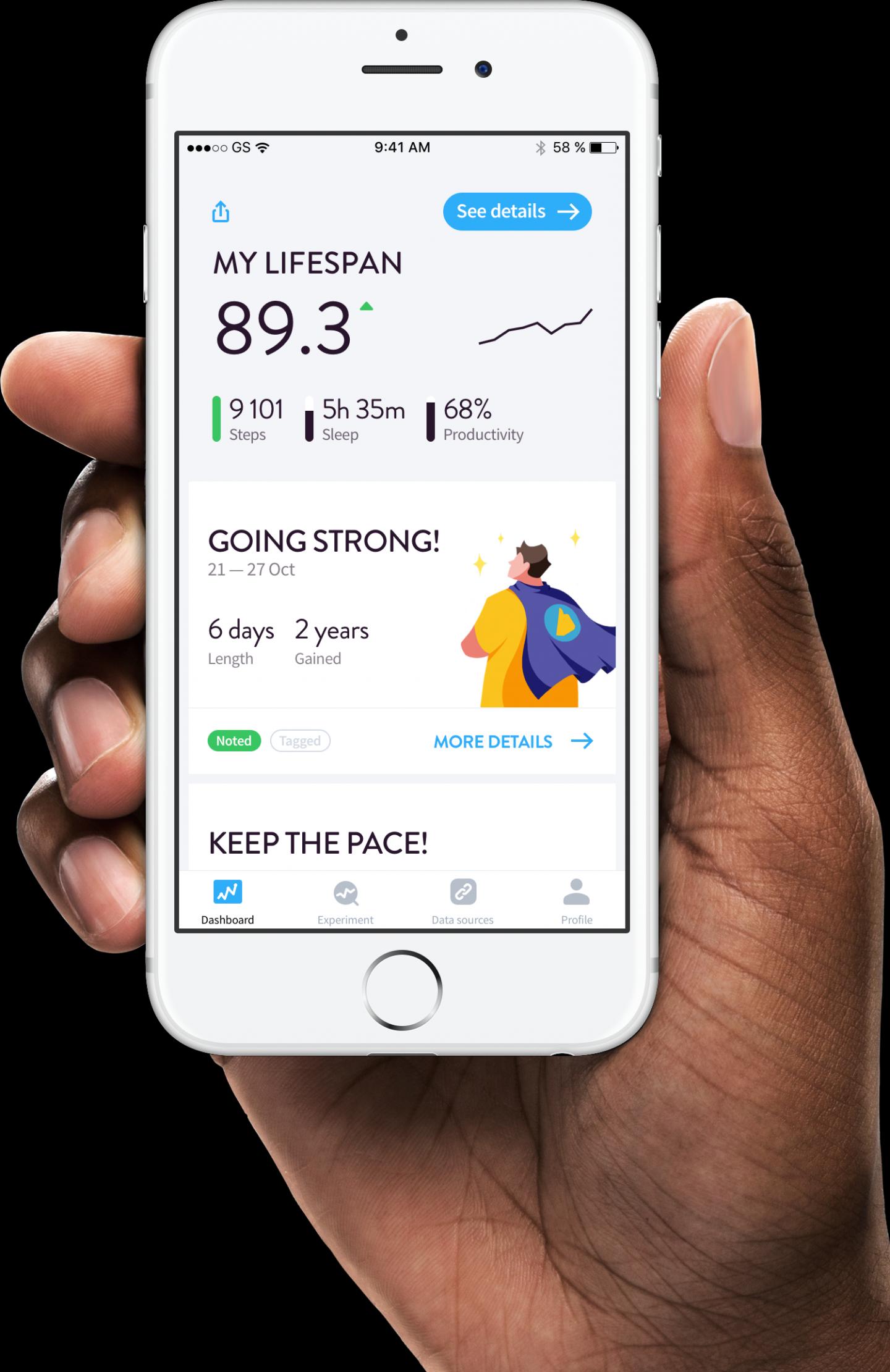
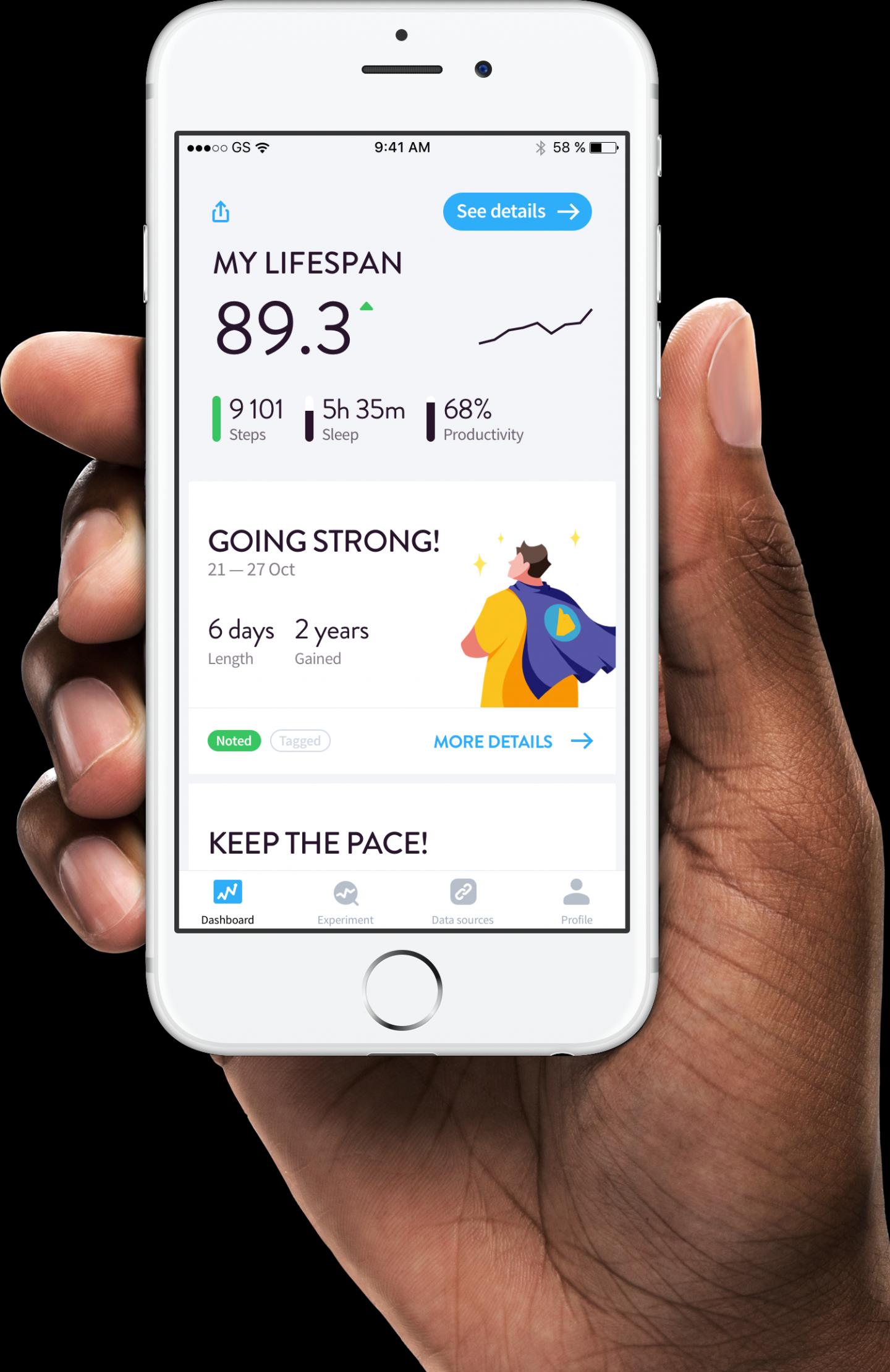
Credit: ©Gero LLC
Moscow, March 29, 2018 – Researchers from the longevity biotech company GERO and Moscow Institute of Physics and Technology (MIPT) have shown that physical activity data acquired from wearables can be used to produce digital biomarkers of aging and frailty. The breakthrough demonstration untaps the emerging potential of combining wearable sensors and AI technologies for continuous health risk monitoring with real-time feedback to life & health insurance, healthcare and wellness providers.
Many physiological parameters demonstrate tight correlations with age. Various biomarkers of age, such as DNA methylation, gene expression or circulating blood factor levels could be used to build accurate «biological clocks» to obtain individual biological age and the rate of aging estimations. Yet large-scale biochemical or genomic profiling is still logistically difficult and expensive for any practical applications beyond academic research.
Recent introduction of affordable wearable sensors enables collection and cloud-storing of personal digitized activity records. This tracking is already done without interfering with the daily routines of hundreds of millions of people all over the world.
Peter Fedichev, Ph.D., GERO Science Director, head of MIPT lab, explains: «Artificial Intelligence is a powerful tool in pattern recognition and has demonstrated outstanding performance in visual object identification, speech recognition, and other fields. Recent promising examples in the field of medicine include neural networks showing cardiologist-level performance in detection of arrhythmia in ECG data, deriving biomarkers of age from clinical blood biochemistry, and predicting mortality based on electronic medical records. Inspired by these examples, we explored AI potential for Health Risks Assessment based on human physical activity».
Researches have analysed physical activity records and clinical data from a large 2003-2006 US National Health and Nutrition Examination Survey (NHANES). They trained neural network to predict biological age and mortality risk of the participants from one week long stream of activity measurements. A state-of-the-art Convolution Neural Network was used to unravel the most biologically relevant motion patterns and establish their relation to general health and recorded lifespan. Novel AI-based algorithm created by GERO scientists has outperformed any previously available models of biological age and mortality risks from the same data.
«Life and health insurance programs have already begun to provide discounts to their users based on physical activity monitored by fitness wristbands. We report that AI can be used to further refine the risks models. Combination of aging theory with the most powerful modern machine learning tools will produce even better health risks models to mitigate longevity risks in insurance, help in pension planning, and contribute to upcoming clinical trials and future deployment of anti-aging therapies» — concludes Peter Fedichev.
Gero Scientific team has already developed a free beta-version of an iPhone application Gero Lifespan estimating user's lifespan with the help of the built-in smartphone accelerometer.
###
The AI for Health Risks Assessment work is a part of GERO effort to produce non-invasive, accurate and affordable digital biomarkers of age and diseases using big data available from large biobanks, such as NHANES and UKBB (see https://www.biorxiv.org/content/early/2017/09/09/186569 for further examples of GERO work).
About Gero
GERO is a longevity biotech company developing therapies and offering risk assessment models for life & health insurance, healthcare and wellness providers.
The scientific effort is led by Dr. Peter Fedichev, managing a diverse scientific group of highly qualified biologists, medical doctors, medicinal chemists and computer science experts.
Gero has been recently listed in Trends in Biotechnology.
Website: gero.com
Facebook: fb.com/geroscience
Media contact: Ksenia Tsvetkova [email protected]
Media Contact
Ksenia Tsvetkova
[email protected]
@getgero
gero.com
Related Journal Article
http://dx.doi.org/10.1038/s41598-018-23534-9