

• HOME
  • NEWS
  • EXPLORE
    • CAREER
      • Companies
      • Jobs
    • EVENTS
    • iGEM
      • News
      • Team
    • PHOTOS
    • VIDEO
    • WIKI
  • BLOG
  • COMMUNITY
    • FACEBOOK
    • INSTAGRAM
    • TWITTER
Saturday, February 7, 2026
BIOENGINEER.ORG
No Result
View All Result
  • Login
  • HOME
  • NEWS
  • EXPLORE
    • CAREER
      • Companies
      • Jobs
        • Lecturer
        • PhD Studentship
        • Postdoc
        • Research Assistant
    • EVENTS
    • iGEM
      • News
      • Team
    • PHOTOS
    • VIDEO
    • WIKI
  • BLOG
  • COMMUNITY
    • FACEBOOK
    • INSTAGRAM
    • TWITTER
  • HOME
  • NEWS
  • EXPLORE
    • CAREER
      • Companies
      • Jobs
        • Lecturer
        • PhD Studentship
        • Postdoc
        • Research Assistant
    • EVENTS
    • iGEM
      • News
      • Team
    • PHOTOS
    • VIDEO
    • WIKI
  • BLOG
  • COMMUNITY
    • FACEBOOK
    • INSTAGRAM
    • TWITTER
No Result
View All Result
Bioengineer.org
No Result
View All Result
Home NEWS Science News Biology

Scientists develop elastic metal rods to treat scoliosis

Bioengineer by Bioengineer
March 23, 2018
in Biology
Reading Time: 2 mins read
0
Share on FacebookShare on TwitterShare on LinkedinShare on RedditShare on Telegram
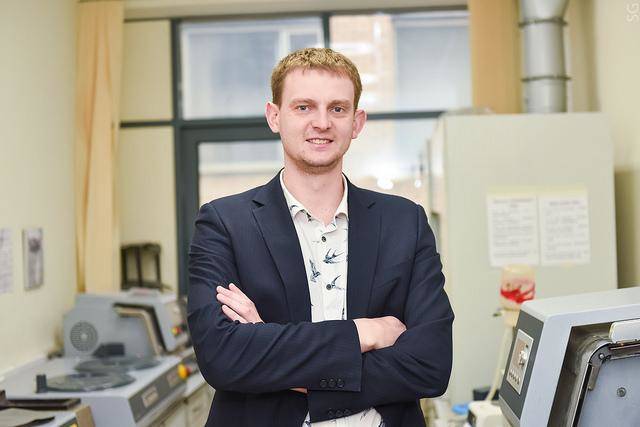
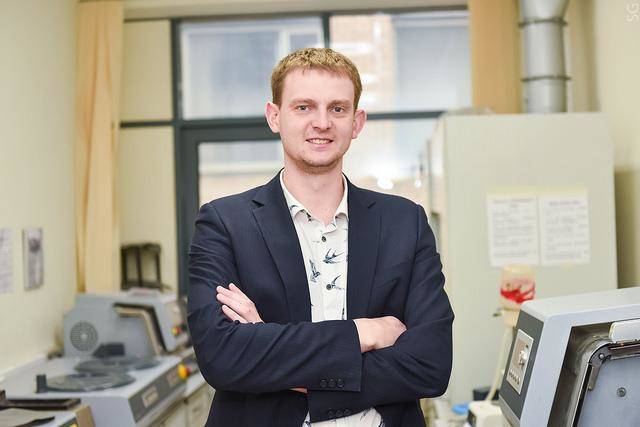
IMAGE

Credit: ©NUST MISIS

NUST MISIS scientists jointly with their colleagues from the Ecole de Technologie Superiore (Montreal, Canada) have experienced a new combination of alloy processing that produces solid and durable implants that are fully compatible with the human body. The research article is published in the Journal of Alloys and Compounds.

The authors sought to develop an industrial technology for the production of metal rod stocks which are used in the production of modern bone implants, and in particular, for treatment of spinal problems.

This new generation of alloys made on the basis of Ti-Zr-Nb (titanium-zirconium-niobium) which possesses a high functional complex and so-called &laquosuperelasticity» (able to restore the original shape against large and repeated deformation) are the working material.

According to scientists, these alloys are the most promising class of metallic biomaterials. This is due to the unique combination of their biochemical and biomechanical properties: Ti-Zr-Nb differs from the complete biocompatibility of composition and high corrosion resistance, while at the same time exhibiting hyperelastic behavior – very similar to &laquonormal» bone behavior.

&laquoOur method of combined thermomechanical processing of alloys – in particular, radial-displacement rolling and rotary forging – allows researchers to get the highest quality blanks for biocompatible implants by controlling their structure and properties. Such processing of blanks gives them an outstanding resistance to fatigue and overall functional stability», said Vadim Sheremetyev, one of research authors, and a senior research associate at NUST MISIS.

According to him, the high-quality rod stocks have already found a potential customer. A large Russian manufacturer of medical products made of titanium is an industrial partner of NUST MISIS`s project. Together with them, scientists are now developing a technology to obtain beams for spinal transpedicular fixation, which should improve the therapy quality in severe cases of scoliosis.

Additionally, scientists are now aimed at developing the thermomechanical processing and optimizing technology modes to obtain materials of the necessary form and sizes with the best complexity of properties.

###

This study was made available online in 12/2017 ahead of peer-review and publication this month.

Media Contact

Lyudmila Dozhdikova
[email protected]
7-495-647-2309

http://en.misis.ru/

Original Source

http://en.misis.ru/university/news/science/2018-03/5281/ http://dx.doi.org/10.1016/j.jallcom.2017.12.119


Share12Tweet8Share2ShareShareShare2

Related Posts

Florida Cane Toad: Complex Spread and Selective Evolution

Florida Cane Toad: Complex Spread and Selective Evolution

February 7, 2026
New Study Uncovers Mechanism Behind Burn Pit Particulate Matter–Induced Lung Inflammation

New Study Uncovers Mechanism Behind Burn Pit Particulate Matter–Induced Lung Inflammation

February 6, 2026

DeepBlastoid: Advancing Automated and Efficient Evaluation of Human Blastoids with Deep Learning

February 6, 2026

Navigating the Gut: The Role of Formic Acid in the Microbiome

February 6, 2026
Please login to join discussion

POPULAR NEWS

  • Robotic Ureteral Reconstruction: A Novel Approach

    Robotic Ureteral Reconstruction: A Novel Approach

    82 shares
    Share 33 Tweet 21
  • Digital Privacy: Health Data Control in Incarceration

    63 shares
    Share 25 Tweet 16
  • Study Reveals Lipid Accumulation in ME/CFS Cells

    57 shares
    Share 23 Tweet 14
  • Breakthrough in RNA Research Accelerates Medical Innovations Timeline

    53 shares
    Share 21 Tweet 13

About

We bring you the latest biotechnology news from best research centers and universities around the world. Check our website.

Follow us

Recent News

Evaluating Pediatric Emergency Care Quality in Ethiopia

TPMT Expression Predictions Linked to Azathioprine Side Effects

Improving Dementia Care with Enhanced Activity Kits

Subscribe to Blog via Email

Success! An email was just sent to confirm your subscription. Please find the email now and click 'Confirm' to start subscribing.

Join 73 other subscribers
  • Contact Us

Bioengineer.org © Copyright 2023 All Rights Reserved.

Welcome Back!

Login to your account below

Forgotten Password?

Retrieve your password

Please enter your username or email address to reset your password.

Log In
No Result
View All Result
  • Homepages
    • Home Page 1
    • Home Page 2
  • News
  • National
  • Business
  • Health
  • Lifestyle
  • Science

Bioengineer.org © Copyright 2023 All Rights Reserved.