Credit: Graziano Tortelli
Mating between domesticated dogs and wild wolves over hundreds of years has left a genetic mark on the wolf gene pool, new research has shown.
The international study showed that around 60 per cent of Eurasian grey wolf genomes carried small blocks of the DNA of domestic dogs, suggesting that wolves cross-bred with dogs in past generations.
The results suggest that wolf-dog hybridisation has been geographically widespread in Europe and Asia and has been occurring for centuries. The phenomenon is seen less frequently in wild wolf populations of North America.
Researchers examined DNA data from grey wolves – the ancestors of the domestic dog — to determine how much their gene pool was diluted with the DNA of domestic canines, and how widespread the process of hybridisation is.
Despite the evidence of hybridisation among Eurasian grey wolves, the wolf populations have remained genetically distinct from dogs, suggesting that such cross-breeding does not diminish distinctiveness of the wolf gene pool if it occurs at low levels.
The results could have important conservation implications for the grey wolf, which is a keystone species — meaning it is vital to the natural balance of the habitat it occupies. The legal status of hybrids is still uncertain and unregulated.
The study was led by researchers from the University of Lincoln, UK, the Italian National Institute for Environmental Protection and Research and the University of California, Los Angeles.
Dr Malgorzata Pilot, from the School of Life Sciences at the University of Lincoln, said: "The fact that wild wolves can cross-breed with dogs is well-documented, but little was previously known about how widespread this phenomenon has been and how it has affected the genetic composition of wild wolf populations.
"We found that while hybridisation has not compromised the genetic distinctiveness of wolf populations, a large number of wild wolves in Eurasia carry a small proportion of gene variants derived from dogs, leading to the ambiguity of how we define genetically 'pure wolves'.
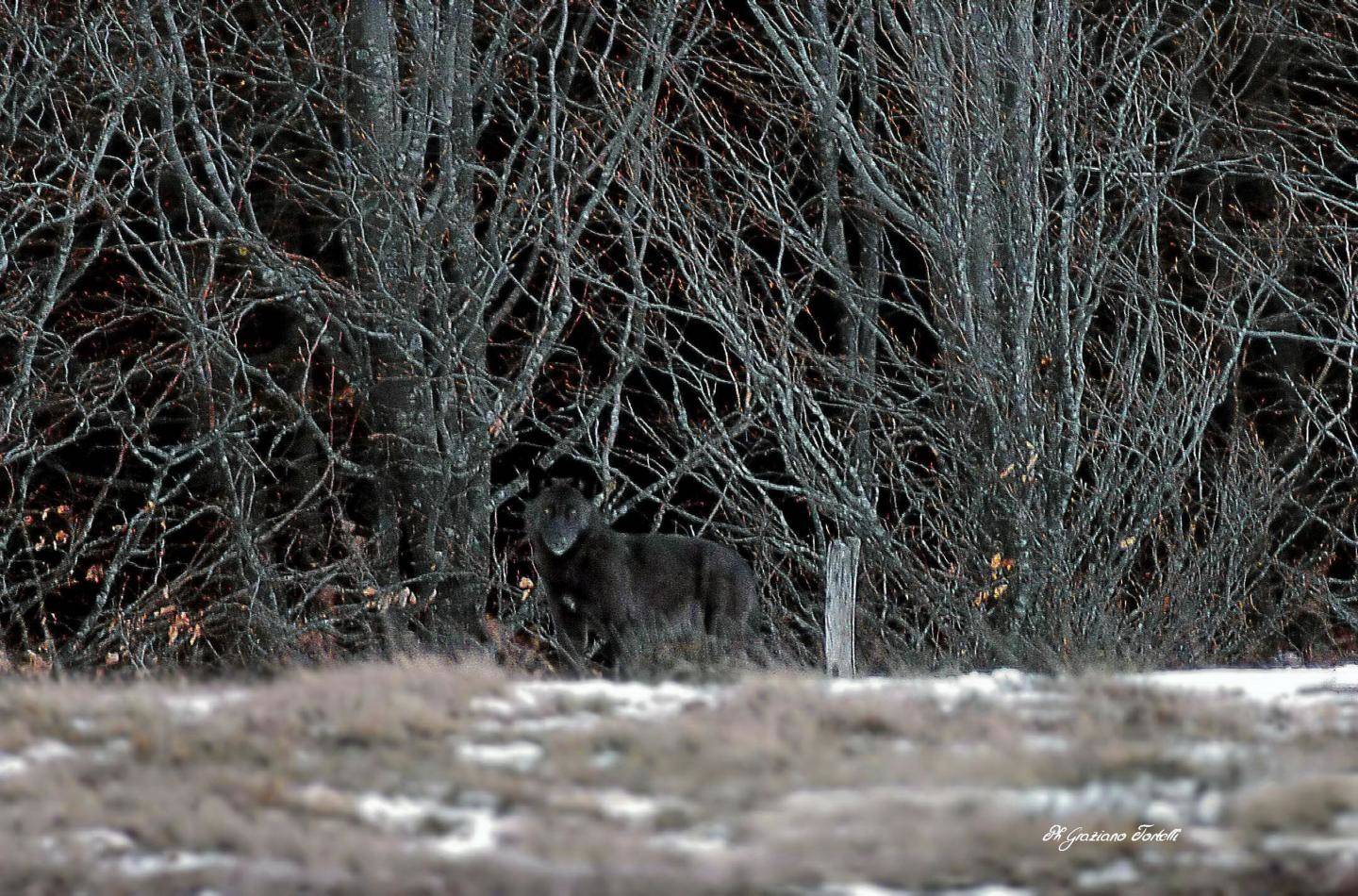
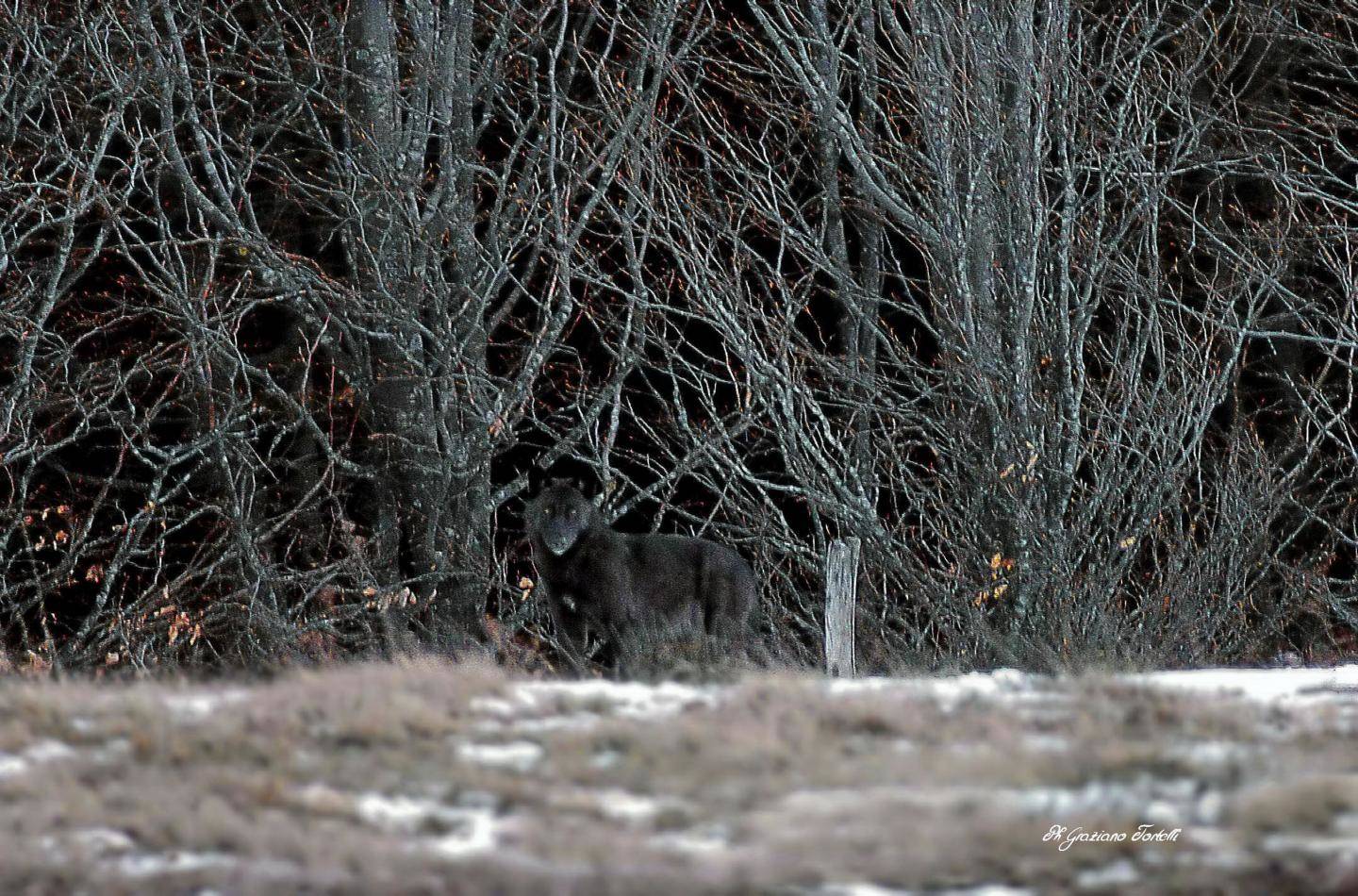
"Our research highlighted that some individual wolves which had been identified as 'pure wolves' according to their physical characteristics were actually shown to be of mixed ancestry. On the other hand, two Italian wolves with an unusual, black coat colour did not show any genetic signatures of hybridisation, except for carrying a dog-derived variant of a gene linked to dark colouration. This suggests that the definition of genetically 'pure' wolves can be ambiguous and identifying admixed individuals can be difficult, implying that management strategies based on removal of suspected hybrids from wolf populations may be inefficient.
"Instead, our study has highlighted a need to reduce the factors which can cause hybridisation, such as abundance of free-ranging dogs, small wolf population sizes, and unregulated hunting."
Studying a specific type of genetic variation in the DNA sequences of wolves and domestic dogs – called Single Nucleotide Polymorphisms (SNPs) – the scientists identified the transfer of dog gene variants into wolf genomes.
A single DNA sequence is formed from a chain of four nucleotide bases and if some individuals in a population do not carry the same nucleotide at a specific position in the sequence, the variation is classified as an SNP.
###
This study was funded by a Leverhulme Trust Research Fellowship, the University of Lincoln, the Polish Committee for Scientific Research, the Italian Ministry of Environment, the US National Science Foundation, the Intramural Program of the National Human Genome Research Institute, and the Italian National Institute for Environmental Protection and Research.
In the US, research collaborators were from Princeton University, the National Human Genome Research Institute based at the National Institutes of Health in Maryland, and UCLA.
The international team also included researchers from the Italian National Institute for Environmental Protection and Research, Aalborg University in Denmark, the Mammal Research Institute, and the Institute of Nature Conservation, both at the Polish Academy of Sciences, as well as the Institute of Zoology at the National Academy of Sciences of Belarus.
The findings have been published in the journal Evolutionary Applications, and the full study can be found here: https://onlinelibrary.wiley.com/doi/full/10.1111/eva.12595.
Media Contact
Sophie Belcher
[email protected]
44-015-228-37650
@unilincoln
http://www.lincoln.ac.uk/home/
Original Source
http://onlinelibrary.wiley.com/doi/full/10.1111/eva.12595 http://dx.doi.org/10.1111/geb.12702