

• HOME
  • NEWS
  • EXPLORE
    • CAREER
      • Companies
      • Jobs
    • EVENTS
    • iGEM
      • News
      • Team
    • PHOTOS
    • VIDEO
    • WIKI
  • BLOG
  • COMMUNITY
    • FACEBOOK
    • INSTAGRAM
    • TWITTER
Saturday, February 7, 2026
BIOENGINEER.ORG
No Result
View All Result
  • Login
  • HOME
  • NEWS
  • EXPLORE
    • CAREER
      • Companies
      • Jobs
        • Lecturer
        • PhD Studentship
        • Postdoc
        • Research Assistant
    • EVENTS
    • iGEM
      • News
      • Team
    • PHOTOS
    • VIDEO
    • WIKI
  • BLOG
  • COMMUNITY
    • FACEBOOK
    • INSTAGRAM
    • TWITTER
  • HOME
  • NEWS
  • EXPLORE
    • CAREER
      • Companies
      • Jobs
        • Lecturer
        • PhD Studentship
        • Postdoc
        • Research Assistant
    • EVENTS
    • iGEM
      • News
      • Team
    • PHOTOS
    • VIDEO
    • WIKI
  • BLOG
  • COMMUNITY
    • FACEBOOK
    • INSTAGRAM
    • TWITTER
No Result
View All Result
Bioengineer.org
No Result
View All Result
Home NEWS Science News Biology

Flight delays: Study finds out why some African birds stay home longer

Bioengineer by Bioengineer
March 21, 2018
in Biology
Reading Time: 2 mins read
0
Share on FacebookShare on TwitterShare on LinkedinShare on RedditShare on Telegram
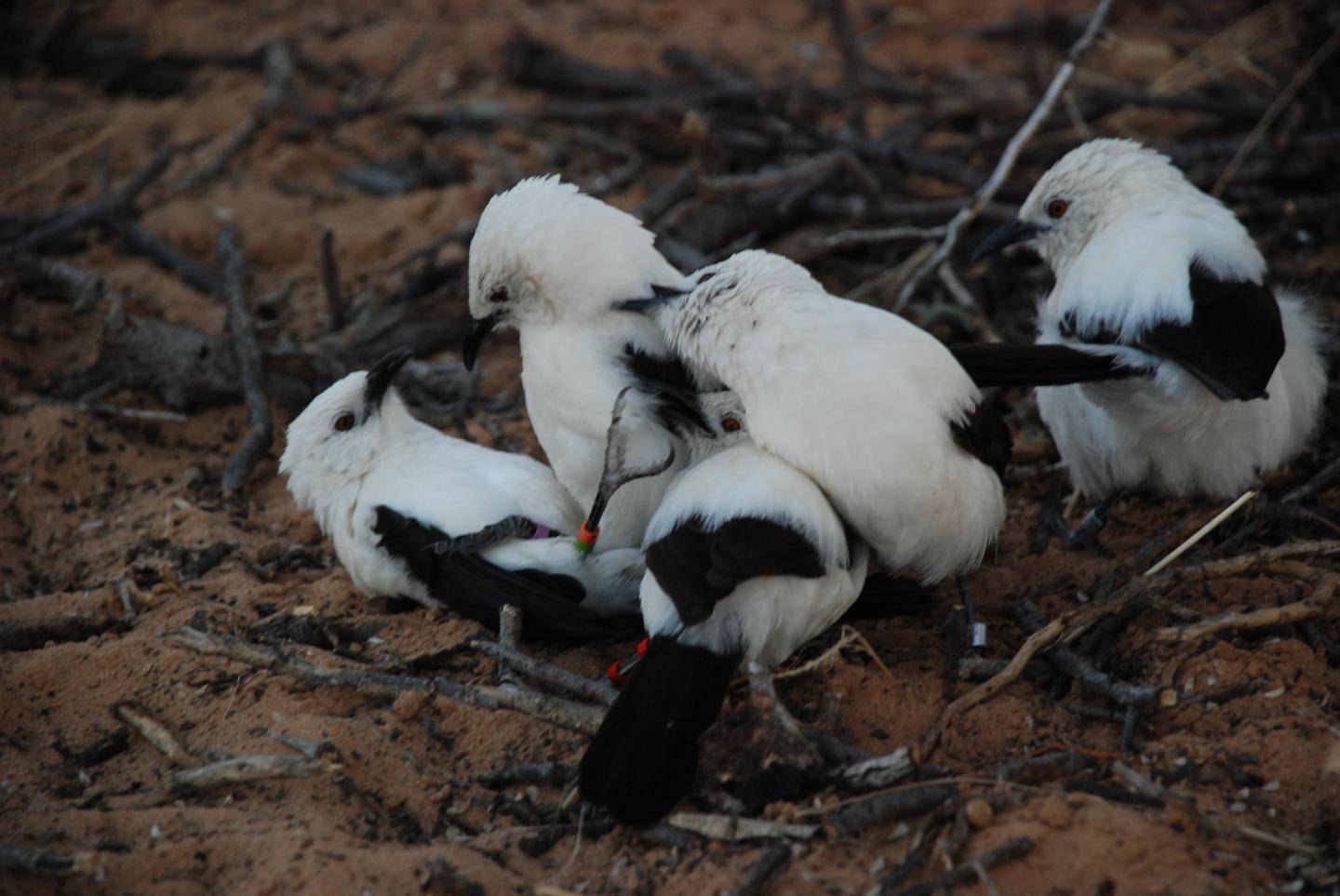
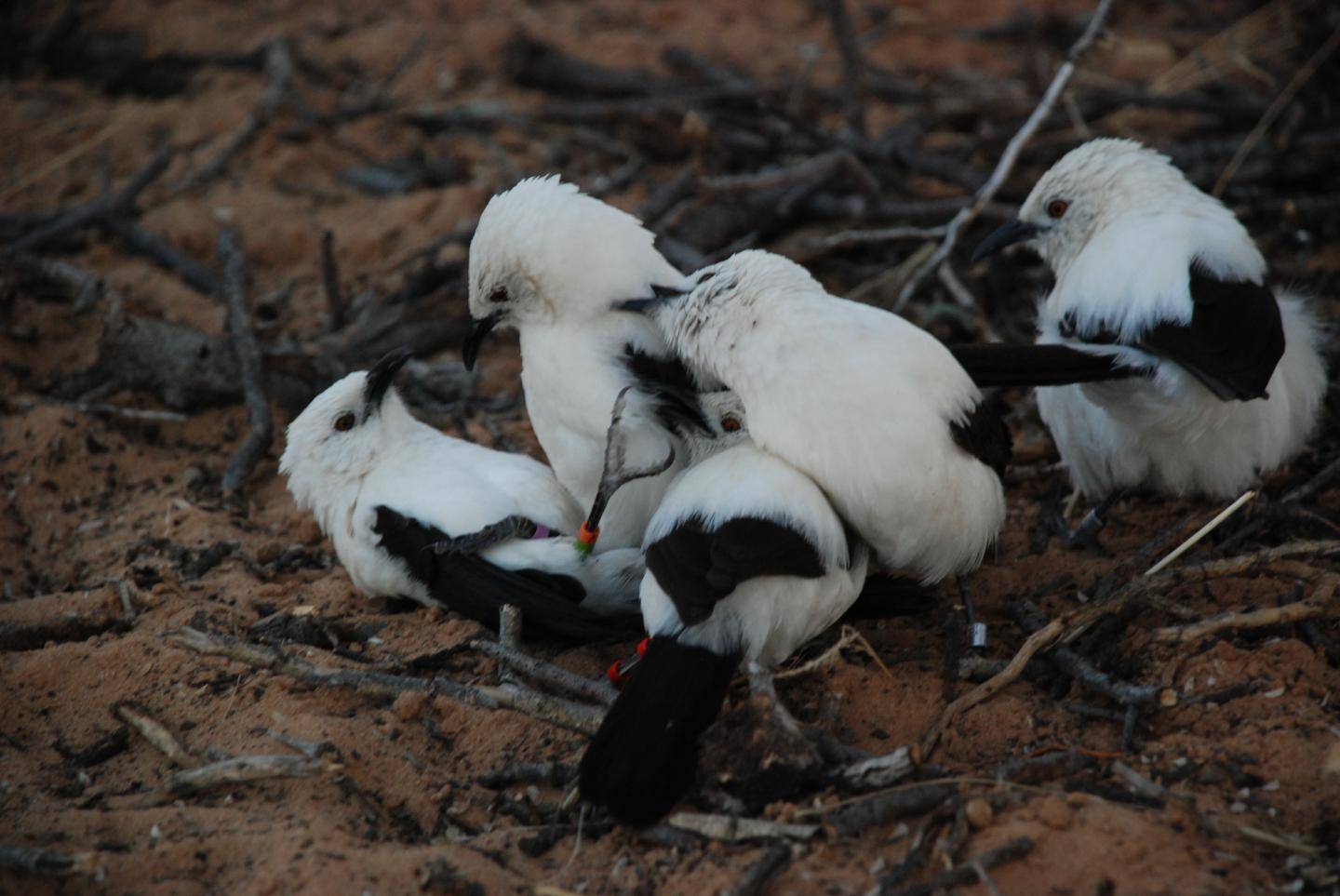
IMAGE

Credit: Tom Flower

Parents of millennials still living at home aren't the only ones with children that refuse to leave. Many animal species have adult offspring that are slow to take flight, but when and how they leave has been poorly understood by scientists. Now, new UBC research on a desert-dwelling African bird is yielding some answers.

Martha Nelson-Flower, a postdoctoral fellow at UBC, studied the behaviour of wild southern pied babblers, which live in family groups of up to 14 in the Kalahari Desert in South Africa. Her findings, published in the Journal of Animal Ecology, suggest that better prospects elsewhere, as well as family dynamics between brothers and stepfathers, play a big part in determining when offspring disperse.

Nelson-Flower used 11 years of data to investigate how the dispersal of male and female babblers was affected by their position in the group social hierarchy, conditions in the environment, and the benefits of staying in their group. She discovered large distinctions between the sexes. Female birds were more independent, but tended to remain at home when in a larger (and therefore safer) group. In contrast, males left only when they had improved chances of leading a group of their own elsewhere.

"Males often leave when there's more rain, which probably means there's more food in the environment," said Nelson-Flower. "They also leave when there are more breeding vacancies for males, and they leave when the distance between groups is small. We think that's because they're more likely to encounter other groups, and they can check to see if there are any breeding vacancies in those groups."

However, a male's position in the group social hierarchy made a big difference to their decision to disperse. Brothers queue for an opportunity to inherit the leadership of their group, or that of a neighbouring group; by leaving early, younger brothers could boost their queue position and improve their prospects. Intriguingly, males with step-fathers also left early, likely because step-fathers prioritize their own, younger sons in the queue.

In contrast, females lower in the pecking order did not leave early, but bided their time, waiting for opportunities to overthrow dominant females in other groups. Nelson-Flower suggests this may be because they sometimes achieve dominance through extreme aggression: "A large, subordinate strong female would go to a group with a dominant female, and attack that female until she left. Sometimes sisters would come in pairs, and they would work together."

###

Media Contact

Sachi Wickramasinghe
[email protected]
604-822-4636
@UBCnews

http://www.ubc.ca

Original Source

http://onlinelibrary.wiley.com/doi/10.1111/1365-2656.12814/full http://dx.doi.org/10.1111/1365-2656.12814


Share13Tweet8Share2ShareShareShare2

Related Posts

New Study Uncovers Mechanism Behind Burn Pit Particulate Matter–Induced Lung Inflammation

New Study Uncovers Mechanism Behind Burn Pit Particulate Matter–Induced Lung Inflammation

February 6, 2026

DeepBlastoid: Advancing Automated and Efficient Evaluation of Human Blastoids with Deep Learning

February 6, 2026

Navigating the Gut: The Role of Formic Acid in the Microbiome

February 6, 2026

AI-Enhanced Optical Coherence Photoacoustic Microscopy Revolutionizes 3D Cancer Model Imaging

February 6, 2026
Please login to join discussion

POPULAR NEWS

  • Robotic Ureteral Reconstruction: A Novel Approach

    Robotic Ureteral Reconstruction: A Novel Approach

    82 shares
    Share 33 Tweet 21
  • Digital Privacy: Health Data Control in Incarceration

    63 shares
    Share 25 Tweet 16
  • Study Reveals Lipid Accumulation in ME/CFS Cells

    57 shares
    Share 23 Tweet 14
  • Breakthrough in RNA Research Accelerates Medical Innovations Timeline

    53 shares
    Share 21 Tweet 13

About

We bring you the latest biotechnology news from best research centers and universities around the world. Check our website.

Follow us

Recent News

Oxygen-Enhanced Dual-Section Microneedle Patch Improves Drug Delivery and Boosts Photodynamic and Anti-Inflammatory Treatment for Psoriasis

Scientists Identify SARS-CoV-2 PLpro and RIPK1 Inhibitors Showing Potent Synergistic Antiviral Effects in Mouse COVID-19 Model

Neg-Entropy: The Key Therapeutic Target for Chronic Diseases

Subscribe to Blog via Email

Enter your email address to subscribe to this blog and receive notifications of new posts by email.

Join 73 other subscribers
  • Contact Us

Bioengineer.org © Copyright 2023 All Rights Reserved.

Welcome Back!

Login to your account below

Forgotten Password?

Retrieve your password

Please enter your username or email address to reset your password.

Log In
No Result
View All Result
  • Homepages
    • Home Page 1
    • Home Page 2
  • News
  • National
  • Business
  • Health
  • Lifestyle
  • Science

Bioengineer.org © Copyright 2023 All Rights Reserved.