Credit: UPV/EHU
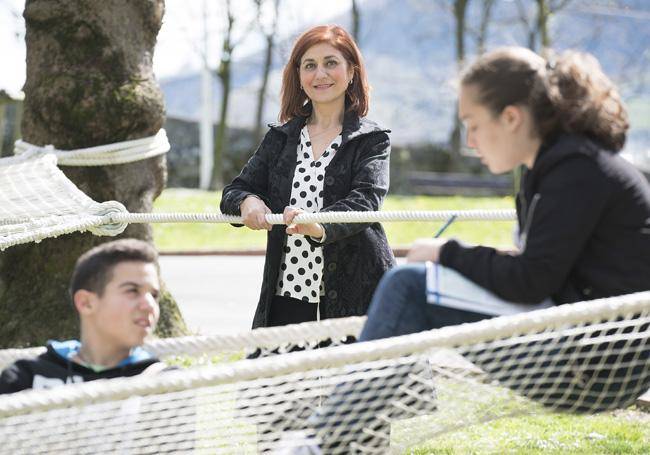
A group of researchers in the Department of Financial Economics II (Company Economics and Marketing) of the UPV/EHU's Faculty of Economics and Business has conducted a study that seeks to identify the factors driving the pro-environmental behaviour of university students; the aim is to be able to increase the effectiveness of university and Government interventions and policies in favour of the environment. "We thought it would be interesting to study the university community because they are the ones who will be leading the future apart from being a reference for other communities," said Azucena Vicente-Molina, the department's head and a co-author of the work.
The pro-environmental behaviour analysed includes daily activities (use of public transport for environmental reasons) and others traditionally related to the domestic sphere (pro-environmental purchasing and recycling). On the basis of a sample of 1,089 students drawn from all the UPV/EHU's centres on the Bizkaia campus (quota samplings), the gender effect was analysed through its influence on a range of variables that seem to determine pro-environmental behaviour. The variables analysed were pro-environmental attitude, motivation (altruist or selfish), the individual's perception regarding the effectiveness of his/her pro-environmental behaviour, and knowledge pertaining to environmental matters, differentiating between objective knowledge (what a person knows about the subject) and subjective knowledge (what a person thinks they know), and the type of course they are on (Sciences, Engineering and Social Sciences).
Educational programmes adapted to the motivations of each gender
The information was analysed bearing in mind firstly the sample as a whole, and secondly, when it was divided into two groups in terms of gender. The overall analysis revealed that "it is the altruist motivations and environmental knowledge believed to be held that are the factors exerting the greatest influence on the pro-environmental behaviour of the students as a whole," said the researcher. Having said that, she warns that "given the fact that the results indicate that the level of objective knowledge of the university community is lower than the level of subjective knowledge, they may well be making incorrect decisions with respect to environmental protection". She went on to add that "this risk is greater in the case of girls because they are more inclined towards developing pro-environmental behaviour, but especially because their actual level of knowledge on these matters is lower than that of the boys".
Yet the comparison of the results divided by gender suggests that the variables as a whole affecting pro-environmental behaviour vary in terms of gender, and that the level of intensity that each factor exerts on this behaviour is also different. "Motivation, subjective knowledge and perceived effectiveness affect both genders, but they have less weight in the boys than in the girls. Yet objective knowledge is a factor that determines the pro-environmental behaviour of the female group but not the male group and yet the factor that exerts the greatest influence on them, i.e. attitude, does not affect the girls," explains Azucena Vicente.
These results have practical implications for future education programmes and will allow the pro-environmental behaviour of the university community "as future decision-makers and references for other communities, which they are, to be better understood", she said. "Yet if such programmes are to be effective, they will need to stress the characteristics and factors that exert the most influence on the pro-environmental behaviour of each gender".
###
Additional information
This study was conducted by the lecturers at the UPV/EHU's Faculty of Economics and Business Azucena Vicente-Molina and Julen Izagirre-Olaizola in the Department of Financial Economics II (Company Economics and Marketing) and Ana Fernández Sainz of the Department of Applied Economics III (Econometrics and Statistics).
Bibliographical reference
M.A. Vicente-Molina, A. Fernández-Sainz, J. 2018. Izagirre-Olaizola. Does gender make a difference in pro-environmental behaviour? The case of the Basque Country University students. Journal of Cleaner Production, vol. 176: 89-98. https://doi.org/10.1016/j.jclepro.2017.12.079
Media Contact
Matxalen Sotillo
[email protected]
34-688-673-770
@upvehu
http://www.ehu.es
Original Source
https://www.ehu.eus/en/-/ingurumen-programek-aintzat-hartu-beharko-lukete-zerk-motibatzen-duen-genero-bakoitza http://dx.doi.org/10.1016/j.jclepro.2017.12.079