• HOME
  • NEWS
  • EXPLORE
    • CAREER
      • Companies
      • Jobs
    • EVENTS
    • iGEM
      • News
      • Team
    • PHOTOS
    • VIDEO
    • WIKI
  • BLOG
  • COMMUNITY
    • FACEBOOK
    • INSTAGRAM
    • TWITTER
Saturday, February 7, 2026
BIOENGINEER.ORG
No Result
View All Result
  • Login
  • HOME
  • NEWS
  • EXPLORE
    • CAREER
      • Companies
      • Jobs
        • Lecturer
        • PhD Studentship
        • Postdoc
        • Research Assistant
    • EVENTS
    • iGEM
      • News
      • Team
    • PHOTOS
    • VIDEO
    • WIKI
  • BLOG
  • COMMUNITY
    • FACEBOOK
    • INSTAGRAM
    • TWITTER
  • HOME
  • NEWS
  • EXPLORE
    • CAREER
      • Companies
      • Jobs
        • Lecturer
        • PhD Studentship
        • Postdoc
        • Research Assistant
    • EVENTS
    • iGEM
      • News
      • Team
    • PHOTOS
    • VIDEO
    • WIKI
  • BLOG
  • COMMUNITY
    • FACEBOOK
    • INSTAGRAM
    • TWITTER
No Result
View All Result
Bioengineer.org
No Result
View All Result
Home NEWS Science News Biology

Specific gene region in hypertension revealed

Bioengineer by Bioengineer
March 20, 2018
in Biology
Reading Time: 2 mins read
0
Share on FacebookShare on TwitterShare on LinkedinShare on RedditShare on Telegram
IMAGE

Credit: University of Tsukuba

Tsukuba, Japan – Genes encode proteins and proteins dictate cell function. Therefore, the thousands of genes expressed in a cell determine what that cell can do. Among the multiple elements that are involved in the precise regulation of gene expression are enhancers, which are short region of DNA that can be bound by proteins (activators) to increase the likelihood of transcription of a particular gene.

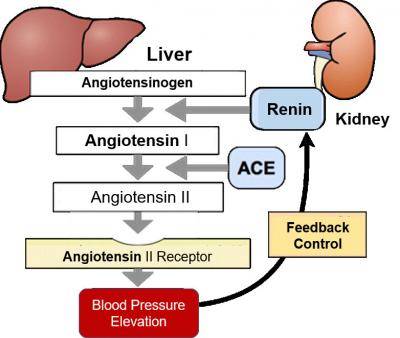
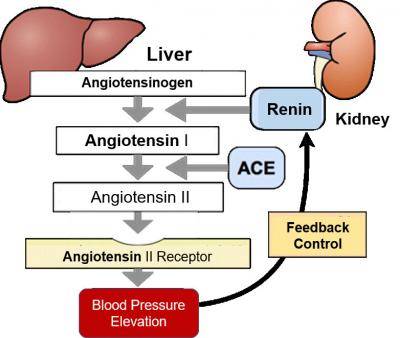
One notable regulatory cascade that involves enhancers is the renin-angiotensin system (RAS) that plays a major role in blood pressure regulation and electrolyte homeostasis. Because increased expression of the protein renin leads to a rise in blood pressure, its transcription must be finely regulated.

While upregulation of the gene renin in the promoter and enhancer elements is relatively well established, the mechanisms controlling its feedback transcriptional suppression are poorly understood. This knowledge gap prompted a team of researchers from the University of Tsukuba to delve deeper into understanding this important regulatory cascade.

"We deleted either 5? or 3? regions of the endogenous mouse renin (mRen) in mice, and placed the animals in a hypertensive environment. While the mRen gene bearing the 3? deletion was appropriately downregulated, the one bearing the 5? deletion (-5E) lost hypertension responsiveness," explains Aki Ushiki, lead author of the study, which was recently reported in Molecular and Cellular Biology. "This means the -5E region is essential for the basal expression of the mRen gene."

Based on their findings, they proposed the -5E element functions as an enhancer under normal conditions and is involved in full activation of mRen gene transcription. Conversely, in the hypertensive state, the enhancer activity somehow becomes attenuated by the hormone angiotensin signaling, which leads to suppression of mRen gene transcription.

"Understanding of this enhancer-mediated transcriptional modulatory mechanism for mRen gene has a broad impact on not only the RAS field but also enhancer biology in general," corresponding author Keiji Tanimoto says. "Also, as the mRen enhancer core sequence is fairly conserved in humans, our findings shed light on the unexplored distal regulatory region of renin genes and provide a novel mechanistic insight into renin gene regulation."

###

Media Contact

Masataka Watanabe
[email protected]
029-853-2039

Related Journal Article

http://dx.doi.org/10.1128/MCB.00566-17

Share12Tweet8Share2ShareShareShare2

Related Posts

Florida Cane Toad: Complex Spread and Selective Evolution

Florida Cane Toad: Complex Spread and Selective Evolution

February 7, 2026
New Study Uncovers Mechanism Behind Burn Pit Particulate Matter–Induced Lung Inflammation

New Study Uncovers Mechanism Behind Burn Pit Particulate Matter–Induced Lung Inflammation

February 6, 2026

DeepBlastoid: Advancing Automated and Efficient Evaluation of Human Blastoids with Deep Learning

February 6, 2026

Navigating the Gut: The Role of Formic Acid in the Microbiome

February 6, 2026
Please login to join discussion

POPULAR NEWS

  • Robotic Ureteral Reconstruction: A Novel Approach

    Robotic Ureteral Reconstruction: A Novel Approach

    82 shares
    Share 33 Tweet 21
  • Digital Privacy: Health Data Control in Incarceration

    63 shares
    Share 25 Tweet 16
  • Study Reveals Lipid Accumulation in ME/CFS Cells

    57 shares
    Share 23 Tweet 14
  • Breakthrough in RNA Research Accelerates Medical Innovations Timeline

    53 shares
    Share 21 Tweet 13

About

We bring you the latest biotechnology news from best research centers and universities around the world. Check our website.

Follow us

Recent News

Decoding Prostate Cancer Origins via snFLARE-seq, mxFRIZNGRND

Digital Health Perspectives from Baltic Sea Experts

Florida Cane Toad: Complex Spread and Selective Evolution

Subscribe to Blog via Email

Enter your email address to subscribe to this blog and receive notifications of new posts by email.

Join 73 other subscribers
  • Contact Us

Bioengineer.org © Copyright 2023 All Rights Reserved.

Welcome Back!

Login to your account below

Forgotten Password?

Retrieve your password

Please enter your username or email address to reset your password.

Log In
No Result
View All Result
  • Homepages
    • Home Page 1
    • Home Page 2
  • News
  • National
  • Business
  • Health
  • Lifestyle
  • Science

Bioengineer.org © Copyright 2023 All Rights Reserved.