

• HOME
  • NEWS
  • EXPLORE
    • CAREER
      • Companies
      • Jobs
    • EVENTS
    • iGEM
      • News
      • Team
    • PHOTOS
    • VIDEO
    • WIKI
  • BLOG
  • COMMUNITY
    • FACEBOOK
    • INSTAGRAM
    • TWITTER
Saturday, February 7, 2026
BIOENGINEER.ORG
No Result
View All Result
  • Login
  • HOME
  • NEWS
  • EXPLORE
    • CAREER
      • Companies
      • Jobs
        • Lecturer
        • PhD Studentship
        • Postdoc
        • Research Assistant
    • EVENTS
    • iGEM
      • News
      • Team
    • PHOTOS
    • VIDEO
    • WIKI
  • BLOG
  • COMMUNITY
    • FACEBOOK
    • INSTAGRAM
    • TWITTER
  • HOME
  • NEWS
  • EXPLORE
    • CAREER
      • Companies
      • Jobs
        • Lecturer
        • PhD Studentship
        • Postdoc
        • Research Assistant
    • EVENTS
    • iGEM
      • News
      • Team
    • PHOTOS
    • VIDEO
    • WIKI
  • BLOG
  • COMMUNITY
    • FACEBOOK
    • INSTAGRAM
    • TWITTER
No Result
View All Result
Bioengineer.org
No Result
View All Result
Home NEWS Science News Health

New research sheds light on underlying cause of brain injury in stroke

Bioengineer by Bioengineer
March 15, 2018
in Health
Reading Time: 3 mins read
0
Share on FacebookShare on TwitterShare on LinkedinShare on RedditShare on Telegram
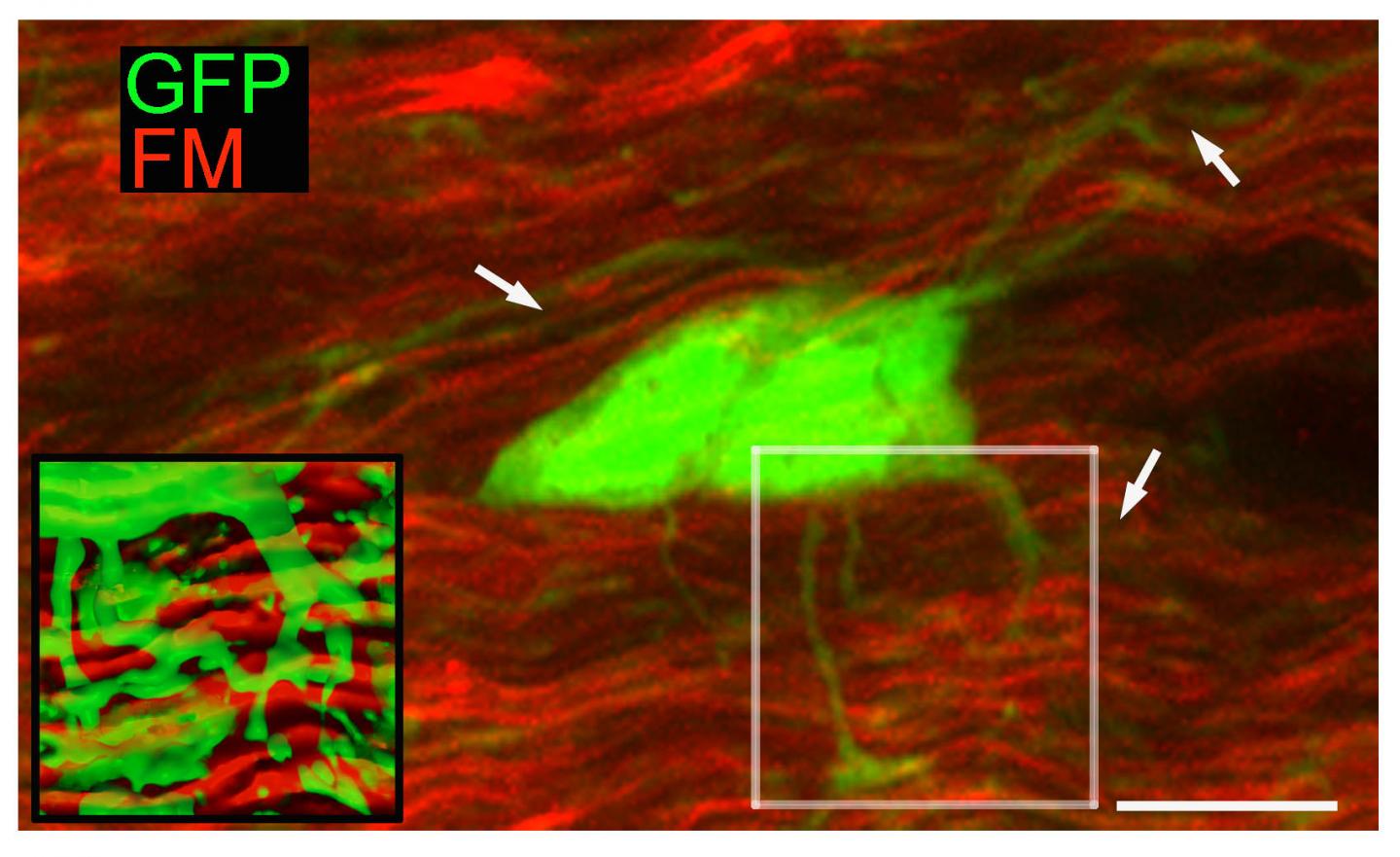
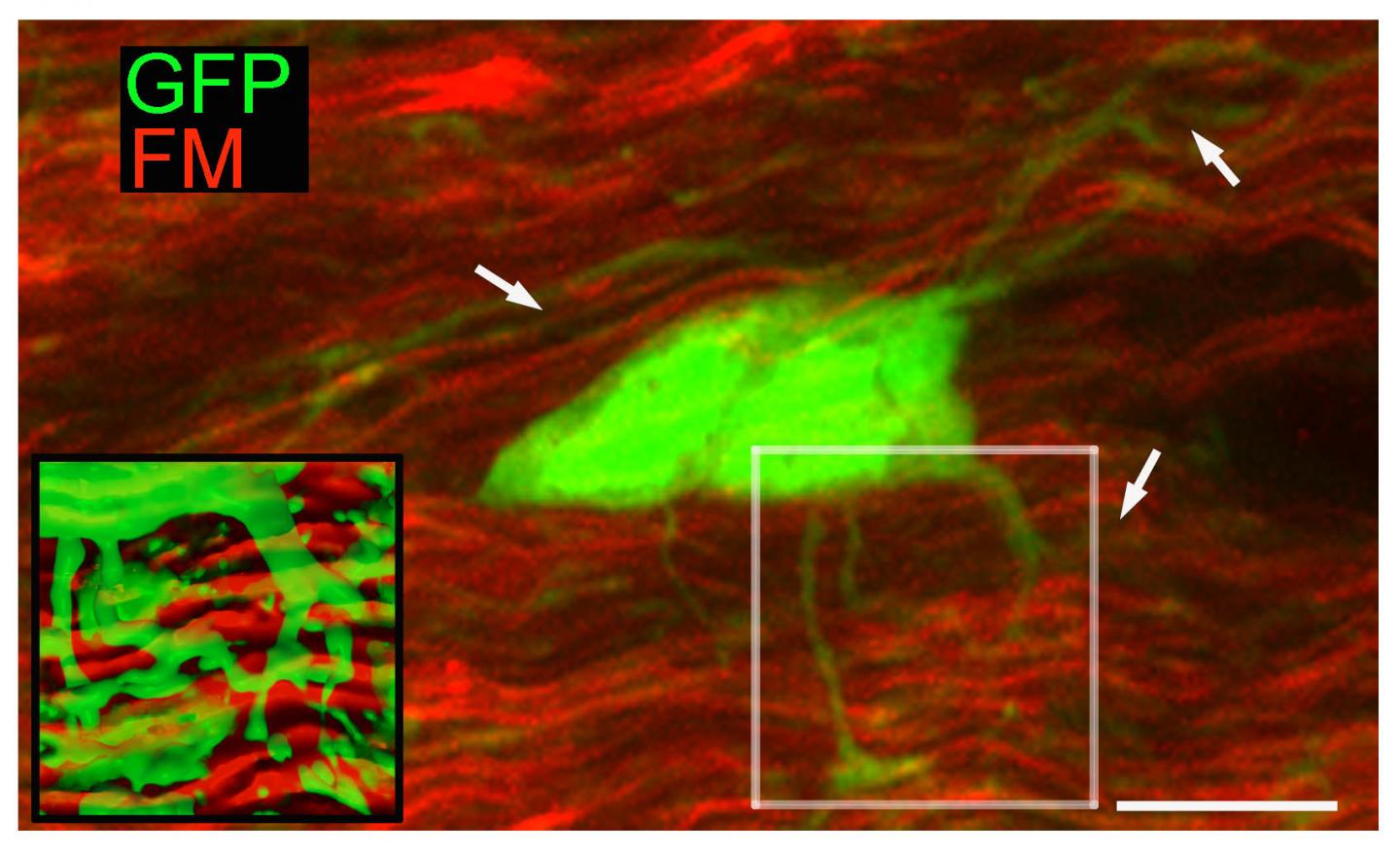
IMAGE

Credit: Professor Robert Fern

New research shows how the novel drug QNZ-46 can help to lessen the effects of excess release of glutamate in the brain – the main cause of brain injury in stroke.

Published in Nature Communications, the study shows how identifying the source of damaging glutamate in stroke leads to discovery of brain protection with QNZ-46, a novel form of preventative treatment with clinical potential.

Existing studies show that restricted blood supply promotes the excess release of glutamate. The glutamate binds to receptors, over-stimulating them and leading to the break-down of myelin – the protective sheath around the nerve fibre (axon).

Previous studies had focused on the brain's grey matter – the area where all of the synapses operate. Now the new study focuses on white matter – the part of the brain the connects all of the grey matter together – and demonstrates that the glutamate release from axons themselves contributes to damaging myelin.

The study, led by Professor Robert Fern at the Plymouth University Peninsula Schools of Medicine and Dentistry (PUPSMD), is the first direct comparison of vesicular fusion within different cellular components in white matter, and it reveals extensive fusion in axons – a mechanism previously thought to be absent from white matter.

The findings support a rational approach toward a low-impact prophylactic therapy, such as QNZ-46, to protect patients at risk of stroke and other forms of excitotoxic injury (injury caused by excess glutamate).

As stroke is the second leading cause of disability and early death in the UK, Professor Fern, part of the University's Institute of Translational and Stratified Medicine, explains the significance of the findings.

"Strokes are known to be caused by loss of blood to the brain, and there has been no way to treat the condition," he said.

"As much as rehabilitation can be effective, there's nothing you can do to heal the damage. This is why it has been necessary to look at how the problem is caused in the first place.

"Myelin damage results in severe functional deficit in the white matter of the brain, for example in ischemic – caused by lack of blood supply – stroke. By identifying how this happens, we have been able to show how QNZ-46 can be used to prevent the damage.

"There need to be further studies to fully understand how these findings can translate going forward, but to see that there are no negative side effects at this stage is a promising sign. By continuing further studies, we can come up with even better forms of the drug to help in stroke treatment."

###

Collaborating with Professor Fern on the study were Sean Doyle, Daniel Bloch Hansen, Peter Bond, Glenn Harper from PUPSMD, and Jasmine Vella, Christian Zammit and Mario Valentino from the University of Malta.

The full study, entitled Vesicular glutamate release from central axons contributes to myelin damage (doi: 10.1038/s41467-018-03427-1) was funded by the University of Plymouth and the Biotechnology and Biological Sciences Research Council, and is available to view in Nature Communications.

Media Contact

Amy McSweeny
[email protected]
01-752-588-018
@PlymUni

http://www.plymouth.ac.uk

Related Journal Article

http://dx.doi.org/10.1038/s41467-018-03427-1

Share12Tweet8Share2ShareShareShare2

Related Posts

Neg-Entropy: The Key Therapeutic Target for Chronic Diseases

February 7, 2026

Multidisciplinary Evidence-Based Guidelines for Therapeutic Drug Monitoring of Biologics in Inflammatory Bowel Disease

February 7, 2026

Early Tuberculosis Treatment Lowers Sepsis Mortality in People with HIV

February 7, 2026

Structure-Guided Development of Picomolar Macrocyclic Inhibitors Targeting TRPC5 Channels with Antidepressant Effects

February 7, 2026
Please login to join discussion

POPULAR NEWS

  • Robotic Ureteral Reconstruction: A Novel Approach

    Robotic Ureteral Reconstruction: A Novel Approach

    82 shares
    Share 33 Tweet 21
  • Digital Privacy: Health Data Control in Incarceration

    63 shares
    Share 25 Tweet 16
  • Study Reveals Lipid Accumulation in ME/CFS Cells

    57 shares
    Share 23 Tweet 14
  • Breakthrough in RNA Research Accelerates Medical Innovations Timeline

    53 shares
    Share 21 Tweet 13

About

We bring you the latest biotechnology news from best research centers and universities around the world. Check our website.

Follow us

Recent News

Neg-Entropy: The Key Therapeutic Target for Chronic Diseases

Multidisciplinary Evidence-Based Guidelines for Therapeutic Drug Monitoring of Biologics in Inflammatory Bowel Disease

Early Tuberculosis Treatment Lowers Sepsis Mortality in People with HIV

Subscribe to Blog via Email

Enter your email address to subscribe to this blog and receive notifications of new posts by email.

Join 73 other subscribers
  • Contact Us

Bioengineer.org © Copyright 2023 All Rights Reserved.

Welcome Back!

Login to your account below

Forgotten Password?

Retrieve your password

Please enter your username or email address to reset your password.

Log In
No Result
View All Result
  • Homepages
    • Home Page 1
    • Home Page 2
  • News
  • National
  • Business
  • Health
  • Lifestyle
  • Science

Bioengineer.org © Copyright 2023 All Rights Reserved.

