Credit: University of Houston
HOUSTON, March 14, 2018 – Two University of Houston scientists are reporting that defects in a portion of the brain's hippocampus, called the dentate gyrus, is regulated by the nuclear receptor LXRβ (Liver X receptor Beta). The dentate gyrus, or DG, is responsible for emotion and memory and is known to be involved in autism spectrum disorders (ASD).
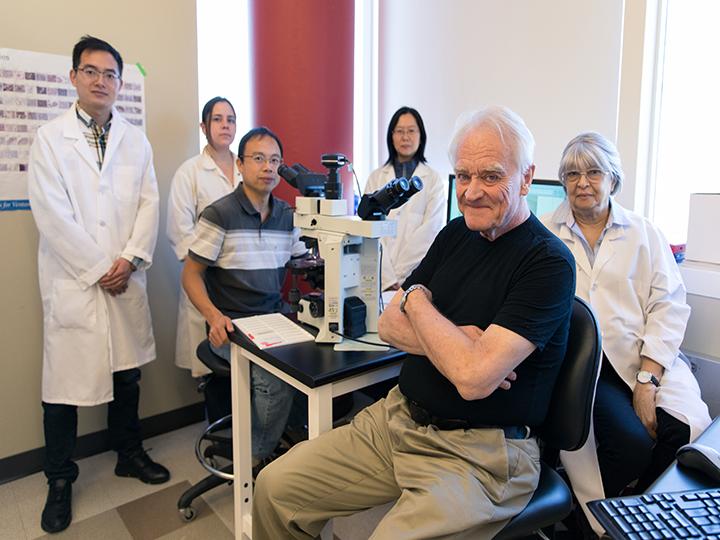
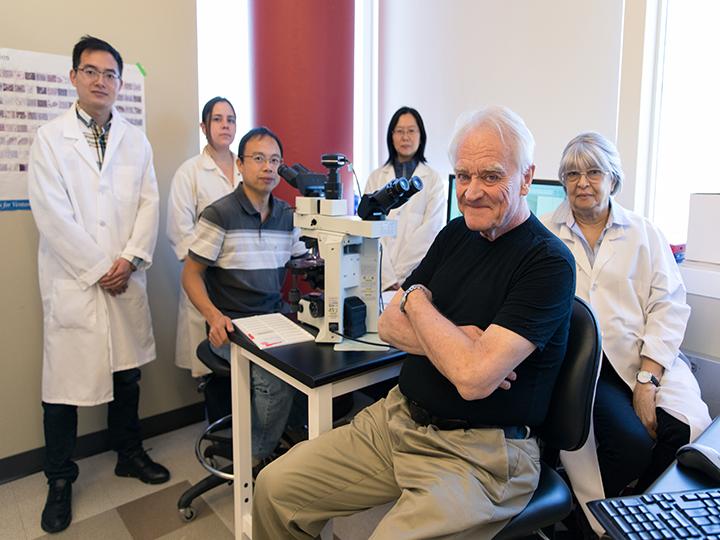
Margaret Warner, professor of biology and biochemistry, and Jan-Åke Gustafsson, professor of biology, biochemistry and founding director of the UH Center of Nuclear Receptors and Cell Signaling, describe the work in the Proceedings of the National Academy of Sciences.
For four decades they have worked together, making discovery after discovery about the role of nuclear receptors in brain functions, and they show no sign of slowing down.
Tracking down the culprit
Neurogenesis, or the regulation of growth of the dentate gyrus, occurs prenatally and postnatally.
"Our findings suggest early changes in DG neurogenesis ultimately provide an aberrant template upon which to build the circuitry that is involved in normal social function," said Warner.
Their studies propose that defects in the neurogenesis of the DG seem to be involved in the etiology of autism spectrum disorders and their associated behaviors. Specifically, defects in the nuclear receptor LXRβ has emerged as the possible culprit of defects in the DG.
Why this gray matter matters
In the world of physiology (how the organisms in our bodies communicate and keep us alive), nuclear receptors rule the day. They are a class of proteins within cells that control hormones and regulate metabolism. One of these proteins, LXRβ, may be the one that holds the key to the genesis of autism. Warner and Gustafsson established this the only way they could – by taking LXRβ out of the equation.
"Knocking out LXRβ led to autistic behavior and reduced cognitive flexibility," said Warner. "In this paper we share our findings that that deletion of the LXRβ causes hypoplasia or underdevelopment in the DG and autistic-like behaviors, including abnormal social interaction and repetitive behavior."
They went on to report: "The behavioral studies confirmed that ablation of LXRβ caused behavior disorders relevant to major ASD symptoms. Social interaction deficits, as key phenotypic traits of ASD, were evident…"
Gustafsson said the findings are the path forward in autism research.
"The Liver X receptor Beta is important in the dentate gyrus and in autism and more studies on the receptor are going to help us cure or treat autism," he said.
He should know. He's the scientist who discovered LXRβ in 1996.
"Until 1996 we did not know that this receptor even existed and it is so important in brain function," said Warner.
###
On the project, the UH team includes Wanfu Wu, a research assistant professor. They are joined by Yulong Cai, Xiaotong Tang, Xin Li, Ying Wang, Xiaohang Bao, Lian Wang, Dayu Sun, Jinghui Zhao, Yan Xing, Xiaotang Fan and Haiwei Xu from Third Military Medical University in Chongqing, China.
Media Contact
Laurie Fickman
[email protected]
713-743-8454
@UH_News
http://www.uh.edu/news-events
Original Source
http://www.uh.edu/news-events/stories/2018/march-2018/031418-autism-brain-gustaffson-warner.php