• HOME
  • NEWS
  • EXPLORE
    • CAREER
      • Companies
      • Jobs
    • EVENTS
    • iGEM
      • News
      • Team
    • PHOTOS
    • VIDEO
    • WIKI
  • BLOG
  • COMMUNITY
    • FACEBOOK
    • INSTAGRAM
    • TWITTER
Saturday, February 7, 2026
BIOENGINEER.ORG
No Result
View All Result
  • Login
  • HOME
  • NEWS
  • EXPLORE
    • CAREER
      • Companies
      • Jobs
        • Lecturer
        • PhD Studentship
        • Postdoc
        • Research Assistant
    • EVENTS
    • iGEM
      • News
      • Team
    • PHOTOS
    • VIDEO
    • WIKI
  • BLOG
  • COMMUNITY
    • FACEBOOK
    • INSTAGRAM
    • TWITTER
  • HOME
  • NEWS
  • EXPLORE
    • CAREER
      • Companies
      • Jobs
        • Lecturer
        • PhD Studentship
        • Postdoc
        • Research Assistant
    • EVENTS
    • iGEM
      • News
      • Team
    • PHOTOS
    • VIDEO
    • WIKI
  • BLOG
  • COMMUNITY
    • FACEBOOK
    • INSTAGRAM
    • TWITTER
No Result
View All Result
Bioengineer.org
No Result
View All Result
Home NEWS Science News Biology

Predicting an insect community structure based on genomic variation in a tree species

Bioengineer by Bioengineer
March 13, 2018
in Biology
Reading Time: 2 mins read
0
Share on FacebookShare on TwitterShare on LinkedinShare on RedditShare on Telegram
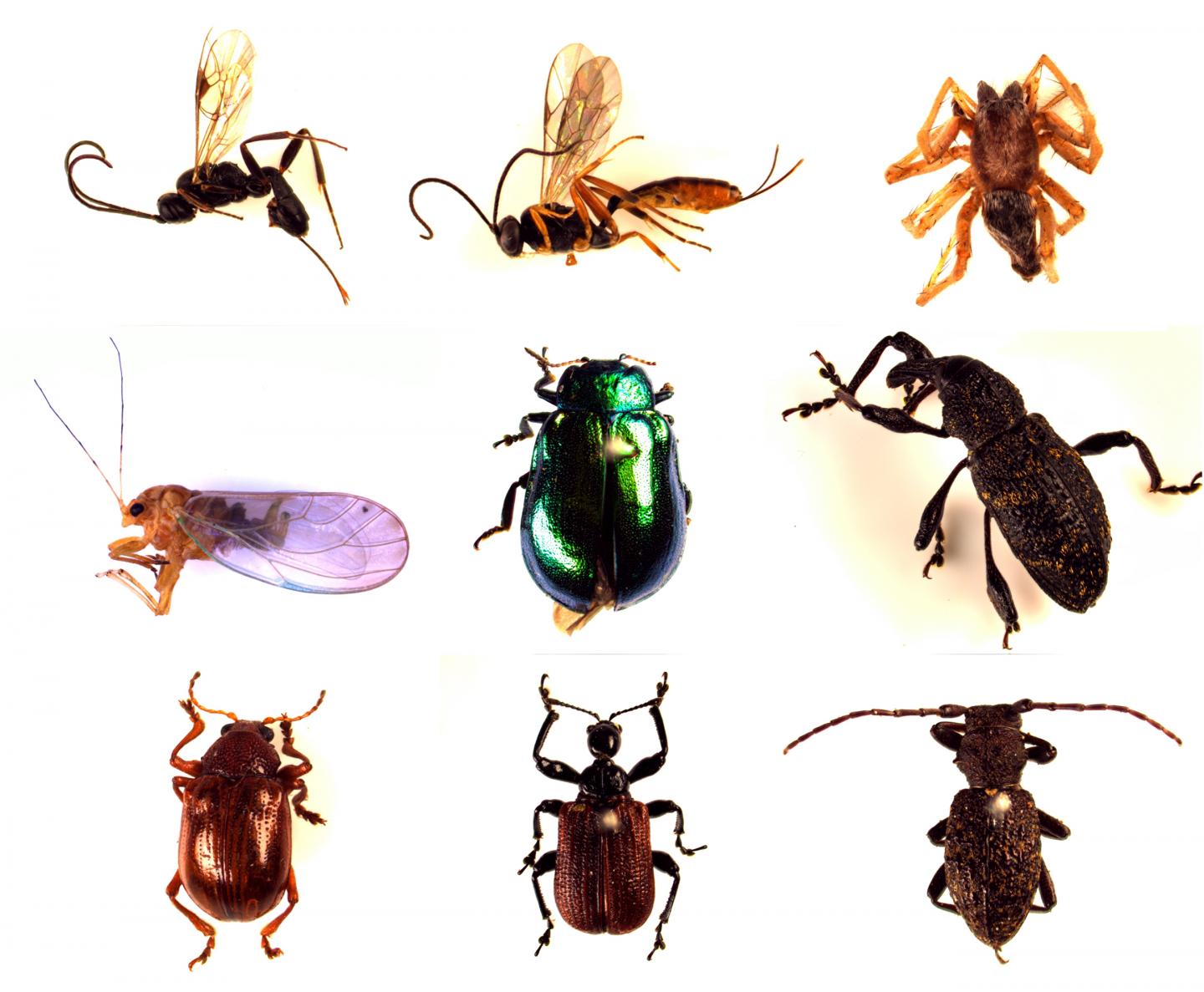
IMAGE

Credit: Shunsuke Utsumi

Generally, spatial and temporal factors affect how communities of organisms are shaped in an ecosystem. Understanding the structure of associated communities is essential for ensuring biodiversity. However, predicting a community structure, or the combination of organisms forming the community, in the natural ecosystem has been difficult because it involves complex factors such as ever-changing meteorological conditions and species interactions.

To address this problem, a research team led by Associate Professor Shunsuke Utsumi and a doctoral student Shinnosuke Kagiya of Hokkaido University studied genomic variation in a foundation tree species to predict an arthropod community.

The researchers examined arthropods on 85 mature alders (Alnus hirsuta) at 12 locations along rivers inside Hokkaido University's 25,000-hectare Uryu Experimental Forest, a continuous mixed forest. They investigated genetic divergence among the alders based on 1,077 single nucleotide polymorphisms obtained from the alders' genome, finding variations in their DNA sequencing. They collected 115 varieties of insects from the alders during the two-year study.

Furthermore, the researchers investigated trees surrounding the alders to take interspecific associations into consideration. They also gathered data about the spatial distance between the trees, river path distances, insect-collection timings, and surrounding vegetation. The data were analyzed, using various statistical models to explain the structure of an insect community.

The team uncovered significant correlations between genetic distance between alders and dissimilarity of arthropod communities living on them. Even after spatial distances between trees and differences in environmental conditions ¬- which are regarded as major factors affecting how an insect community is shaped ¬- are factored in, the correlation between the alder's genetic distance and the insect community structure was solid, remaining consistent for the surveyed two years. Indeed, the genetic distance was the most important predictor to explain the variance of arthropod communities.

Furthermore, year-to-year temporal changes in arthropod communities were more similar between genetically close alder populations.

"Since arthropod communities cause various repercussions on the networks of species interactions in the ecosystem, the genome of an individual tree, which reflects its evolution, is a key to understanding the structure of organism communities on a larger scale. Also, our findings could provide clues for more effective ecosystem preservation plans," says Shunsuke Utsumi.

###

Media Contact

Naoki Namba
[email protected]
81-117-062-185
@hokkaido_uni

https://www.global.hokudai.ac.jp/

Original Source

https://www.global.hokudai.ac.jp/blog/predicting-an-insect-community-structure-based-on-genomic-variation-in-a-tree-species/ http://dx.doi.org/10.1111/mec.14515


Share13Tweet8Share2ShareShareShare2

Related Posts

Florida Cane Toad: Complex Spread and Selective Evolution

Florida Cane Toad: Complex Spread and Selective Evolution

February 7, 2026
New Study Uncovers Mechanism Behind Burn Pit Particulate Matter–Induced Lung Inflammation

New Study Uncovers Mechanism Behind Burn Pit Particulate Matter–Induced Lung Inflammation

February 6, 2026

DeepBlastoid: Advancing Automated and Efficient Evaluation of Human Blastoids with Deep Learning

February 6, 2026

Navigating the Gut: The Role of Formic Acid in the Microbiome

February 6, 2026
Please login to join discussion

POPULAR NEWS

  • Robotic Ureteral Reconstruction: A Novel Approach

    Robotic Ureteral Reconstruction: A Novel Approach

    82 shares
    Share 33 Tweet 21
  • Digital Privacy: Health Data Control in Incarceration

    63 shares
    Share 25 Tweet 16
  • Study Reveals Lipid Accumulation in ME/CFS Cells

    57 shares
    Share 23 Tweet 14
  • Breakthrough in RNA Research Accelerates Medical Innovations Timeline

    53 shares
    Share 21 Tweet 13

About

We bring you the latest biotechnology news from best research centers and universities around the world. Check our website.

Follow us

Recent News

Evaluating Pediatric Emergency Care Quality in Ethiopia

TPMT Expression Predictions Linked to Azathioprine Side Effects

Improving Dementia Care with Enhanced Activity Kits

Subscribe to Blog via Email

Enter your email address to subscribe to this blog and receive notifications of new posts by email.

Join 73 other subscribers
  • Contact Us

Bioengineer.org © Copyright 2023 All Rights Reserved.

Welcome Back!

Login to your account below

Forgotten Password?

Retrieve your password

Please enter your username or email address to reset your password.

Log In
No Result
View All Result
  • Homepages
    • Home Page 1
    • Home Page 2
  • News
  • National
  • Business
  • Health
  • Lifestyle
  • Science

Bioengineer.org © Copyright 2023 All Rights Reserved.