• HOME
  • NEWS
  • EXPLORE
    • CAREER
      • Companies
      • Jobs
    • EVENTS
    • iGEM
      • News
      • Team
    • PHOTOS
    • VIDEO
    • WIKI
  • BLOG
  • COMMUNITY
    • FACEBOOK
    • INSTAGRAM
    • TWITTER
Saturday, February 7, 2026
BIOENGINEER.ORG
No Result
View All Result
  • Login
  • HOME
  • NEWS
  • EXPLORE
    • CAREER
      • Companies
      • Jobs
        • Lecturer
        • PhD Studentship
        • Postdoc
        • Research Assistant
    • EVENTS
    • iGEM
      • News
      • Team
    • PHOTOS
    • VIDEO
    • WIKI
  • BLOG
  • COMMUNITY
    • FACEBOOK
    • INSTAGRAM
    • TWITTER
  • HOME
  • NEWS
  • EXPLORE
    • CAREER
      • Companies
      • Jobs
        • Lecturer
        • PhD Studentship
        • Postdoc
        • Research Assistant
    • EVENTS
    • iGEM
      • News
      • Team
    • PHOTOS
    • VIDEO
    • WIKI
  • BLOG
  • COMMUNITY
    • FACEBOOK
    • INSTAGRAM
    • TWITTER
No Result
View All Result
Bioengineer.org
No Result
View All Result
Home NEWS Science News Health

Russian scientists prove the possibility of creating liposomal form of porphyrazine photosensitizer

Bioengineer by Bioengineer
March 7, 2018
in Health
Reading Time: 2 mins read
0
Share on FacebookShare on TwitterShare on LinkedinShare on RedditShare on Telegram
IMAGE

Credit: Lobachevsky University

A team of Nizhny Novgorod researchers led by Dr. V.A. Vodeneev, head of the Laboratory for Optical Theranostics at the Institute of Biology and Biomedicine of the Lobachevsky University (UNN), is working to develop effective ways to combat cancer.

Currently, much attention is given to photodynamic therapy (PDT) of tumors, a method of treatment based on the accumulation of photosensitive substances (photosensitizers) in the tumor. When these photosensitizers absorb light at a certain wavelength, they can generate toxic agents that kill cancer cells. Researchers' efforts are aimed at developing methods for targeted delivery of drugs to target cells. By solving this problem, it will be possible to minimize the impact on the surrounding normal tissues, reduce systemic effects, and achieve the maximum effectiveness of photodynamic therapy due to the specific accumulation of drugs in the affected tissue.

Preparations for PDT being developed at the UNN Laboratory for Optical Theranostics belong to the porphyrazine class. In 2015, a group of scientists from the London Imperial College (Department of Chemistry, Imperial College London, Exhibition Road, London SW7 2AZ, United Kingdom), together with researchers from the Lobachevsky University and the Institute of Organometallic Chemistry of the RAS (Nizhny Novgorod, Russia) proved the unique possibility of their double use as photosensitizers and viscosity markers in photodynamic therapy. Intracellular viscosity measurement is very important for monitoring the effectiveness of photodynamic therapy. It allows one to evaluate structural changes at the cellular level (since cell death during therapy is accompanied by an increase in intracellular viscosity). These results were published in the Journal of Materials Chemistry [Izquierdo M.A., Vyšniauskas A., Lermontova S.A. et al. (2015). Dual use of porphyrazines as sensitizers and viscosity markers in photodynamic therapy. Journal of Materials Chemistry B 3:1089-1096].

Nizhny Novgorod researchers propose to increase the effectiveness of these photosensitizers by loading them into special lipid capsules – liposomes. Scientists claim that liposomes will ensure effective delivery of the photosensitizer to the affected area due to the structural features of the tumor vasculature. In this case, it will be also possible to reduce systemic toxicity of anti-cancer agents.

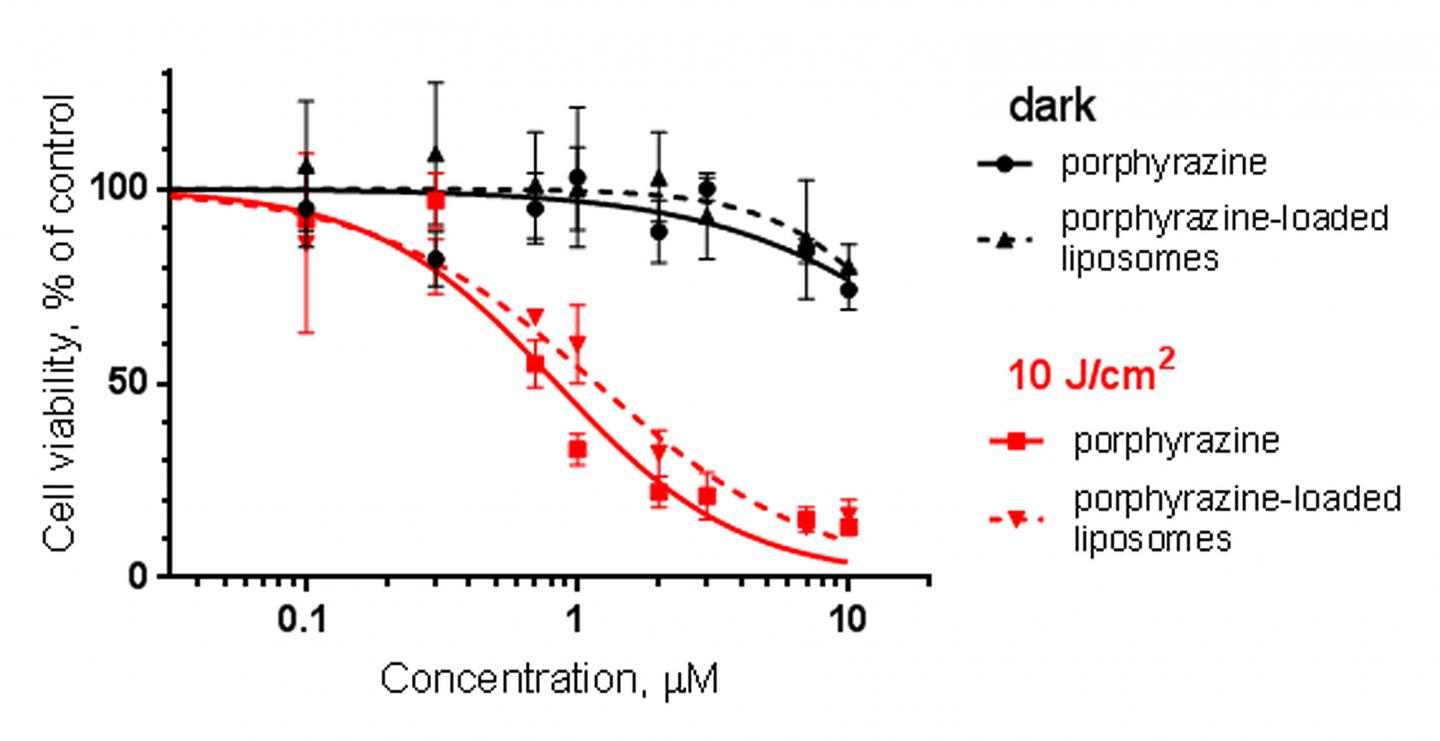
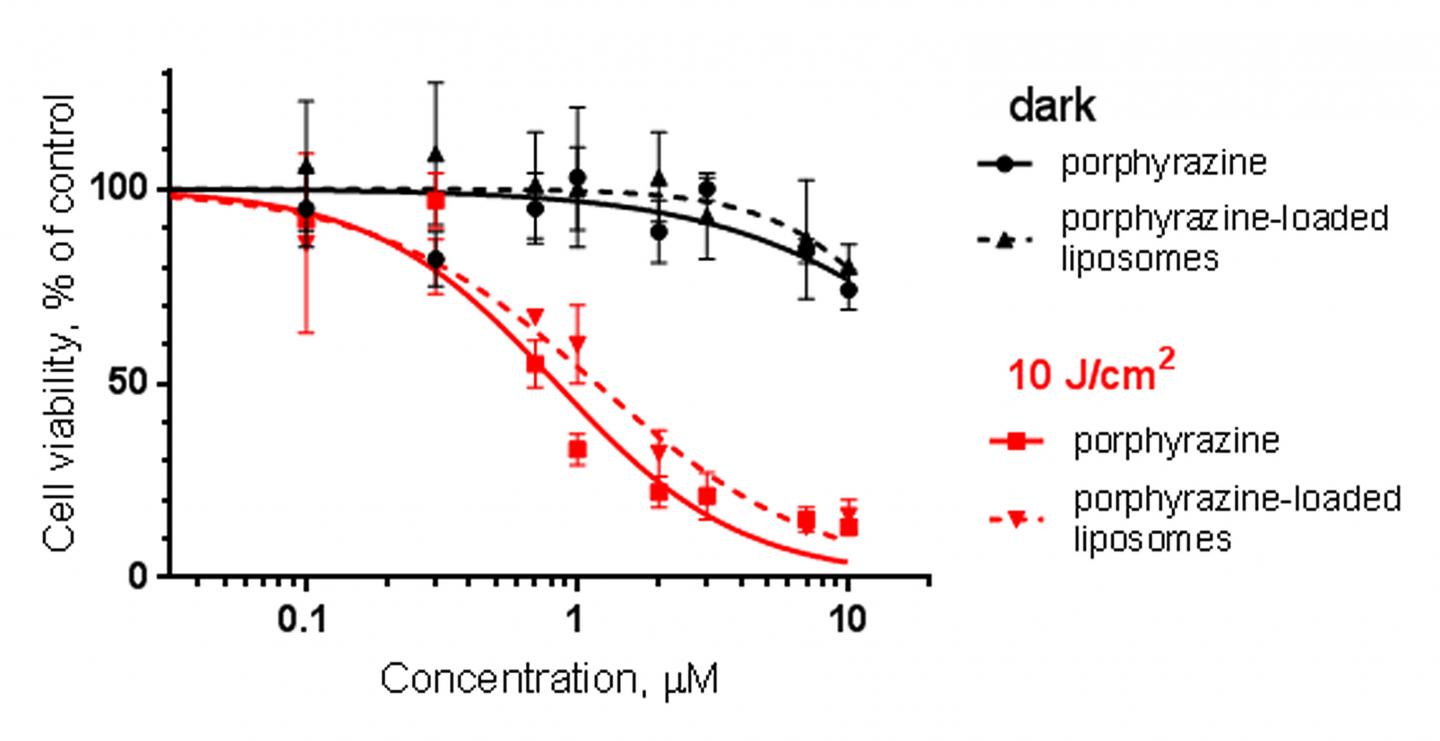
According to Dr. Vodeneev, the studies carried out at the UNN Laboratory for Optical Theranostics show that the porphyrazine photosensitizer can be effectively loaded into liposomes consisting of phosphatidylcholine and its mixtures with cholesterol and phosphatidylglycerol.

"We have achieved a high rate of cellular uptake of the liposomal preparation and a strong photoinduced toxicity. This provides the prerequisites for the further use of the liposomal form of this photosensitizer for photodynamic therapy of tumors", notes Dr. Vodeneev.

###

Media Contact

Nikita Avralev
[email protected]

http://www.unn.ru/eng/

Share12Tweet7Share2ShareShareShare1

Related Posts

Evaluating Pediatric Emergency Care Quality in Ethiopia

February 7, 2026

TPMT Expression Predictions Linked to Azathioprine Side Effects

February 7, 2026

Improving Dementia Care with Enhanced Activity Kits

February 7, 2026

Decoding Prostate Cancer Origins via snFLARE-seq, mxFRIZNGRND

February 7, 2026
Please login to join discussion

POPULAR NEWS

  • Robotic Ureteral Reconstruction: A Novel Approach

    Robotic Ureteral Reconstruction: A Novel Approach

    82 shares
    Share 33 Tweet 21
  • Digital Privacy: Health Data Control in Incarceration

    63 shares
    Share 25 Tweet 16
  • Study Reveals Lipid Accumulation in ME/CFS Cells

    57 shares
    Share 23 Tweet 14
  • Breakthrough in RNA Research Accelerates Medical Innovations Timeline

    53 shares
    Share 21 Tweet 13

About

We bring you the latest biotechnology news from best research centers and universities around the world. Check our website.

Follow us

Recent News

Evaluating Pediatric Emergency Care Quality in Ethiopia

TPMT Expression Predictions Linked to Azathioprine Side Effects

Improving Dementia Care with Enhanced Activity Kits

Subscribe to Blog via Email

Success! An email was just sent to confirm your subscription. Please find the email now and click 'Confirm' to start subscribing.

Join 73 other subscribers
  • Contact Us

Bioengineer.org © Copyright 2023 All Rights Reserved.

Welcome Back!

Login to your account below

Forgotten Password?

Retrieve your password

Please enter your username or email address to reset your password.

Log In
No Result
View All Result
  • Homepages
    • Home Page 1
    • Home Page 2
  • News
  • National
  • Business
  • Health
  • Lifestyle
  • Science

Bioengineer.org © Copyright 2023 All Rights Reserved.