

• HOME
  • NEWS
  • EXPLORE
    • CAREER
      • Companies
      • Jobs
    • EVENTS
    • iGEM
      • News
      • Team
    • PHOTOS
    • VIDEO
    • WIKI
  • BLOG
  • COMMUNITY
    • FACEBOOK
    • INSTAGRAM
    • TWITTER
Saturday, February 7, 2026
BIOENGINEER.ORG
No Result
View All Result
  • Login
  • HOME
  • NEWS
  • EXPLORE
    • CAREER
      • Companies
      • Jobs
        • Lecturer
        • PhD Studentship
        • Postdoc
        • Research Assistant
    • EVENTS
    • iGEM
      • News
      • Team
    • PHOTOS
    • VIDEO
    • WIKI
  • BLOG
  • COMMUNITY
    • FACEBOOK
    • INSTAGRAM
    • TWITTER
  • HOME
  • NEWS
  • EXPLORE
    • CAREER
      • Companies
      • Jobs
        • Lecturer
        • PhD Studentship
        • Postdoc
        • Research Assistant
    • EVENTS
    • iGEM
      • News
      • Team
    • PHOTOS
    • VIDEO
    • WIKI
  • BLOG
  • COMMUNITY
    • FACEBOOK
    • INSTAGRAM
    • TWITTER
No Result
View All Result
Bioengineer.org
No Result
View All Result
Home NEWS Science News Biology

Research brief: Shifting tundra vegetation spells change for arctic animals

Bioengineer by Bioengineer
March 6, 2018
in Biology
Reading Time: 2 mins read
0
Share on FacebookShare on TwitterShare on LinkedinShare on RedditShare on Telegram
IMAGE

Credit: Daniel Ackerman

For nearly two decades, scientists have noted dramatic changes in arctic tundra habitat. Ankle-high grasses and sedges have given way to a sea of woody shrubs growing to waist- or neck-deep heights. This shrubification of the tundra challenges animals like caribou that are adapted to low-stature arctic vegetation.

Pinpointing a cause has been difficult. However, new UMN research published in Environmental Research Letters found that regardless of soil fertility or rainfall amounts, the single variable that was by far the strongest determinant of how much a shrub grew in a given year was the temperature in June. A warmer June means faster shrub growth.

"It was a surprising result," said Daniel Ackerman, a Ph.D. candidate in the Department of Ecology, Evolution and Behavior in the College of Biological Sciences who led the UMN research team that traveled to the tundra in northern Alaska to investigate why the habitat was changing. "Other variables, including temperatures during the rest of the growing season in July and August, barely had an impact on shrub growth."

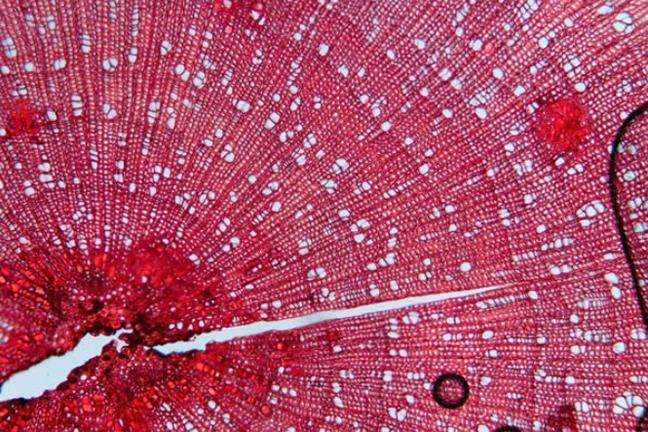
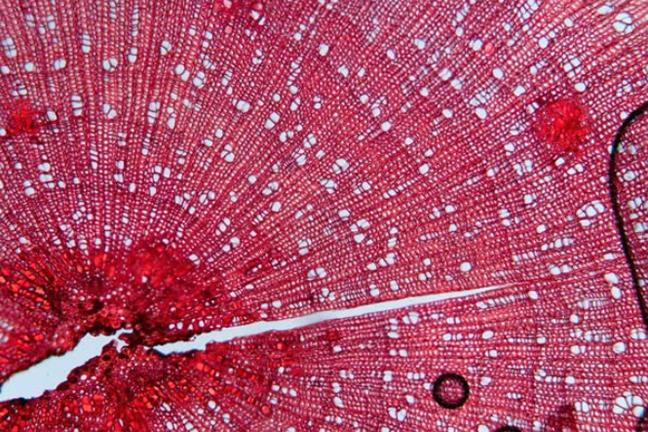
Like trees at lower latitudes, shrubs in the tundra form a concentric ring around their stem each growing season. Ackerman's team used these annual rings to their advantage, collecting hundreds of shrub stems across a range of soil conditions. They measured the size of each annual ring in their samples–no easy task given that these shrubs can contain more than 50 rings in a stem with the diameter of a pencil.

After painstakingly measuring 20,000 individual shrub rings through a microscope, the team created records of historic shrub growth from across northern Alaska. Next, before coming to their findings, the team compared these growth records to climate observations, examining factors like precipitation, temperature, and solar radiation.

"Our new understanding of the link between June temperature and shrub growth means that we can expect shrubification to continue throughout northern Alaska," said Ackerman. "With this study and others like it, we're beginning to understand the causes of shrubification. However, we still have a ways to go in predicting its effects. It seems like larger shrubs will benefit some animals, like moose and ptarmigan, while other animals, like caribou, could be harmed."

###

Funding for this study was provided by the University of Minnesota's Department of Ecology, Evolution, and Behavior; The Bell Museum of Natural History; The Explorers Club; and the National Science Foundation.

Media Contact

Stephanie Xenos
[email protected]
612-624-8723
@UMNews

http://www.umn.edu

Original Source

https://twin-cities.umn.edu/news-events/research-brief-shifting-tundra-vegetation-spells-change-arctic-animals http://dx.doi.org/10.1088/1748-9326/aab326


Share12Tweet8Share2ShareShareShare2

Related Posts

Florida Cane Toad: Complex Spread and Selective Evolution

Florida Cane Toad: Complex Spread and Selective Evolution

February 7, 2026
New Study Uncovers Mechanism Behind Burn Pit Particulate Matter–Induced Lung Inflammation

New Study Uncovers Mechanism Behind Burn Pit Particulate Matter–Induced Lung Inflammation

February 6, 2026

DeepBlastoid: Advancing Automated and Efficient Evaluation of Human Blastoids with Deep Learning

February 6, 2026

Navigating the Gut: The Role of Formic Acid in the Microbiome

February 6, 2026
Please login to join discussion

POPULAR NEWS

  • Robotic Ureteral Reconstruction: A Novel Approach

    Robotic Ureteral Reconstruction: A Novel Approach

    82 shares
    Share 33 Tweet 21
  • Digital Privacy: Health Data Control in Incarceration

    63 shares
    Share 25 Tweet 16
  • Study Reveals Lipid Accumulation in ME/CFS Cells

    57 shares
    Share 23 Tweet 14
  • Breakthrough in RNA Research Accelerates Medical Innovations Timeline

    53 shares
    Share 21 Tweet 13

About

We bring you the latest biotechnology news from best research centers and universities around the world. Check our website.

Follow us

Recent News

Personalized Guide to Understanding and Reducing Chemicals

Inflammasome Protein ASC Drives Pancreatic Cancer Metabolism

Phage-Antibiotic Combo Beats Resistant Peritoneal Infection

Subscribe to Blog via Email

Enter your email address to subscribe to this blog and receive notifications of new posts by email.

Join 73 other subscribers
  • Contact Us

Bioengineer.org © Copyright 2023 All Rights Reserved.

Welcome Back!

Login to your account below

Forgotten Password?

Retrieve your password

Please enter your username or email address to reset your password.

Log In
No Result
View All Result
  • Homepages
    • Home Page 1
    • Home Page 2
  • News
  • National
  • Business
  • Health
  • Lifestyle
  • Science

Bioengineer.org © Copyright 2023 All Rights Reserved.