• HOME
  • NEWS
  • EXPLORE
    • CAREER
      • Companies
      • Jobs
    • EVENTS
    • iGEM
      • News
      • Team
    • PHOTOS
    • VIDEO
    • WIKI
  • BLOG
  • COMMUNITY
    • FACEBOOK
    • INSTAGRAM
    • TWITTER
Thursday, December 18, 2025
BIOENGINEER.ORG
No Result
View All Result
  • Login
  • HOME
  • NEWS
  • EXPLORE
    • CAREER
      • Companies
      • Jobs
        • Lecturer
        • PhD Studentship
        • Postdoc
        • Research Assistant
    • EVENTS
    • iGEM
      • News
      • Team
    • PHOTOS
    • VIDEO
    • WIKI
  • BLOG
  • COMMUNITY
    • FACEBOOK
    • INSTAGRAM
    • TWITTER
  • HOME
  • NEWS
  • EXPLORE
    • CAREER
      • Companies
      • Jobs
        • Lecturer
        • PhD Studentship
        • Postdoc
        • Research Assistant
    • EVENTS
    • iGEM
      • News
      • Team
    • PHOTOS
    • VIDEO
    • WIKI
  • BLOG
  • COMMUNITY
    • FACEBOOK
    • INSTAGRAM
    • TWITTER
No Result
View All Result
Bioengineer.org
No Result
View All Result
Home NEWS Science News Biology

A better way to wash pesticides off apples

Bioengineer by Bioengineer
February 13, 2018
in Biology
Reading Time: 2 mins read
0
Share on FacebookShare on TwitterShare on LinkedinShare on RedditShare on Telegram

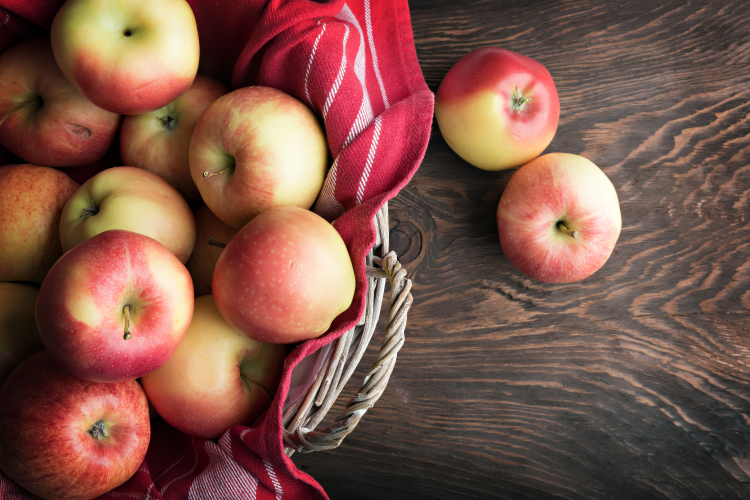
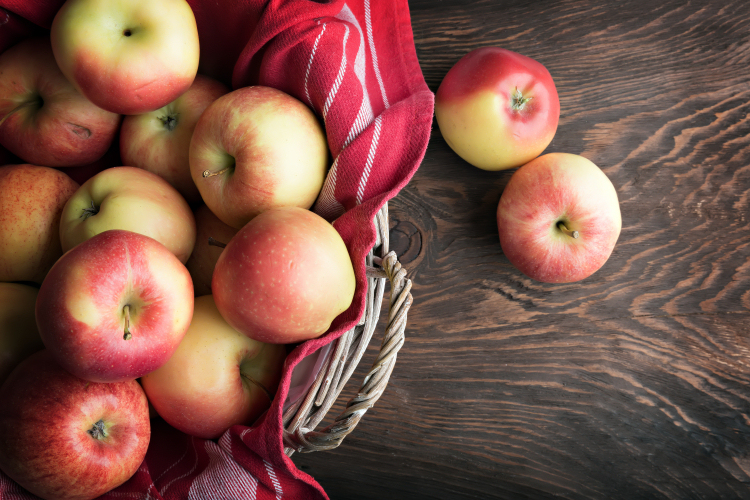
Polishing an apple with your shirt might remove some dust and dirt, but getting rid of pesticide residues could take a little more work. Researchers now report in ACS’ Journal of Agricultural and Food Chemistry, that washing apples with a common household product — baking soda — could do the trick for residues on the surfaces of the fruit.

The use of pesticides can help increase crop yield, but concerns over their potential effects on human health have been raised over the years. Washing could be one effective strategy to clean pesticides off produce, and it is standard practice in the food industry. But some of the plant-protecting compounds that get absorbed by fruits and vegetables might not be easily removed using current cleaning methods. Lili He and colleagues wanted to find out which washing method can most effectively reduce pesticides.

The researchers applied two common pesticides — the fungicide thiabendazole, which past research has shown can penetrate apple peels, and the insecticide phosmet — to organic Gala apples. They then washed these apples with three different liquids: tap water, a 1 percent baking soda/water solution, and a U.S.-EPA-approved commercial bleach solution often used on produce. The baking soda solution was the most effective at reducing pesticides. After 12 and 15 minutes, 80 percent of the thiabendazole was removed, and 96 percent of the phosmet was removed, respectively. The different percentages are likely due to thiabendezole’s greater absorption into the apple. Mapping images showed that thiabendazole had penetrated up to 80 micrometers deep into the apples; phosmet was detected at a depth of only 20 micrometers. Washing the produce with either plain tap water or the bleach solution for two minutes, per the industry standard, were far less effective.

###

The authors acknowledge funding from the National Institute of Food and Agriculture of the U.S. Department of Agriculture.

The paper’s abstract will be available on Oct. 25 at 8 a.m. Eastern time here: http://pubs.acs.org/doi/abs/10.1021/acs.jafc.7b03118

The American Chemical Society is a not-for-profit organization chartered by the U.S. Congress. ACS is the world’s largest scientific society and a global leader in providing access to chemistry-related research through its multiple databases, peer-reviewed journals and scientific conferences. ACS does not conduct research, but publishes and publicizes peer-reviewed scientific studies. Its main offices are in Washington, D.C., and Columbus, Ohio.

To automatically receive news releases from the American Chemical Society, contact [email protected]

Follow us: Twitter | Facebook

Media Contact

Katie Cottingham
[email protected]
301-775-8455
@ACSpressroom

http://www.acs.org

Share12Tweet8Share2ShareShareShare2

Related Posts

New Trichoderma frianum Species Identified in India

New Trichoderma frianum Species Identified in India

December 18, 2025
Comparing Pig, Mouse, and Human Genomes: Insights Revealed

Comparing Pig, Mouse, and Human Genomes: Insights Revealed

December 18, 2025

Vigna radiata CLC Genes: Key Players in Salt Resistance

December 18, 2025

Boosting Cassava Yield and Drought Resilience via Vascular Potassium

December 17, 2025
Please login to join discussion

POPULAR NEWS

  • Nurses’ Views on Online Learning: Effects on Performance

    Nurses’ Views on Online Learning: Effects on Performance

    70 shares
    Share 28 Tweet 18
  • NSF funds machine-learning research at UNO and UNL to study energy requirements of walking in older adults

    70 shares
    Share 28 Tweet 18
  • MoCK2 Kinase Shapes Mitochondrial Dynamics in Rice Fungal Pathogen

    72 shares
    Share 29 Tweet 18
  • Unraveling Levofloxacin’s Impact on Brain Function

    53 shares
    Share 21 Tweet 13

About

We bring you the latest biotechnology news from best research centers and universities around the world. Check our website.

Follow us

Recent News

How Self-Efficacy and Support Influence Nurses’ Disaster Readiness

Low-Energy Ketogenic Diet: A Solution for MASLD

Transformers Optimize IoHT Attack Detection with Hybrid Algorithm

Subscribe to Blog via Email

Enter your email address to subscribe to this blog and receive notifications of new posts by email.

Join 70 other subscribers
  • Contact Us

Bioengineer.org © Copyright 2023 All Rights Reserved.

Welcome Back!

Login to your account below

Forgotten Password?

Retrieve your password

Please enter your username or email address to reset your password.

Log In
No Result
View All Result
  • Homepages
    • Home Page 1
    • Home Page 2
  • News
  • National
  • Business
  • Health
  • Lifestyle
  • Science

Bioengineer.org © Copyright 2023 All Rights Reserved.