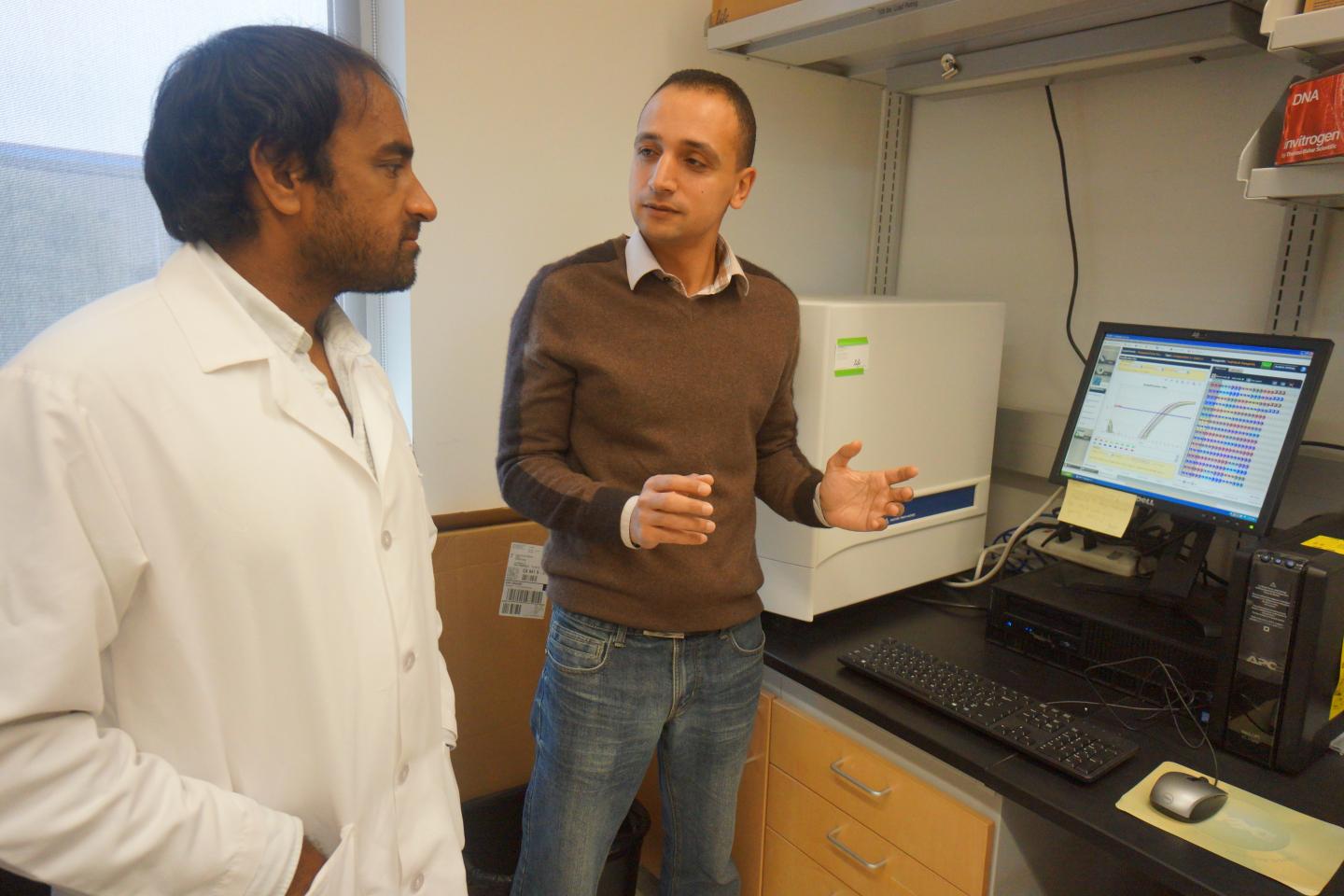
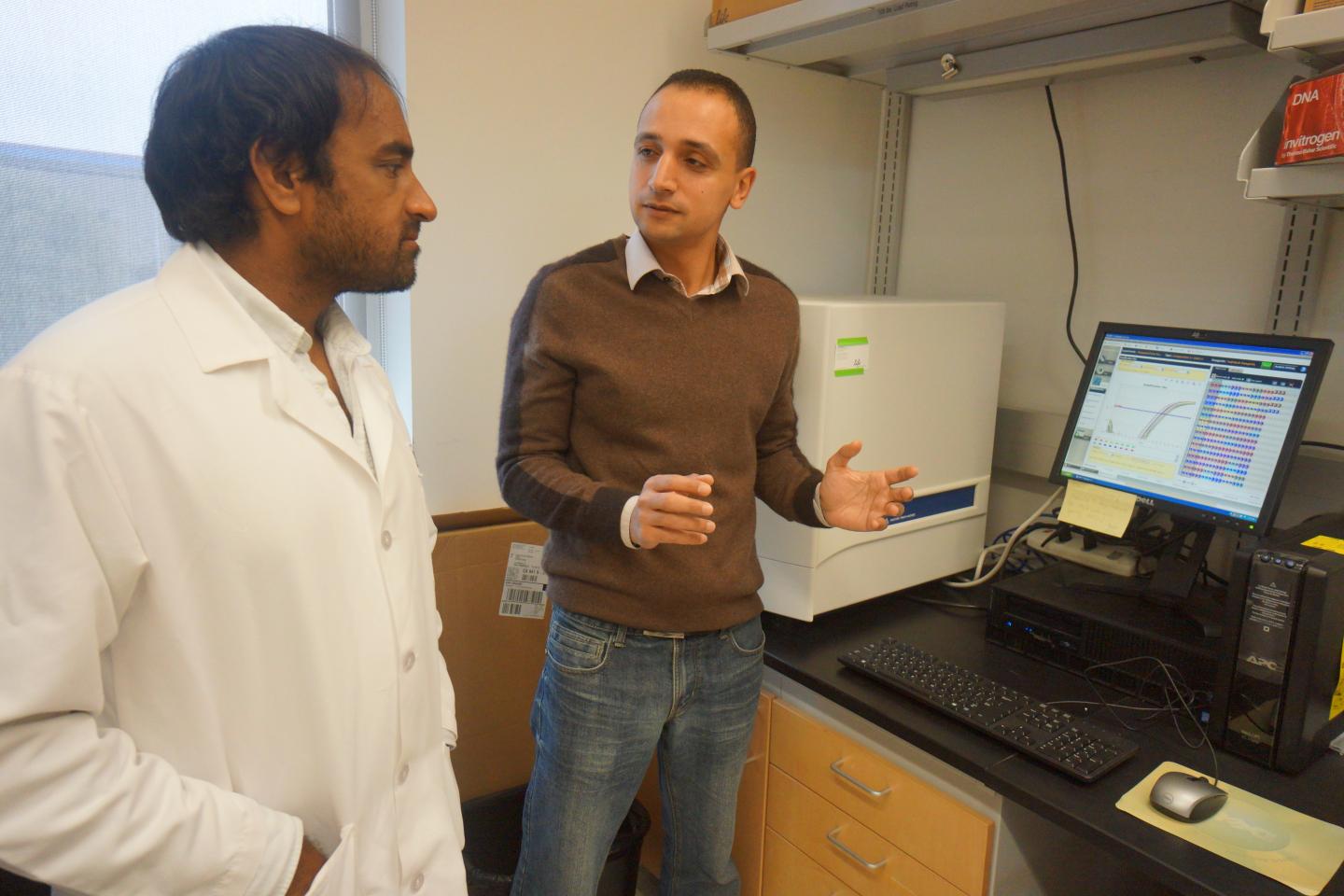
July 13, 2016, San Francisco, CA– The ultimate impediment to a cure for HIV infection is the presence of latent, HIV-infected cells, which can reawaken and produce new virus when antiretroviral drug therapy is stopped. These latent, HIV-infected cells are untouched by antiretroviral therapy and are unseen by the immune system. Moving medicine closer to a cure for HIV, scientists at Blood Systems Research Institute (BSRI), the University of California at San Francisco (UCSF), and the University of Hawaii have discovered that the human sugar-binding protein galectin-9 potently forces latent HIV out of hiding, and poisons the virus on its way out.
Building off of their earlier studies that identified key human genes involved in maintaining the latent, hidden state of HIV-infected cells, the paper's lead author, Dr. Mohamed Abdel-Mohsen, Scientist at BSRI and UCSF School of Medicine, and colleagues used cutting-edge technologies to demonstrate that galectin-9, a beta-galactoside-binding lectin, reactivates latent HIV and renders infected cells visible to the immune system. This concept of therapeutically forcing latent HIV out of hiding as a curative approach is known as the "shock and kill" HIV eradication strategy.
Dr. Satish Pillai, lead researcher on the study, Associate Investigator at BSRI and Associate Director of the UCSF-Gladstone Institute of Virology & Immunology Center for AIDS Research, explains, "For nearly two decades, antiretroviral therapy has demonstrated efficacy in suppressing HIV replication, but these drugs do not completely clear viral infection or fully restore health. We need a means to draw out the virus from its hidden reservoirs within the body and allow the body's own immune system to eliminate it."
Beyond subjecting latent HIV-infected cells to destruction by the immune system, the team found that galectin-9 strongly increases levels of an antiviral protein called "APOBEC3G" in infected cells. APOBEC3G is a lethal mutagen that destroys the genetic code of viruses including HIV. This ensures that virus that comes out of hiding at the hands of galectin-9 will be sterilized on its way out of the cell, preventing any further infection. These findings reveal that galectin-9 is a new weapon in the HIV cure arsenal, promoting eradication of the latent HIV reservoir in infected individuals on antiretroviral therapy.
The research was published in PLoS Pathogens and is an open access manuscript.
An additional revelation in the authors' study is that galectin-9 works by manipulating sugars on the surface of HIV-infected cells to deliver the signals that force latent HIV out of hiding. "Galectin-9 binds to certain classes of sugars on the surface of cells to start a chain reaction that forces HIV out of hiding. There's been very little attention paid to how the sugar coating on the surface of human cells affects the fate of the virus that lies inside. This sugar coating may hold the key to new therapeutics that can be harnessed to cure HIV and possibly a range of other infectious diseases." says Abdel-Mohsen.
Pillai and Abdel-Mohsen also see the potential for galectin-9 to alter the current course of treatment for HIV, which involves life-long adherence to antiretroviral therapies to prevent latent stores of the virus in the body from reactivating and infecting new cells. "Our findings make us optimistic that future HIV treatments can eliminate all traces of the virus from the body," says Pillai. "Ultimately, we hope that galectin-9 gets us one big step closer to a cure." says Abdel-Mohsen.
###
The study was funded in large part by the amfAR Institute for HIV Cure Research and by the National Institutes of Health (NIH), with additional support from the University of California and the San Francisco-Gladstone Institute of Virology & Immunology Center for AIDS Research. The findings are among the first to be generated by researchers supported by the amfAR Institute, which was established in December 2015. The centerpiece of amfAR's Countdown to a Cure for AIDS initiative, the Institute brings together leading HIV researchers working collaboratively to address the scientific challenges that stand in the way of a cure.
The Blood Systems Research Institute, based in San Francisco, is on the forefront of scientific research for transfusion-focused safety and policy issues. Funded primarily through grants and contracts, and supplemented by contributions from its Blood Systems parent organization, the institute generates and analyzes data to aid the US and worldwide transfusion medicine community by studying potential transfusion-transmitted infectious diseases and recommending testing strategies and technology. Under the scientific leadership of Dr. Michael Busch, Blood Systems Research Institute has made major contributions in the areas of transfusion-transmitted infections like HIV, HCV and HTLV and emerging infections from Chagas, West Nile virus and dengue viruses. Dr. Busch and his colleagues serve on HHS, FDA and other agency committees that influence national and international blood banking policy.
Blood Systems, one of the nation's oldest and largest non-profit blood service providers, is based in Scottsdale, Arizona. It operates several well-respected divisions, including the Blood Systems Research Institute, community blood centers serving nearly 700 hospitals in 24 states, biological products distribution services and a quality consulting group, and it is a partner in the operation of high-volume donor testing laboratories. Together, the divisions of Blood Systems provide a diverse range of products and services across all facets of blood banking.
@BloodSystems
Media Contact
Barbara Kain
[email protected]
480-675-5664
http://www.bloodsystems.org