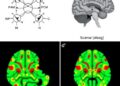
Credit: Zheng-Xiong Xi and Lauren Brick
Rats missing a neuroreceptor that controls the release of the neurotransmitter glutamate are less amenable to the rewarding effects of cocaine, increasing their chance of kicking the habit once addicted, researchers from the National Institute on Drug Abuse (NIDA) find. Their work, appearing July 11 in Cell Reports, suggests that the receptor, which protects nerve cells from fatal inundation by excess glutamate, is involved in modulating the reward-seeking behavior associated with drug addiction.
By silencing the gene responsible for expressing the receptor, called mGluR2, the researchers studied its effect across the stages of the cocaine addiction cycle. Rats without the receptor were more likely to consume cocaine when it was made freely available but less likely to seek out cocaine when they had to demonstrate more effort to obtain it. When cocaine was no longer available to them, the rats were quicker to cease the behaviors that had previously resulted in the drug's delivery. Even when cocaine was subsequently re-introduced, they showed reduced interest for drug seeking, constituting a lower rate of relapse.
"The gene-knockout mice don't enjoy much reward when they take the cocaine. So when the drug is available to them, the animals work to increase their intake to feel rewarded," says senior author Zheng-Xiong Xi, an addiction researcher at NIDA. "But when the drug is difficult to get, the reward isn't worth it anymore, the animal just wants to quit."
This apparent incongruity between increased early cocaine use and decreased later relapse is resolved by a single explanation: low or absent mGluR2 expression causes the rodents to experience a lessened neurological reward when taking cocaine, as measured by intracranial probing of brain stimulation.
At the cellular level, the research illuminates the role that glutamate–the most abundant neurotransmitter in all vertebrates and a prominent contributor to pathways of learning, memory, and anxiety in humans–plays in cocaine addiction, going beyond previous findings that focused on dopamine response, more commonly associated with reward seeking, as the main culprit. Deleting mGluR2 causes nerve cells to be awash in glutamate before any cocaine is ingested. Since cocaine "works" by binding to receptors in place of neurotransmitters like glutamate and dopamine, forcing them to float around and excite synapses, the preexisting flood of glutamate limits its power to deliver a neurological reward.
In the long run, mGluR2's involvement in reward circuits could let it pack a double punch as a biomarker for predicting risk of cocaine addiction and as a therapeutic target for drug development. "Our work suggests that, if you could take a medicine to activate mGluR2 activity, then it would decrease or significantly inhibit both cocaine-taking and cocaine-seeking behaviors," Xi says.
The researchers also plan on studying the influence of mGluR2–which has been preliminarily associated with alcohol and nicotine addictions–in relation to opiates such as heroin. "It seems that mGluR2 may be a common target for treating addictions to many drugs," Xi says.
###
This work was supported by the Intramural Research Program of the National Institute on Drug Abuse.
Cell Reports, Yang et al.: "Deletion of Type 2 Metabotropic Glutamate Receptor (mGluR2) Decreases Sensitivity to Cocaine Reward in Rats" http://www.cell.com/cell-reports/fulltext/S2211-1247(17)30860-4
Cell Reports (@CellReports), published by Cell Press, is a weekly open-access journal that publishes high-quality papers across the entire life sciences spectrum. The journal features reports, articles, and resources that provide new biological insights, are thought-provoking, and/or are examples of cutting-edge research. Visit: http://www.cell.com/cell-reports. To receive Cell Press media alerts, contact [email protected]
Media Contact
Arjuna Subramanian
[email protected]
617-335-6270
@CellPressNews
http://www.cellpress.com
Related Journal Article
http://dx.doi.org/10.1016/j.celrep.2017.06.046