• HOME
  • NEWS
  • EXPLORE
    • CAREER
      • Companies
      • Jobs
    • EVENTS
    • iGEM
      • News
      • Team
    • PHOTOS
    • VIDEO
    • WIKI
  • BLOG
  • COMMUNITY
    • FACEBOOK
    • INSTAGRAM
    • TWITTER
Saturday, February 7, 2026
BIOENGINEER.ORG
No Result
View All Result
  • Login
  • HOME
  • NEWS
  • EXPLORE
    • CAREER
      • Companies
      • Jobs
        • Lecturer
        • PhD Studentship
        • Postdoc
        • Research Assistant
    • EVENTS
    • iGEM
      • News
      • Team
    • PHOTOS
    • VIDEO
    • WIKI
  • BLOG
  • COMMUNITY
    • FACEBOOK
    • INSTAGRAM
    • TWITTER
  • HOME
  • NEWS
  • EXPLORE
    • CAREER
      • Companies
      • Jobs
        • Lecturer
        • PhD Studentship
        • Postdoc
        • Research Assistant
    • EVENTS
    • iGEM
      • News
      • Team
    • PHOTOS
    • VIDEO
    • WIKI
  • BLOG
  • COMMUNITY
    • FACEBOOK
    • INSTAGRAM
    • TWITTER
No Result
View All Result
Bioengineer.org
No Result
View All Result
Home NEWS Science News Biology

Beijing severe haze more frequent under global warming

Bioengineer by Bioengineer
February 12, 2018
in Biology
Reading Time: 2 mins read
0
Share on FacebookShare on TwitterShare on LinkedinShare on RedditShare on Telegram
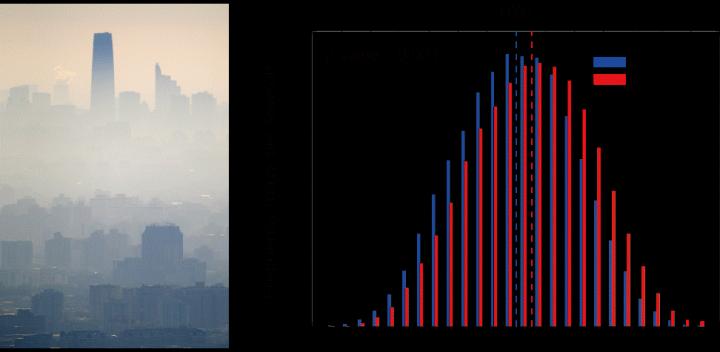
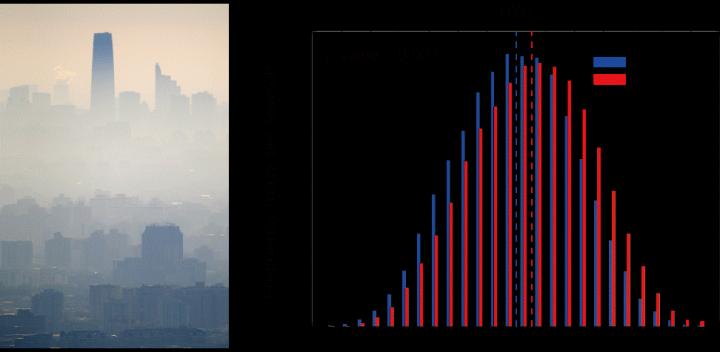
IMAGE

Credit: IAP

Frequency of Beijing winter severe haze has increased over past decades, culminating in events during January 2013, December 2015 and December 2016, when a high number of episodes occurred. In January 2013, for example, the maximum daily PM2.5 (fine particulate matter with a diameter of 2.5 μm or less) average near Beijing reached 500 μg m-3 (20 times concentration suggested by the WMO).

These suffering events lead to serious health concerns among the public, and a sharp decrease in visibility, causing massive disruption to economic activities. A new study published in Nature Climate Change, co-authored by Dr. LI Ke at the Institute of Atmospheric Physics, Chinese Academy of Sciences, projects a substantial increase in the frequency and persistence of conducive weather conditions to Beijing severe haze in response to climate change.

"While the underlying cause of severe haze is increased pollutant emissions, local weather conditions play a part." said LIAO Hong, a professor at Nanjing University of Information Science and Technology (NUIST), China, and the corresponding author of the paper.

Conducive weather conditions are an important ingredient of severe haze episodes, which feature reduced surface winter northerlies, weakened northwesterlies in the midtroposphere, and enhanced thermal stability of the lower atmosphere.

"Using observed long-term PM2.5 daily concentrations at Beijing and daily reanalysis meteorological fields, we developed an effective Haze Weather Index (HWI) to represent such conducive weather conditions." said Dr. Wenju CAI, the first author of this study and a senior scientist at Commonwealth Scientific and Industrial Research Organisation (CSIRO), Australia.

After comparing the frequency of conducive weather conditions (represented by the HWI) between the historical (1950-1999) and future (2050-2099) climate in 15 models under Representative Concentration Pathway 8.5 (RCP8.5), the researchers project a 50% increase in the frequency of conducive weather conditions similar to those in January 2013, in response to climate change.

"The increased frequency of severe haze weathers is consistent with large-scale circulation changes, including an Arctic Oscillation upward trend, weakening East Asian winter monsoon, and faster warming in the lower troposphere", explained Dr. CAI.

"While the priority to mitigate Beijing severe haze is to effectively reduce emissions of air pollutants, the global effort in reducing greenhouse gas emissions will contribute to decreasing the risk of Beijing winter severe haze events." concluded Prof. LIAO.

###

Media Contact

Zheng Lin
[email protected]
86-108-299-5053
@aasjournal

http://english.iap.cas.cn/

Share12Tweet7Share2ShareShareShare1

Related Posts

Florida Cane Toad: Complex Spread and Selective Evolution

Florida Cane Toad: Complex Spread and Selective Evolution

February 7, 2026
New Study Uncovers Mechanism Behind Burn Pit Particulate Matter–Induced Lung Inflammation

New Study Uncovers Mechanism Behind Burn Pit Particulate Matter–Induced Lung Inflammation

February 6, 2026

DeepBlastoid: Advancing Automated and Efficient Evaluation of Human Blastoids with Deep Learning

February 6, 2026

Navigating the Gut: The Role of Formic Acid in the Microbiome

February 6, 2026
Please login to join discussion

POPULAR NEWS

  • Robotic Ureteral Reconstruction: A Novel Approach

    Robotic Ureteral Reconstruction: A Novel Approach

    82 shares
    Share 33 Tweet 21
  • Digital Privacy: Health Data Control in Incarceration

    63 shares
    Share 25 Tweet 16
  • Study Reveals Lipid Accumulation in ME/CFS Cells

    57 shares
    Share 23 Tweet 14
  • Breakthrough in RNA Research Accelerates Medical Innovations Timeline

    53 shares
    Share 21 Tweet 13

About

We bring you the latest biotechnology news from best research centers and universities around the world. Check our website.

Follow us

Recent News

Evaluating Pediatric Emergency Care Quality in Ethiopia

TPMT Expression Predictions Linked to Azathioprine Side Effects

Improving Dementia Care with Enhanced Activity Kits

Subscribe to Blog via Email

Success! An email was just sent to confirm your subscription. Please find the email now and click 'Confirm' to start subscribing.

Join 73 other subscribers
  • Contact Us

Bioengineer.org © Copyright 2023 All Rights Reserved.

Welcome Back!

Login to your account below

Forgotten Password?

Retrieve your password

Please enter your username or email address to reset your password.

Log In
No Result
View All Result
  • Homepages
    • Home Page 1
    • Home Page 2
  • News
  • National
  • Business
  • Health
  • Lifestyle
  • Science

Bioengineer.org © Copyright 2023 All Rights Reserved.