Credit: Cornell University
For two Cornell engineering professors, the International Space Station U.S. National Laboratory is basically a high-powered microscope attached to a super-slow-motion camera, some 250 miles above the Earth.
With that in mind, Paul Steen and Michel Louge hope to learn more about the behavior of water when they send experiments up to the ISS in early 2018. Steen and Louge have received funding from the National Science Foundation (NSF) and NASA's Center for the Advancement of Science in Space (CASIS).
The NSF and CASIS, which manages the ISS national lab, solicited funding proposals last December under the heading, "Fluid Dynamics Research on the International Space Station to Benefit Life on Earth." Five funding awards, totaling $1.5 million, were announced Sept. 29.
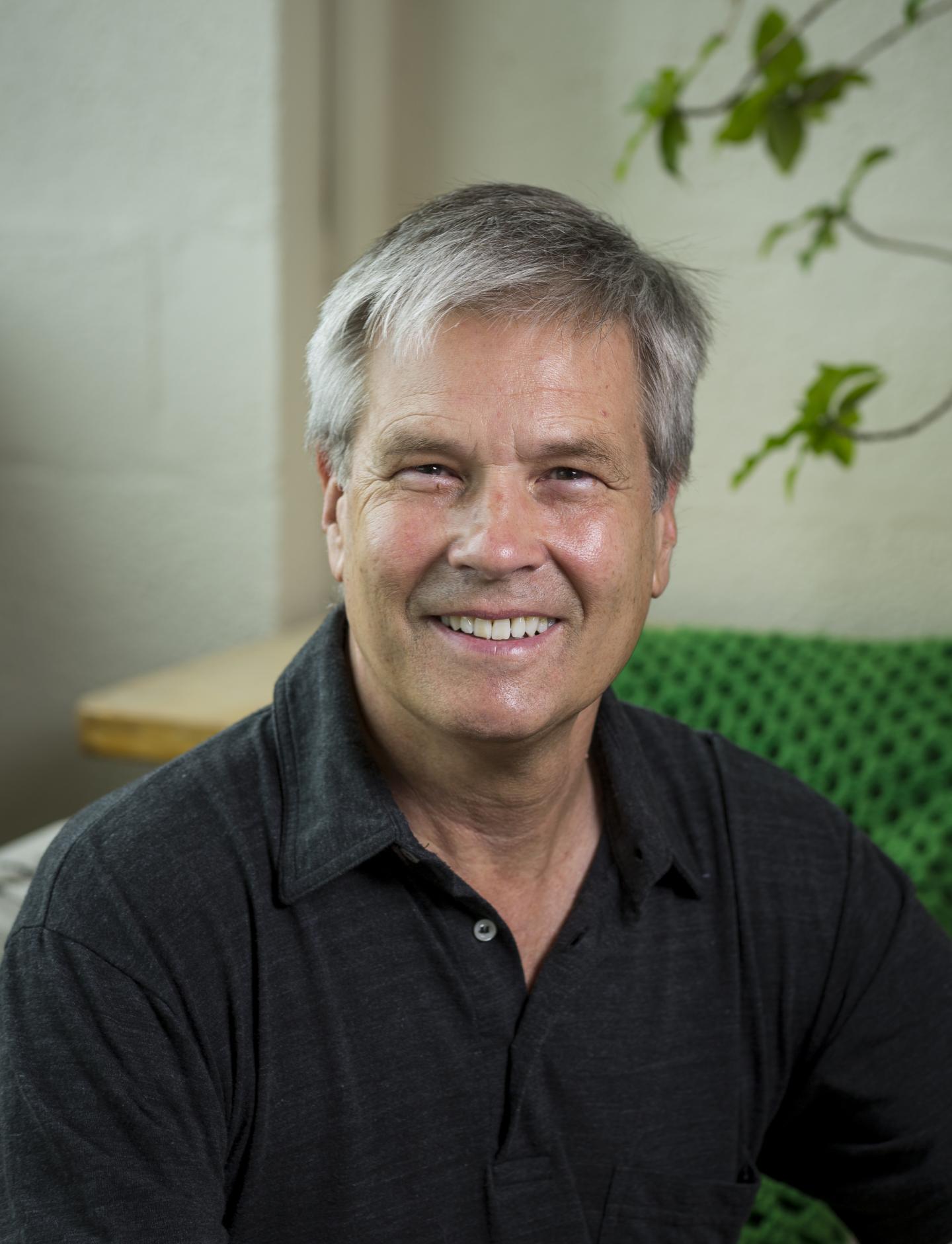
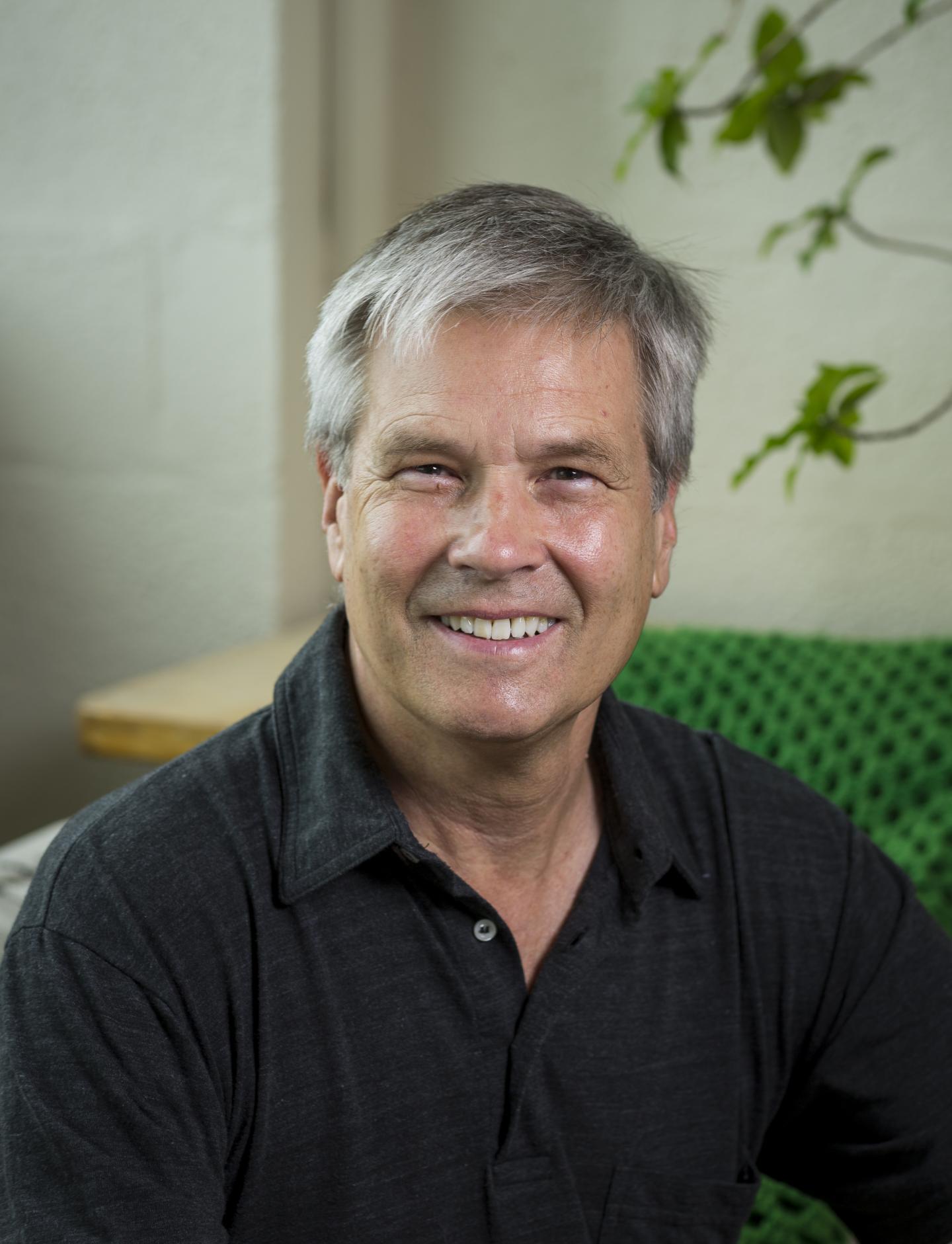
Steen is the Maxwell M. Upson Professor of Engineering in the Robert Frederick Smith School of Chemical and Biomolecular Engineering. His research examines the dynamical stability of fluid systems, with recent focus on systems where the capillary action of surface tension influences the shape of deformable liquid/gas interfaces.
Louge is a professor in the Sibley School of Mechanical and Aerospace Engineering and a faculty fellow at the Atkinson Center for a Sustainable Future. His work focuses on gas-solid and granular flows, which incorporate fluid mechanics, heat transfer, instrumentation, particle impacts and inclined flows.
Both researchers will send experiments to the ISS to reveal details about the behavior of water that can be better seen in the absence of Earth's gravity.
"We are examining behaviors which are very difficult to measure on Earth, even with the most sophisticated instruments," Steen said. "We have basically a microscope, and a slowing-down of time, on the ISS."
Steen, an associate editor of the Nature Partner Journal Microgravity, has for a long time been involved with NASA regarding fluid physics. In his project summary, Steen says his goal is to gain a deeper insight into contact-line mobility and inertial spreading of water droplets, which is important for manufacturing and coating and forming operations. With gravity levels on the ISS at about one-millionth of terrestrial levels, he said, features of contact-line motions that are small-scale and fast on Earth become larger and slower on the ISS.
A secondary goal of Steen's project will be to expand his "photo album" of the shapes an oscillated drop of water can take. It's a project he started in 2013 with Susan Daniel, associate professor of chemical and biomolecular engineering. They started three years ago with 37 images of oscillating droplets; Steen's catalog is up to 64 images now.
"If you compare it to the periodic table, it's as if we're at the discovery of the element bromine, which occurred nearly 200 years ago," he said. "We think, with the advantages of the ISS, being able to see things smaller and faster, we should be able to get another 10 to 20 elements.
"So we should be able to get ourselves up into the late 20th century," he added with a laugh.
Louge's experiment will focus on the imbibition of water — what happens when a liquid comes into contact with a porous solid partially filled with gas, such as dry soil. In his project summary, Louge noted that imbibition is central to applications where three states of matter (liquid, gas, solid) coexist, including fuel cells, filtration, carbon dioxide sequestration, heat pipes and the wetting of soil.
Louge is hoping the numerical simulations of colleague Olivier Desjardins, associate professor of mechanical and aerospace engineering, can be verified in space, where bigger drops and longer time scales will allow him to see "all the grungy details" of imbibition.
"In the end, it will be useful for anything that has a porous medium and water," he said. "So you're talking about irrigation and agriculture, fuel cells, dam breaks, hydraulic fracturing. The imbibition of water, even if it's a tiny amount, has to be understood in all these applications."
###
Media Contact
Tom Fleischman
[email protected]
607-255-9735
@cornell
http://pressoffice.cornell.edu