• HOME
  • NEWS
  • EXPLORE
    • CAREER
      • Companies
      • Jobs
    • EVENTS
    • iGEM
      • News
      • Team
    • PHOTOS
    • VIDEO
    • WIKI
  • BLOG
  • COMMUNITY
    • FACEBOOK
    • INSTAGRAM
    • TWITTER
Saturday, February 7, 2026
BIOENGINEER.ORG
No Result
View All Result
  • Login
  • HOME
  • NEWS
  • EXPLORE
    • CAREER
      • Companies
      • Jobs
        • Lecturer
        • PhD Studentship
        • Postdoc
        • Research Assistant
    • EVENTS
    • iGEM
      • News
      • Team
    • PHOTOS
    • VIDEO
    • WIKI
  • BLOG
  • COMMUNITY
    • FACEBOOK
    • INSTAGRAM
    • TWITTER
  • HOME
  • NEWS
  • EXPLORE
    • CAREER
      • Companies
      • Jobs
        • Lecturer
        • PhD Studentship
        • Postdoc
        • Research Assistant
    • EVENTS
    • iGEM
      • News
      • Team
    • PHOTOS
    • VIDEO
    • WIKI
  • BLOG
  • COMMUNITY
    • FACEBOOK
    • INSTAGRAM
    • TWITTER
No Result
View All Result
Bioengineer.org
No Result
View All Result
Home NEWS Science News Biology

Flies the key to studying the causes of dementia

Bioengineer by Bioengineer
February 12, 2018
in Biology
Reading Time: 2 mins read
0
Share on FacebookShare on TwitterShare on LinkedinShare on RedditShare on Telegram
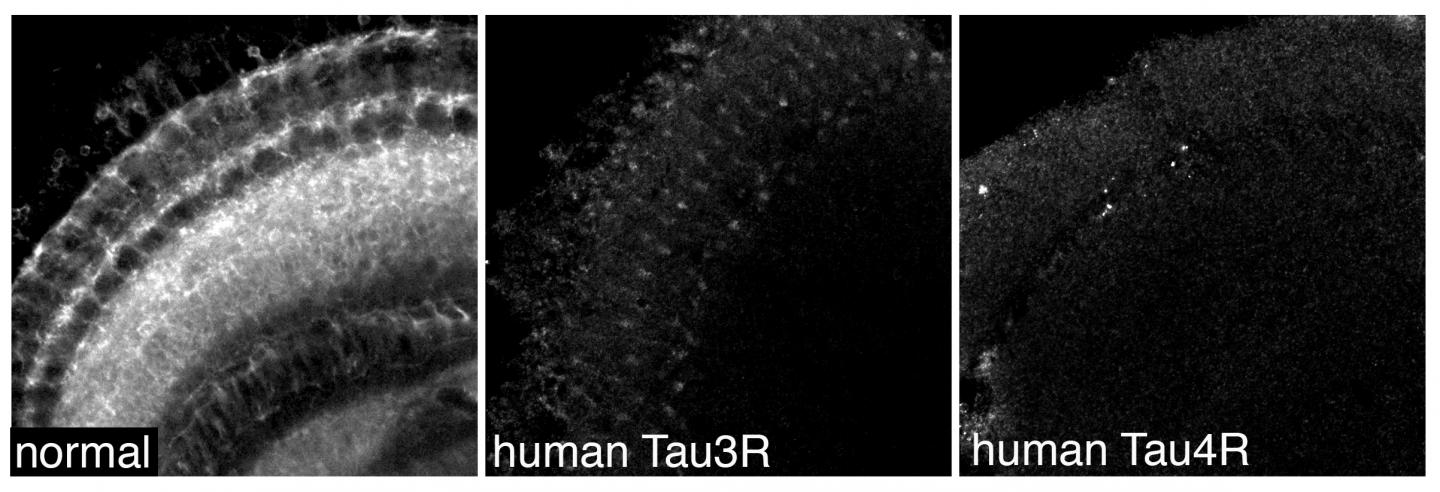
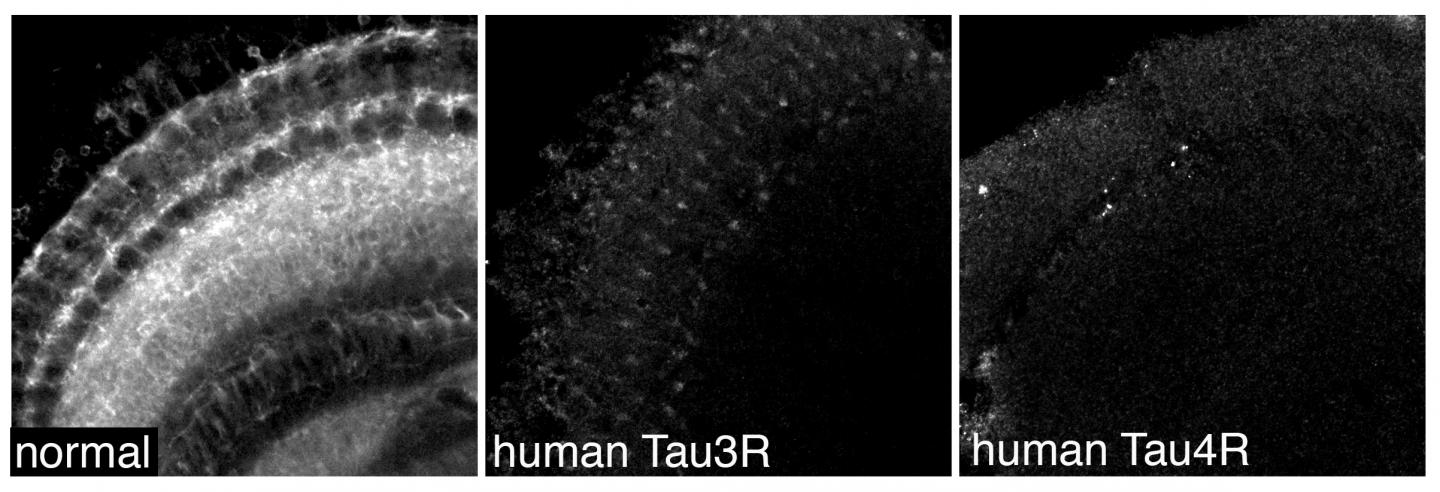
IMAGE

Credit: Dr Torsten Bossing, University of Plymouth

A research team from the University of Plymouth, University of Southampton and the Alexander Fleming Biomedical Sciences Research Center, Vari, Greece, have studied two structurally-similar proteins in the adult brain and have found that they play distinct roles in the development of dementia.

Their study is published in the prestigious journal Neurobiology of Disease.

The understanding and knowledge gained from this study could lead to effective therapies for dementia and other neurodegenerative diseases.

Tau proteins stabilise microtubules in the brain and nervous system. Microtubules help form the structure of cells and other functions, such as providing the rail tracks for transport between cells.

In the brain of dementia patients, the abnormal clumping of Tau proteins have long been linked to changes in nerve cell activation and ultimately cell death. Two structurally different forms of Tau exist. The research team expressed these two forms of human Tau in nerve cells of the Drosophila (fruit fly) brain, examining their effects on nerve cell survival and activation, fly movement and memory formation.

The results show that these two proteins differ in terms of biology and pathological potential. One leads to poor communication between nerves associated with movement. The other leads to greater neurodegeneration and impairments in learning and memory.

This is important because defects in the proteins have a bearing on neurodegenerative diseases such as dementia. Designing drugs which target each form specifically should help to improve specific symptoms.

Involved in the study from the University of Plymouth is Dr Torsten Bossing. He commented: "With each new discovery like this we move one step closer to finding effective drug treatments for debilitating neurodegenerative diseases. This is an important study carried out using nerve cells from fruit flies and it has the potential over the coming years to be developed through more testing and clinical trials. We firmly believe that the answer to the question of how we treat conditions such as dementia lies at this cellular level."

###

The study received funding from the Royal Society (Plymouth), the Wessex Medical Trust and Gerald Kerkut Trust (Southampton), and the European Social Fund and Greek National Funds (THALIS-UOA) (Vari).

Media Contact

Andrew Gould
[email protected]
@PlymUni

http://www.plymouth.ac.uk

Related Journal Article

http://dx.doi.org/10.1016/j.nbd.2017.05.003

Share12Tweet8Share2ShareShareShare2

Related Posts

Florida Cane Toad: Complex Spread and Selective Evolution

Florida Cane Toad: Complex Spread and Selective Evolution

February 7, 2026
New Study Uncovers Mechanism Behind Burn Pit Particulate Matter–Induced Lung Inflammation

New Study Uncovers Mechanism Behind Burn Pit Particulate Matter–Induced Lung Inflammation

February 6, 2026

DeepBlastoid: Advancing Automated and Efficient Evaluation of Human Blastoids with Deep Learning

February 6, 2026

Navigating the Gut: The Role of Formic Acid in the Microbiome

February 6, 2026
Please login to join discussion

POPULAR NEWS

  • Robotic Ureteral Reconstruction: A Novel Approach

    Robotic Ureteral Reconstruction: A Novel Approach

    82 shares
    Share 33 Tweet 21
  • Digital Privacy: Health Data Control in Incarceration

    63 shares
    Share 25 Tweet 16
  • Study Reveals Lipid Accumulation in ME/CFS Cells

    57 shares
    Share 23 Tweet 14
  • Breakthrough in RNA Research Accelerates Medical Innovations Timeline

    53 shares
    Share 21 Tweet 13

About

We bring you the latest biotechnology news from best research centers and universities around the world. Check our website.

Follow us

Recent News

Personalized Guide to Understanding and Reducing Chemicals

Inflammasome Protein ASC Drives Pancreatic Cancer Metabolism

Phage-Antibiotic Combo Beats Resistant Peritoneal Infection

Subscribe to Blog via Email

Enter your email address to subscribe to this blog and receive notifications of new posts by email.

Join 73 other subscribers
  • Contact Us

Bioengineer.org © Copyright 2023 All Rights Reserved.

Welcome Back!

Login to your account below

Forgotten Password?

Retrieve your password

Please enter your username or email address to reset your password.

Log In
No Result
View All Result
  • Homepages
    • Home Page 1
    • Home Page 2
  • News
  • National
  • Business
  • Health
  • Lifestyle
  • Science

Bioengineer.org © Copyright 2023 All Rights Reserved.