• HOME
  • NEWS
  • EXPLORE
    • CAREER
      • Companies
      • Jobs
    • EVENTS
    • iGEM
      • News
      • Team
    • PHOTOS
    • VIDEO
    • WIKI
  • BLOG
  • COMMUNITY
    • FACEBOOK
    • INSTAGRAM
    • TWITTER
Saturday, February 7, 2026
BIOENGINEER.ORG
No Result
View All Result
  • Login
  • HOME
  • NEWS
  • EXPLORE
    • CAREER
      • Companies
      • Jobs
        • Lecturer
        • PhD Studentship
        • Postdoc
        • Research Assistant
    • EVENTS
    • iGEM
      • News
      • Team
    • PHOTOS
    • VIDEO
    • WIKI
  • BLOG
  • COMMUNITY
    • FACEBOOK
    • INSTAGRAM
    • TWITTER
  • HOME
  • NEWS
  • EXPLORE
    • CAREER
      • Companies
      • Jobs
        • Lecturer
        • PhD Studentship
        • Postdoc
        • Research Assistant
    • EVENTS
    • iGEM
      • News
      • Team
    • PHOTOS
    • VIDEO
    • WIKI
  • BLOG
  • COMMUNITY
    • FACEBOOK
    • INSTAGRAM
    • TWITTER
No Result
View All Result
Bioengineer.org
No Result
View All Result
Home NEWS Science News Health

Scleroderma study: Hope for a longer life for patients with rare…

Bioengineer by Bioengineer
February 12, 2018
in Health
Reading Time: 2 mins read
0
Share on FacebookShare on TwitterShare on LinkedinShare on RedditShare on Telegram
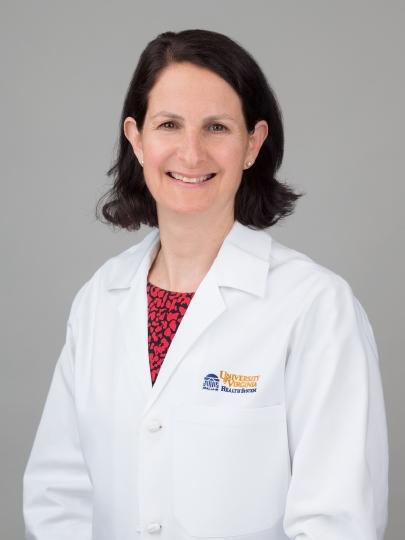
IMAGE

Credit: UVA Health System

An unusual autoimmune disease that causes skin and lung damage can be treated effectively by stem cell transplant, a new study in the New England Journal of Medicine has found. The approach could represent the first new treatment to improve survival in patients with severe scleroderma in more than four decades.

The experimental procedure uses chemotherapy and radiation to destroy the body's malfunctioning immune system, then replaces it via a stem-cell transplant. The stem cells are taken from the patient's own blood and given back to the patient after the chemotherapy.

In a multisite clinical trial, the approach proved more successful than the existing treatment, significantly improving survival and reported quality of life. "This is a major advance in the treatment of severe scleroderma," said Karen Ballen, MD, a co-investigator on the study and the director of stem cell transplantation at the University of Virginia Cancer Center.

Scleroderma Study

The study compared the most effective existing treatment, the drug cyclophosphamide, with the new approach. Thirty-four trial participants received cyclophosphamide, while 33 received the stem cell transplant treatment. After 72 months, 86 percent of those who received the stem-cell transplant remained alive, compared with only 51 percent of those who received infusions of cyclophosphamide.

In the New England Journal of Medicine paper detailing their findings, the researchers conclude: "At four and a half years of follow up, participants who received a transplant experienced significantly better outcomes overall than those who received cyclophosphamide. In addition, 44 percent of participants who received cyclophosphamide had begun taking anti-rheumatic drugs for progression of their scleroderma, compared to only 9 percent of those who received a transplant."

Both treatment options carried risks of infections and low blood-cell counts, the researchers reported. The overall infection rates were similar.

All participants had severe scleroderma that affected their lungs or kidneys. The researchers noted that their study had limitations that suggest the findings may not apply to all patients with scleroderma.

###

Scleroderma Findings Published

The researchers have published their findings in the New England Journal of Medicine. The study was led by Keith Sullivan, MD, of Duke University.

The research was supported by the National Institutes of Health's National Institute of Allergy and Infectious Diseases, grants N01-AI05419, HHSN272201100025C, N01-AI25481, HHSN272200900057C and 1UMZAI117870.

To learn more about scleroderma, visit https://uvahealth.com/services/dermatology/skin-conditions/scleroderma. To keep up with the latest medical research news from UVA, subscribe to the Making of Medicine blog at http://makingofmedicine.virginia.edu.

Media Contact

Josh Barney
[email protected]
434-906-8864

http://www.healthsystem.virginia.edu/home.html

Related Journal Article

http://dx.doi.org/10.1056/NEJMoa1703327
Share12Tweet7Share2ShareShareShare1

Related Posts

Decoding Prostate Cancer Origins via snFLARE-seq, mxFRIZNGRND

February 7, 2026

Digital Health Perspectives from Baltic Sea Experts

February 7, 2026

Exploring Decision-Making in Dementia Caregivers’ Mobility

February 7, 2026

Succinate Receptor 1 Limits Blood Cell Formation, Leukemia

February 7, 2026
Please login to join discussion

POPULAR NEWS

  • Robotic Ureteral Reconstruction: A Novel Approach

    Robotic Ureteral Reconstruction: A Novel Approach

    82 shares
    Share 33 Tweet 21
  • Digital Privacy: Health Data Control in Incarceration

    63 shares
    Share 25 Tweet 16
  • Study Reveals Lipid Accumulation in ME/CFS Cells

    57 shares
    Share 23 Tweet 14
  • Breakthrough in RNA Research Accelerates Medical Innovations Timeline

    53 shares
    Share 21 Tweet 13

About

We bring you the latest biotechnology news from best research centers and universities around the world. Check our website.

Follow us

Recent News

Decoding Prostate Cancer Origins via snFLARE-seq, mxFRIZNGRND

Digital Health Perspectives from Baltic Sea Experts

Florida Cane Toad: Complex Spread and Selective Evolution

Subscribe to Blog via Email

Enter your email address to subscribe to this blog and receive notifications of new posts by email.

Join 73 other subscribers
  • Contact Us

Bioengineer.org © Copyright 2023 All Rights Reserved.

Welcome Back!

Login to your account below

Forgotten Password?

Retrieve your password

Please enter your username or email address to reset your password.

Log In
No Result
View All Result
  • Homepages
    • Home Page 1
    • Home Page 2
  • News
  • National
  • Business
  • Health
  • Lifestyle
  • Science

Bioengineer.org © Copyright 2023 All Rights Reserved.