• HOME
  • NEWS
  • EXPLORE
    • CAREER
      • Companies
      • Jobs
    • EVENTS
    • iGEM
      • News
      • Team
    • PHOTOS
    • VIDEO
    • WIKI
  • BLOG
  • COMMUNITY
    • FACEBOOK
    • INSTAGRAM
    • TWITTER
Saturday, February 7, 2026
BIOENGINEER.ORG
No Result
View All Result
  • Login
  • HOME
  • NEWS
  • EXPLORE
    • CAREER
      • Companies
      • Jobs
        • Lecturer
        • PhD Studentship
        • Postdoc
        • Research Assistant
    • EVENTS
    • iGEM
      • News
      • Team
    • PHOTOS
    • VIDEO
    • WIKI
  • BLOG
  • COMMUNITY
    • FACEBOOK
    • INSTAGRAM
    • TWITTER
  • HOME
  • NEWS
  • EXPLORE
    • CAREER
      • Companies
      • Jobs
        • Lecturer
        • PhD Studentship
        • Postdoc
        • Research Assistant
    • EVENTS
    • iGEM
      • News
      • Team
    • PHOTOS
    • VIDEO
    • WIKI
  • BLOG
  • COMMUNITY
    • FACEBOOK
    • INSTAGRAM
    • TWITTER
No Result
View All Result
Bioengineer.org
No Result
View All Result
Home NEWS Science News Health

New function in gene-regulatory protein discovered

Bioengineer by Bioengineer
February 11, 2018
in Health
Reading Time: 2 mins read
0
Share on FacebookShare on TwitterShare on LinkedinShare on RedditShare on Telegram
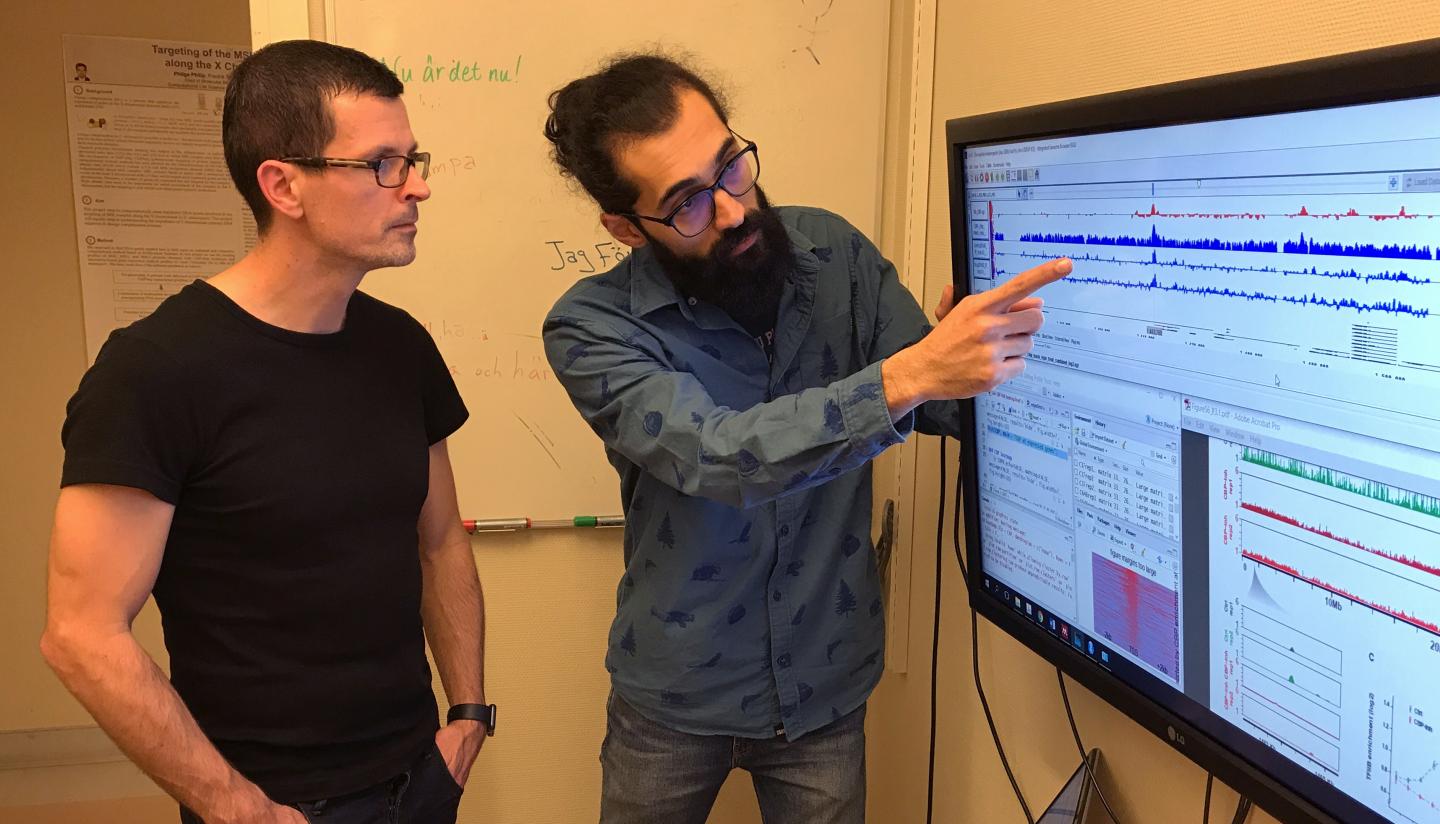
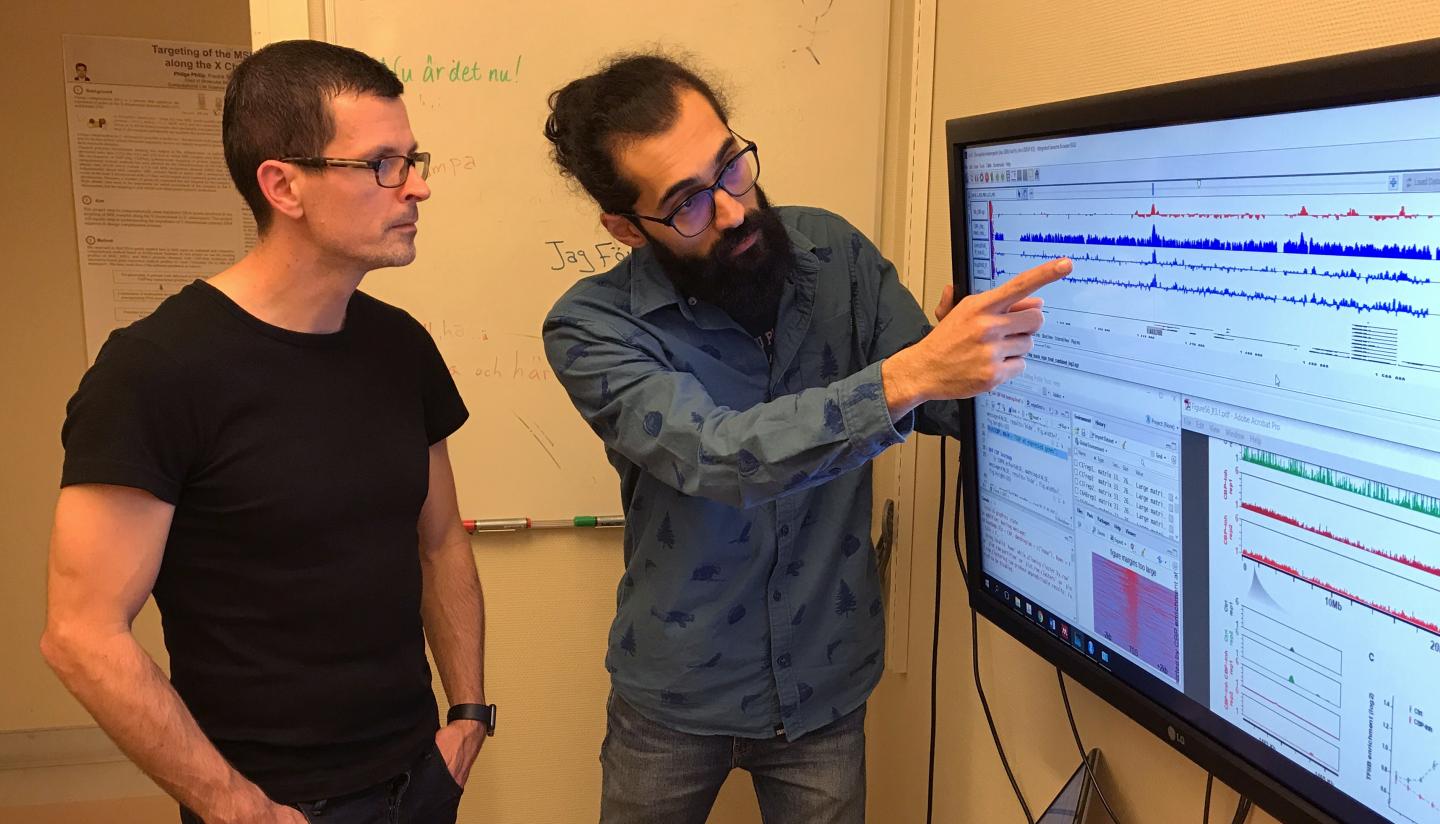
IMAGE

Credit: Photo: Eshagh Dorafshan

Researchers at Umeå and Stockholm universities in Sweden and Johns Hopkins University School of Medicine in the US have published a new study in the journal Molecular Cell. In the article, they show how the protein CBP affects the expression of genes through its interaction with the basal machinery that reads the instructions in our DNA.

Our gene pool, our DNA that is, contains instructions for how the cell should assemble functional proteins. Before the DNA code can be translated into a string of amino acids that then fold into a functional protein, an intermediate RNA molecule needs to be produced. This RNA molecule is a copy of the DNA region, or gene, that contains the instructions for a specific protein. Various proteins are needed in different amounts in various cells, and much of the regulation of protein levels takes place by controlling how many RNA copies are produced from each gene.

RNA polymerase is the enzyme that produces the RNA copy, and the amount of RNA produced from each gene depends on two main steps: the recruitment of RNA polymerase to the start of a gene; and the release of the enzyme from the start position so that it can begin the copying process. Per Stenberg's team at Umeå University, together with Mattias Mannervik's team from Stockholm University, and John Lis' team at the Johns Hopkins University School of Medicine in the US, has studied how the protein CBP affects these two steps.

"We, as well as others, have previously shown that the protein CBP is involved in several different processes in the cell. But it has not previously been known that CBP is directly involved in the recruitment of RNA polymerase to the genes. We can also show that it depends on an interaction with a previously known factor, TFIIB," says Per Stenberg, researcher at the Department of Molecular Biology at Umeå University, and at the Swedish Defence Research Agency (FOI).

When the function of CBP is experimentally disrupted, genes have a hard time recruiting RNA polymerase, which will further lead to a lower amount of proteins to be produced. By using novel methods developed in John Lis' lab, it was discovered that CBP also affects the efficiency of the release of RNA polymerase from the gene start so that it can initiate the copying process.

"We were really surprised when we discovered that without CBP, the RNA polymerase cannot correctly position itself at the gene start, and that it had a harder time initiating the copying process," says Per Stenberg.

The new insights have been published in the journal Molecular Cell, and enhance our understanding of gene regulation at the same time as it can also explain why the protein CBP is often affected in certain forms of cancer, for instance prostate, breast and lung cancer.

###

Media Contact

Ingrid Söderbergh
[email protected]
46-090-786-6024
@UmeaUniversity

http://www.umu.se/umu/index_eng.html

Original Source

http://www.cell.com/molecular-cell/fulltext/S1097-2765(17)30709-8

Share12Tweet8Share2ShareShareShare2

Related Posts

Digital Health Perspectives from Baltic Sea Experts

February 7, 2026

Exploring Decision-Making in Dementia Caregivers’ Mobility

February 7, 2026

Succinate Receptor 1 Limits Blood Cell Formation, Leukemia

February 7, 2026

Palmitoylation of Tfr1 Drives Platelet Ferroptosis and Exacerbates Liver Damage in Heat Stroke

February 7, 2026
Please login to join discussion

POPULAR NEWS

  • Robotic Ureteral Reconstruction: A Novel Approach

    Robotic Ureteral Reconstruction: A Novel Approach

    82 shares
    Share 33 Tweet 21
  • Digital Privacy: Health Data Control in Incarceration

    63 shares
    Share 25 Tweet 16
  • Study Reveals Lipid Accumulation in ME/CFS Cells

    57 shares
    Share 23 Tweet 14
  • Breakthrough in RNA Research Accelerates Medical Innovations Timeline

    53 shares
    Share 21 Tweet 13

About

We bring you the latest biotechnology news from best research centers and universities around the world. Check our website.

Follow us

Recent News

Digital Health Perspectives from Baltic Sea Experts

Florida Cane Toad: Complex Spread and Selective Evolution

Exploring Decision-Making in Dementia Caregivers’ Mobility

Subscribe to Blog via Email

Enter your email address to subscribe to this blog and receive notifications of new posts by email.

Join 73 other subscribers
  • Contact Us

Bioengineer.org © Copyright 2023 All Rights Reserved.

Welcome Back!

Login to your account below

Forgotten Password?

Retrieve your password

Please enter your username or email address to reset your password.

Log In
No Result
View All Result
  • Homepages
    • Home Page 1
    • Home Page 2
  • News
  • National
  • Business
  • Health
  • Lifestyle
  • Science

Bioengineer.org © Copyright 2023 All Rights Reserved.