• HOME
  • NEWS
  • EXPLORE
    • CAREER
      • Companies
      • Jobs
    • EVENTS
    • iGEM
      • News
      • Team
    • PHOTOS
    • VIDEO
    • WIKI
  • BLOG
  • COMMUNITY
    • FACEBOOK
    • INSTAGRAM
    • TWITTER
Wednesday, April 1, 2026
BIOENGINEER.ORG
No Result
View All Result
  • Login
  • HOME
  • NEWS
  • EXPLORE
    • CAREER
      • Companies
      • Jobs
        • Lecturer
        • PhD Studentship
        • Postdoc
        • Research Assistant
    • EVENTS
    • iGEM
      • News
      • Team
    • PHOTOS
    • VIDEO
    • WIKI
  • BLOG
  • COMMUNITY
    • FACEBOOK
    • INSTAGRAM
    • TWITTER
  • HOME
  • NEWS
  • EXPLORE
    • CAREER
      • Companies
      • Jobs
        • Lecturer
        • PhD Studentship
        • Postdoc
        • Research Assistant
    • EVENTS
    • iGEM
      • News
      • Team
    • PHOTOS
    • VIDEO
    • WIKI
  • BLOG
  • COMMUNITY
    • FACEBOOK
    • INSTAGRAM
    • TWITTER
No Result
View All Result
Bioengineer.org
No Result
View All Result
Home NEWS Science News Biology

Update on an endangered Philippine cycad species

Bioengineer by Bioengineer
February 11, 2018
in Biology
Reading Time: 2 mins read
0
Share on FacebookShare on TwitterShare on LinkedinShare on RedditShare on Telegram
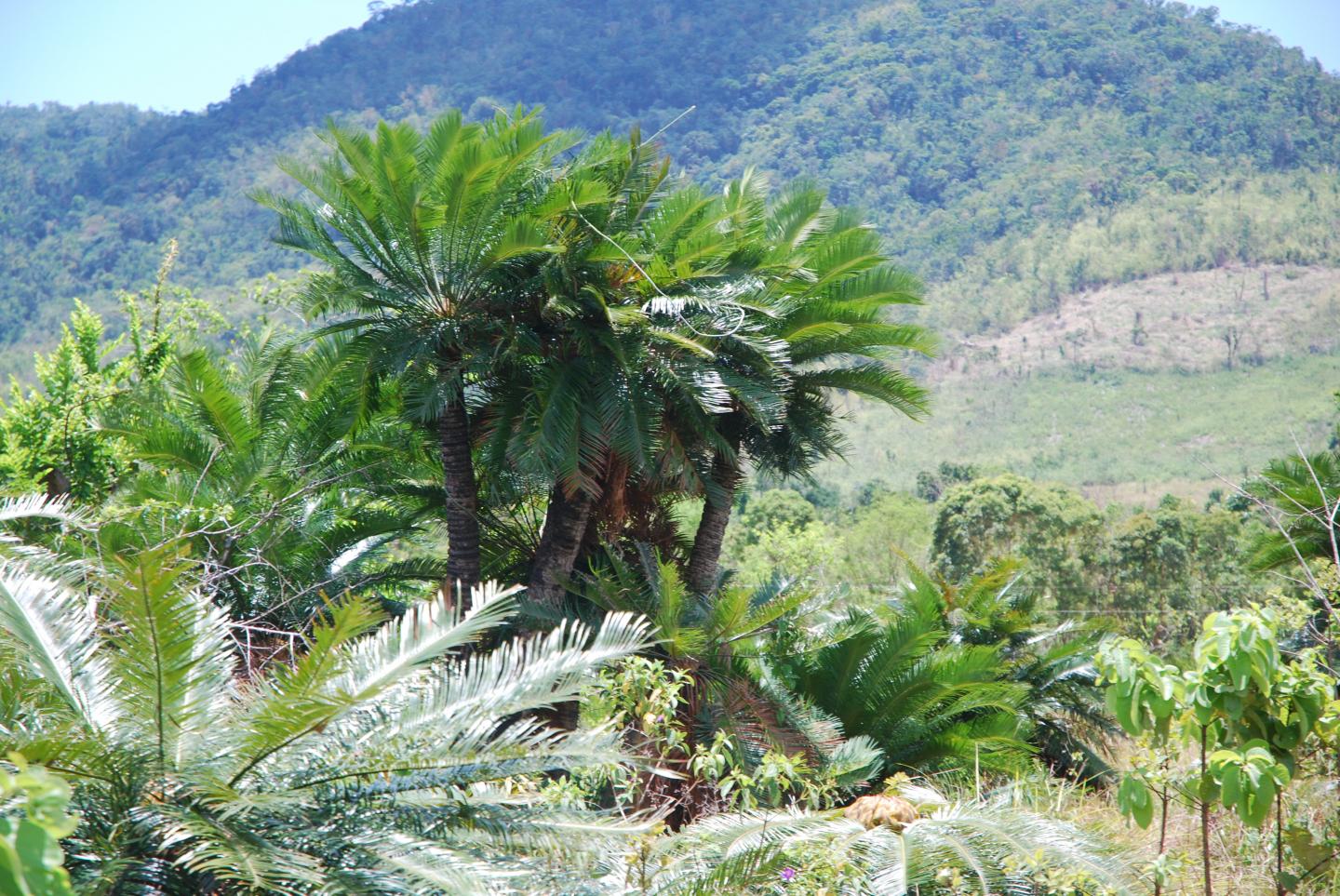
IMAGE

Credit: Thomas Marler

When plant species are threatened to the point that they reach a designation of Critically Endangered, sustaining an understanding of threats requires repeated site visits by knowledgeable biologists to the various sub-populations. The Critically Endangered Cycas wadei, which is known to occur in a single location in the Philippines, was recently evaluated for the contemporary status of the population. The findings and recommendations appear in the current issue of the Journal of Biodiversity & Endangered Species.

This tree is one of 114 described species of Cycas throughout the world and one of 11 Cycas species from the Philippines. The designation of Critically Endangered is primarily based on the fact that the entire population resides in a single, small location on one island. Scientists call plants with these traits "endemic" species. Being restricted to one location increases the vulnerability to any new threats. These threats are amplified by the fact that plants are immobile, and the existing population cannot migrate to new locations like populations of animals.

The study was conducted through a partnership between the University of Guam and the Philippine Native Plants Conservation Society. Ecologist Thomas Marler and taxonomist Ulysses Ferreras carried out the field work. The authors noted that updates on threatened species are often based on general observations. They countered this nonspecific approach by instead implementing empirical methods for determining various population traits. "Establishing plots and applying direct measurements within those plots allowed us to use actual numbers to determine the structure and density of the population," said Marler.

The take-home outcomes of the species update illuminated the most important threats to the future health of Cycas wadei. The two main threats of habitat loss and poaching are not unique to this Cycas species, as many species throughout the world are endangered because of these same threats. The population resides in a grassland that is periodically burned. Fire damage is a third threat that the authors illuminated. Deficiencies in potassium in the soils were identified as the foremost resource constraint on tree growth and development.

Cycas wadei belongs to a group of plants called cycads. This group is comprised of two families and ten genera. Cycads are among the most threatened groups of plants worldwide. Marler and Ferreras hope that the empirical approach they employed can be used for other species updates.

###

Media Contact

Olympia Terral
[email protected]
671-732-2092

http://www.uog.edu

Related Journal Article

http://dx.doi.org/10.4172/2332-2543.1000193

Share13Tweet8Share2ShareShareShare2

Related Posts

Do Your Genes Influence How Lifestyle Choices Affect Aging?

Do Your Genes Influence How Lifestyle Choices Affect Aging?

April 1, 2026
Combining Single-Cell Multiomics Unlocks Precise Identification of Rare Cell Types and States

Combining Single-Cell Multiomics Unlocks Precise Identification of Rare Cell Types and States

March 31, 2026

Genetically Engineered Marmosets Pave the Way for Advancements in Human Deafness Research

March 31, 2026

How Great Hammerhead Sharks Outsmart Ocean Temperature Swings: Insights from FIU Researchers

March 31, 2026
Please login to join discussion

POPULAR NEWS

  • blank

    Revolutionary AI Model Enhances Precision in Detecting Food Contamination

    96 shares
    Share 38 Tweet 24
  • Imagine a Social Media Feed That Challenges Your Views Instead of Reinforcing Them

    1006 shares
    Share 398 Tweet 249
  • Promising Outcomes from First Clinical Trials of Gene Regulation in Epilepsy

    51 shares
    Share 20 Tweet 13
  • Popular Anti-Aging Compound Linked to Damage in Corpus Callosum, Study Finds

    43 shares
    Share 17 Tweet 11

About

We bring you the latest biotechnology news from best research centers and universities around the world. Check our website.

Follow us

Recent News

Cutting-Edge “Smart” Drugs Revolutionize Cancer Treatment

KIST-IAE Collaborative Team Surpasses Performance Limits in Lithium-Air Batteries with Innovative Two-Dimensional Catalyst

Brain Metastases Show Unique Macrophage Spatial Patterns

Subscribe to Blog via Email

Enter your email address to subscribe to this blog and receive notifications of new posts by email.

Join 78 other subscribers
  • Contact Us

Bioengineer.org © Copyright 2023 All Rights Reserved.

Welcome Back!

Login to your account below

Forgotten Password?

Retrieve your password

Please enter your username or email address to reset your password.

Log In
No Result
View All Result
  • Homepages
    • Home Page 1
    • Home Page 2
  • News
  • National
  • Business
  • Health
  • Lifestyle
  • Science

Bioengineer.org © Copyright 2023 All Rights Reserved.