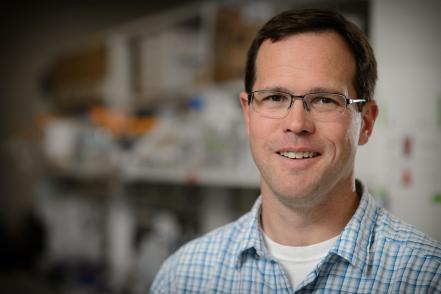
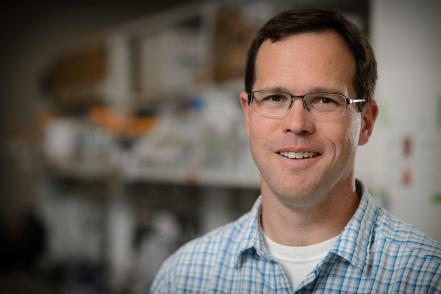
Credit: G.L. Kohuth, Michigan State University
EAST LANSING, Mich. — A Michigan State University breast cancer researcher has shown that effective treatment options can be predicted based on the way certain breast cancer genes act or express themselves.
The research, published in the journal Oncogene, offers up proof that gene expression patterns can help direct the type of therapy a patient might receive, paving the way for more targeted and personalized approaches to care.
The National Institutes of Health and the Susan G. Komen Foundation funded the study.
"Breast cancer has numerous subtypes," said Eran Andrechek, a physiology professor in the College of Human Medicine. "Treatments for these various subtypes have to be different because there are different genes that drive the cancer."
Estrogen- or progesterone-receptor positive breast cancer, where hormones drive cancer growth, is one subtype. Other subtypes include human epidermal growth factor receptor 2, or HER2, which is a protein that also promotes the development of the disease, and triple-negative breast cancer, or TNBC. This cancer type isn't driven by either the HER2 protein or hormone receptors and is the one that Andrechek focused on in his study.
His research, also led by doctoral student Jing-Ru Jhan, first examined the unique genetic characteristics and differences within each TNBC tumor. Then Andrechek's team took the genomic information they gathered and compared it to various drugs that could target the specific tumor activity.
"Triple-negative breast cancer is highly aggressive and currently there are limited treatment options," Andrechek said. "By looking at the particular gene expression patterns of this cancer and determining the pathways that were activated, or turned on, we identified certain drugs that could turn these pathways off and stop tumor growth."
Andrechek's study discovered that a three-drug combination, including two FDA-approved drugs – Afatinib and Trametinib – also targeted a specific pathway associated with triple-negative breast cancer and together, were effective at stopping the cancer's growth. Currently, both drugs are commonly used for other types of cancers.
Andrechek said his proof-of-concept study is a positive first step in determining the feasibility of this type of treatment approach.
"We tested several other drug combinations too and when we expanded our study to include human breast cancers that were grown in mice, we received the same positive result," Andrechek said. "This gives us a much clearer indication that targeted, individualized breast cancer treatment is viable."
###
Michigan State University has been working to advance the common good in uncommon ways for more than 150 years. One of the top research universities in the world, MSU focuses its vast resources on creating solutions to some of the world's most pressing challenges, while providing life-changing opportunities to a diverse and inclusive academic community through more than 200 programs of study in 17 degree-granting colleges.
Media Contact
Sarina Gleason
[email protected]
517-355-9742
@MSUnews
http://msutoday.msu.edu/journalists/