Fourier transform infrared spectroscopy using the benchtop IR Biotyper system differentiated serotypes of the bacterial pathogen Streptococcus suis with an overall accuracy of 90 percent across 13 distinct serotypes, rising to 96.7 percent when closely related serotypes were evaluated together. Researchers demonstrated that examining cellular biochemical absorption patterns provides a rapid, cost-effective phenotypic alternative to conventional genetic typing methods for this widespread veterinary and zoonotic agent.
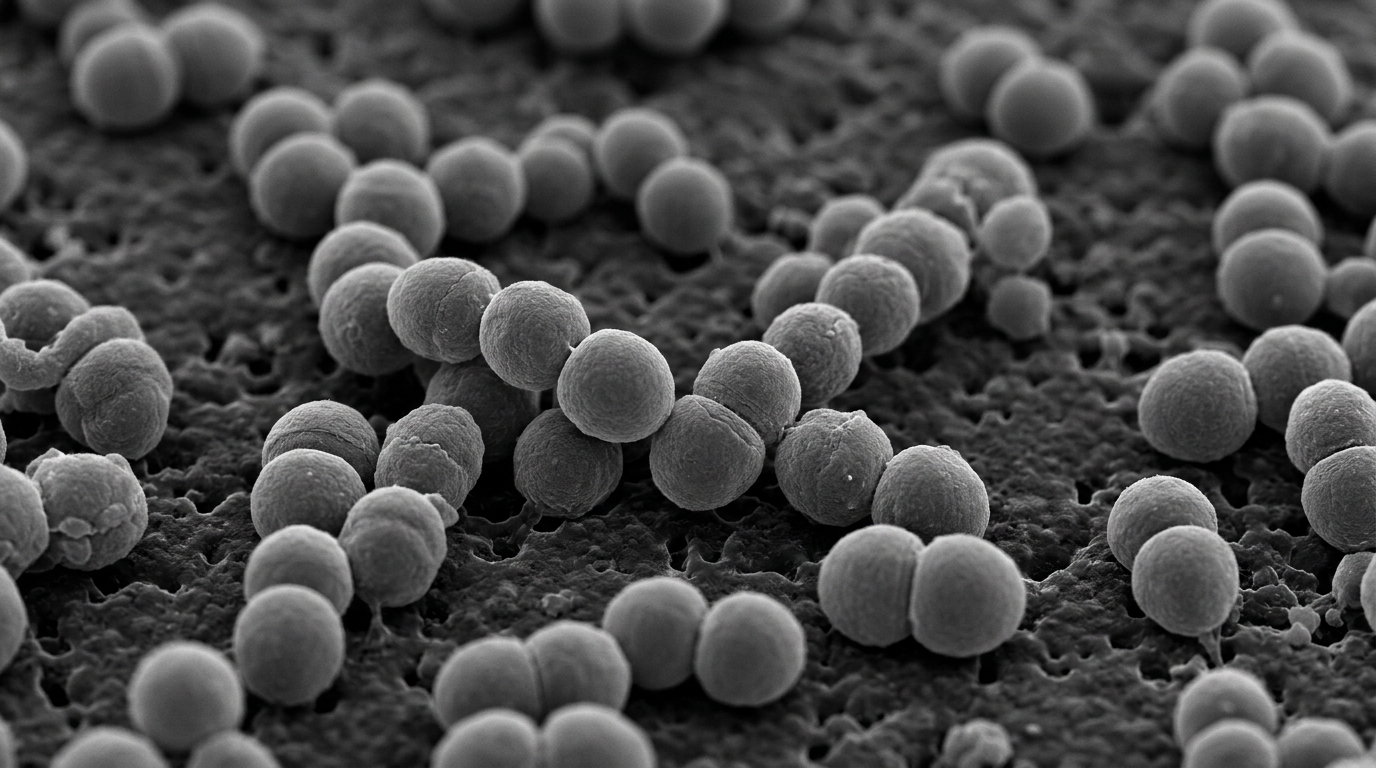
Streptococcus suis represents a major bacterial threat in global swine production, inhabiting the upper respiratory tract of pigs and causing severe clinical conditions including meningitis, septicaemia, polyserositis, arthritis, and endocarditis during the post-weaning stage. Beyond causing substantial agricultural and economic losses, the bacterium is an emerging zoonotic pathogen capable of infecting humans through direct occupational contact or the ingestion of undercooked pork products, leading to systemic illnesses such as meningitis, deafness, endocarditis, and death.
Accurate serotyping is critical for managing infections, tracing outbreaks, and formulating effective vaccines, particularly because commercial bacterin-based vaccines in Europe offer limited cross-protection across diverse serotypes. The species is highly heterogeneous, comprising 29 currently recognized serotypes defined by variations in capsular polysaccharides. Standard diagnostic workflows rely on two-step multiplex polymerase chain reaction assays targeting the capsular polysaccharide locus, which can be time-consuming, or high-resolution whole-genome sequencing, which remains resource-intensive for high-throughput routine surveillance.
To overcome these diagnostic bottlenecks, investigators evaluated Fourier transform infrared spectroscopy, a phenotypic analytical method that records the absorption of infrared radiation by vibrating chemical bonds within cellular macromolecules. By measuring how infrared energy interacts with molecular dipole moments across cellular components such as lipids, proteins, and carbohydrates, the technique generates an intricate, reproducible spectral fingerprint reflective of the bacterium’s specific biochemical makeup.
The experimental dataset comprised 92 field isolates recovered from diseased piglets across 11 Italian regions and 22 provinces, along with the reference strain ATCC 43765. The bacterial collection encompassed 13 distinct serotypes and 23 sequence types, isolated from clinical cases presenting with meningitis (63 cases), septicaemia (19 cases), arthritis (4 cases), pneumonia (4 cases), and pericarditis (1 case). Prior to spectroscopic assessment, isolate identities were confirmed using matrix-assisted laser desorption ionization–time-of-flight mass spectrometry, and serotypes were characterized using established polymerase chain reaction assays and whole-genome multi-locus sequence typing.
Isolates were cultivated on 5 percent sheep blood agar under 5 percent carbon dioxide at 37 degrees Celsius for 24 hours. Laboratory sample preparation followed a standardized smear-ultraviolet protocol, wherein bacterial biomass was distributed onto 96-spot silicon plates in four technical replicates, irradiated under a ultraviolet lamp for at least 10 minutes to ensure benchtop decontamination, and measured under ambient room conditions without strict humidity or temperature control. Instrument calibration and run-to-run quality control were maintained using standardized infrared test reagents.
A total of 368 infrared spectra were collected across the mid-infrared range of 4000 to 500 inverse centimeters using OPUS and IR Biotyper client software. Data processing involved calculating the second derivative of absorbance across nine data points using the Savitzky–Golay algorithm, followed by vector normalization and interpolation to integer wavenumbers. Comparative exploratory analysis of macromolecular spectral bands confirmed that the carbohydrate-dominated region spanning 1300 to 800 inverse centimeters delivered the highest discriminatory power for separating distinct serotypes.
Multivariate exploratory evaluation utilizing principal component analysis and linear discriminant analysis demonstrated clear spatial separation for serotypes 4, 7, 9, 10, and 23 in three-dimensional score plots, where 30 principal components accounted for 99.1 percent of the total spectral variance. Further dimensional deviation plots confirmed separation among serotypes 1, 5, 8, 15, and 19, whereas serotypes 1/2 and 2 remained spectrally indistinguishable, and isolate profile 1-14 showed overlap with serotype 1.
To automate isolate classification, investigators assessed multiple machine learning models embedded in the system software, including linear support vector machines, radial basis function support vector machines, and artificial neural networks. A radial basis function support vector machine configured with a cost parameter of 10 and a gamma value of 0.0001 achieved the highest performance during internal four-fold cross-validation across the full isolate dataset, utilizing an integrated traffic-light reliability scoring metric based on Youden index threshold calculations.
When serotypes 2 and 1/2 were treated as discrete independent classes, the automated classifier achieved an overall diagnostic accuracy of 90 percent, correctly categorizing 83 of 92 isolates. Misclassifications included five serotype 2 isolates categorized as serotype 1/2, one serotype 2 isolate designated as uncertain, and a single serotype 19 strain assigned to serotype 9. When spectrally overlapping serotypes 2 and 1/2 were grouped into a single combined operational category, overall classification accuracy reached 96.7 percent, resolving reciprocal misallocations between those two specific groups.
The biological basis of the high discriminatory capability in the 1300 to 800 inverse centimeter region corresponds directly to structural diversity in capsular polysaccharides, which constitute the primary antigenic markers defining Streptococcus suis serotypes. The inability of the spectroscopic model to separate serotypes 2 and 1/2 independently mirrors their subtle structural homology; their capsular side chains differ solely by the substitution of galactose in serotype 2 with N-acetylgalactosamine in serotype 1/2, generating near-identical infrared absorption profiles.
The researchers noted that phenotypic spectroscopic results can be influenced by subtle variations in culture parameters and strain-level biological heterogeneity, emphasizing the necessity of testing larger international isolate cohorts and establishing expanded spectral reference databases. Overall, the findings establish that Fourier transform infrared spectroscopy represents a rapid, high-throughput, and accessible diagnostic tool capable of augmenting routine bacterial surveillance and outbreak management without requiring specialized bioinformatic pipelines.
The evolutionary classification and regional surveillance of Streptococcus suis illustrate why rapid phenotypic identification remains critical across swine-producing territories. The species originally comprised thirty-five distinct serotypes based upon variations within capsular polysaccharides, designated serotypes 1 through 34 and serotype 1/2. Subsequent taxonomic revisions reclassified six of these groups into separate Streptococcus species, establishing the twenty-nine recognized serotypes monitored today. Although serotype 2 historically dominates clinical records in both swine herds and human patients worldwide, the distribution of invasive serotypes fluctuates across time and geography. Across several European nations, serotype 9 has emerged as the leading cause of invasive disease in pigs. Italian swine production reflects this dynamic heterogeneity, with serotypes 9 and 1/2 causing the majority of diagnosed pig infections alongside frequent detections of serotype 7. While human illnesses caused by serotypes other than serotype 2 remain uncommon, documented human vulnerability was underscored when the first human infection involving serotype 9 was reported in Thailand in 2015, highlighting the veterinary and public health importance of continuous serological monitoring.
To determine the spectral baseline that best discriminates these distinct serotypes, the research team examined multiple infrared absorption bands corresponding to major cellular macromolecule classes across the mid-infrared range between 4000 and 500 inverse centimeters. Specific macromolecular intervals evaluated during exploratory data analysis included lipid vibrations occurring between 3200 and 2800 inverse centimeters as well as 1500 and 1400 inverse centimeters, protein absorption features between 1800 and 1500 inverse centimeters, and carbohydrate signatures spanning 1200 to 900 inverse centimeters. Because capsular polysaccharides represent the primary serotype-defining surface architecture in Streptococcus suis, their distinctive carbohydrate compositions generate pronounced spectral divergences within the bacterial cell envelope. While each of these macromolecular bands provided baseline biochemical data, the default instrument interval spanning 1300 to 800 inverse centimeters ultimately provided the highest discriminatory power for distinguishing capsular serotypes during exploratory similarity calculations.
The configuration of automated classification tools required careful algorithmic structuring to address the uneven numerical representation of different serotypes within the field collection. The software environment incorporated three distinct machine learning options derived from accessible Java libraries: linear support vector machines, radial basis function support vector machines, and artificial neural networks. User-configurable parameters within these architectures were limited to the cost factor for support vector models and the number of training cycles for neural networks. Because several serotypes were represented by only one or two clinical isolates, an isolate-level leave-one-out cross-validation framework was deemed unsuitable for testing predictive performance. Instead, investigators trained the classifier on the entire eligible isolate dataset using a four-fold cross-validation scheme where data folds were generated randomly, allowing replicate spectra from individual isolates to be distributed across training and testing partitions to evaluate predictive accuracy.
Specific analytical provisions were also established for ambiguous strains and quality classification thresholds. Two isolates designated as profile 1–14 were excluded from classifier training because their precise serotype identity remains uncharacterized and initial exploratory spectroscopy revealed completely divergent spectral profiles between them; when tested against the trained model, one isolate was assigned to serotype 1 while the other was classified as uncertain. To report diagnostic confidence objectively, the software applies a three-tiered traffic-light scoring metric established from outlier distribution analyses using the Youden index. A green score indicates that a sample spectrum falls securely within the spectral boundaries of the training dataset, signifying high classification reliability. A yellow score indicates placement along the peripheral margins of the training space, denoting moderate reliability. A red score denotes an outlier positioned distant from all defined reference classes, warning that the assigned identification cannot be considered reliable.
Subject of Research: Fourier transform infrared spectroscopy for serotype discrimination of Streptococcus suis
Article Title: Application of Fourier transform infrared (FT-IR) spectroscopy to discriminate serotypes of Streptococcus suis
Article References: Massacci, F. R., Cordovana, M., Albini, E., Cucco, L., Piersanti, F., Russo, E., Leo, P., Baldaccini, A., Luppi, A., Vio, D., Paniccià, M., Pezzotti, G., & Magistrali, C. F. (2026). Application of Fourier transform infrared (FT-IR) spectroscopy to discriminate serotypes of Streptococcus suis. Veterinary Research, 57(1), Article 193. https://doi.org/10.1186/s13567-026-01870-3
Image Credits: AI Generated
DOI: 10.1186/s13567-026-01870-3
Keywords: Streptococcus suis, Fourier transform infrared spectroscopy, IR Biotyper, serotype discrimination, swine pathogen, zoonotic infection, capsular polysaccharides, support vector machine, radial basis function, principal component analysis, linear discriminant analysis, multiplex PCR, whole-genome sequencing, MALDI-TOF mass spectrometry, Savitzky-Golay algorithm, bacterial typing, epidemiological surveillance
News Source: Kristina Jarvis. (November 29, 2026). Infrared Spectroscopy Discriminates Swine Pathogen Streptococcus Suis Serotypes With High Accuracy. Scienmag.