• HOME
  • NEWS
  • EXPLORE
    • CAREER
      • Companies
      • Jobs
    • EVENTS
    • iGEM
      • News
      • Team
    • PHOTOS
    • VIDEO
    • WIKI
  • BLOG
  • COMMUNITY
    • FACEBOOK
    • INSTAGRAM
    • TWITTER
Saturday, February 7, 2026
BIOENGINEER.ORG
No Result
View All Result
  • Login
  • HOME
  • NEWS
  • EXPLORE
    • CAREER
      • Companies
      • Jobs
        • Lecturer
        • PhD Studentship
        • Postdoc
        • Research Assistant
    • EVENTS
    • iGEM
      • News
      • Team
    • PHOTOS
    • VIDEO
    • WIKI
  • BLOG
  • COMMUNITY
    • FACEBOOK
    • INSTAGRAM
    • TWITTER
  • HOME
  • NEWS
  • EXPLORE
    • CAREER
      • Companies
      • Jobs
        • Lecturer
        • PhD Studentship
        • Postdoc
        • Research Assistant
    • EVENTS
    • iGEM
      • News
      • Team
    • PHOTOS
    • VIDEO
    • WIKI
  • BLOG
  • COMMUNITY
    • FACEBOOK
    • INSTAGRAM
    • TWITTER
No Result
View All Result
Bioengineer.org
No Result
View All Result
Home NEWS Science News Biology

Some monkeys prone to isolation

Bioengineer by Bioengineer
February 11, 2018
in Biology
Reading Time: 2 mins read
0
Share on FacebookShare on TwitterShare on LinkedinShare on RedditShare on Telegram
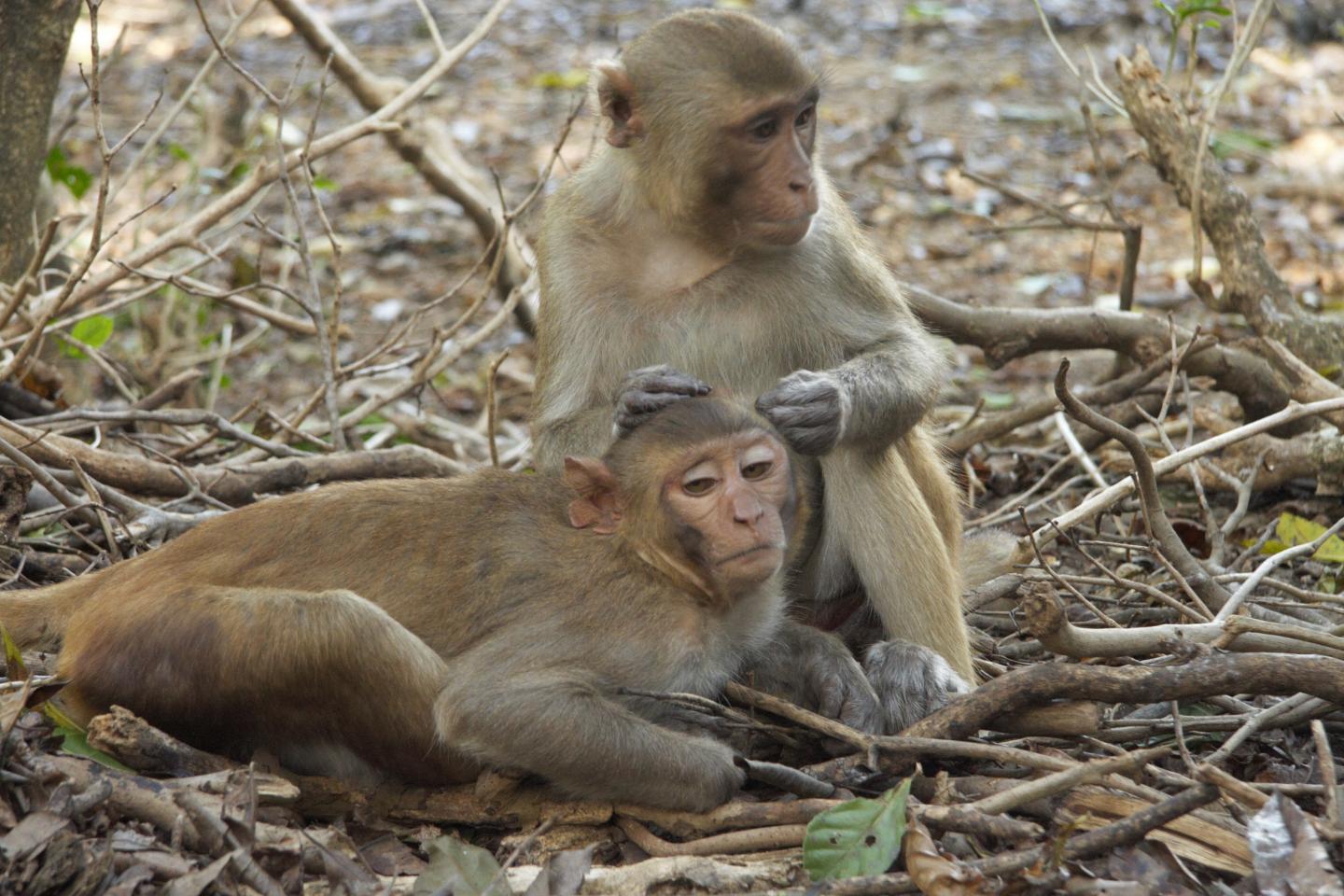
IMAGE

Credit: Lauren Brent

Some individual animals are prone to social isolation, new research suggests.

The study of rhesus macaques showed some of the monkeys remain socially isolated for much of their lives, suggesting their isolation is caused by a persistent trait or traits.

The researchers – from the universities of Exeter, Puerto Rico and Pennsylvania – believe the cause is a mixture of their genes and other factors such as age, sex and family size.

Social isolation is linked to reduced life expectancy in many species, including humans.

"Understanding social isolation is really important, and studying macaques might give us clues about human behaviour," said Dr Lauren Brent, from the University of Exeter.

"Isolation is the latest epidemic among humans, and research has suggested it is as bad for us as smoking 15 cigarettes a day.

"Given the benefits of social integration, we need to understand why some individual animals tend to be socially isolated."

The researchers measured integration by observing how much time macaques spent grooming others and being groomed – a key social behaviour for the species.

The factors that played a role in isolation were age, sex, social status, group size and how long a macaque had belonged to a social group.

However, the identity of an animal's mother did not play a role, suggesting behaviour that leads to isolation is not learned from the mother.

Dr Brent said the findings suggest isolation could be partly maintained by natural selection – meaning there might be some evolutionary benefits.

The paper did not examine this in detail, but the possible benefits of isolation include lower risks of disease and conflict.

The data came from 429 adult rhesus macaques at the Cayo Santiago field station in Puerto Rico, which was devastated earlier this year by Hurricane Maria.

Researchers including Dr Brent have raised more than £70,000 to repair the field station and support people living nearby.

###

The paper, published in the journal Scientific Reports, is entitled: "Persistent social isolation reflects identity and social context but not maternal effects or early environment."

Media Contact

Alex Morrison
[email protected]
44-013-927-24828
@uniofexeter

http://www.exeter.ac.uk

Related Journal Article

http://dx.doi.org/10.1038/s41598-017-18104-4

Share12Tweet8Share2ShareShareShare2

Related Posts

Florida Cane Toad: Complex Spread and Selective Evolution

Florida Cane Toad: Complex Spread and Selective Evolution

February 7, 2026
New Study Uncovers Mechanism Behind Burn Pit Particulate Matter–Induced Lung Inflammation

New Study Uncovers Mechanism Behind Burn Pit Particulate Matter–Induced Lung Inflammation

February 6, 2026

DeepBlastoid: Advancing Automated and Efficient Evaluation of Human Blastoids with Deep Learning

February 6, 2026

Navigating the Gut: The Role of Formic Acid in the Microbiome

February 6, 2026
Please login to join discussion

POPULAR NEWS

  • Robotic Ureteral Reconstruction: A Novel Approach

    Robotic Ureteral Reconstruction: A Novel Approach

    82 shares
    Share 33 Tweet 21
  • Digital Privacy: Health Data Control in Incarceration

    63 shares
    Share 25 Tweet 16
  • Study Reveals Lipid Accumulation in ME/CFS Cells

    57 shares
    Share 23 Tweet 14
  • Breakthrough in RNA Research Accelerates Medical Innovations Timeline

    53 shares
    Share 21 Tweet 13

About

We bring you the latest biotechnology news from best research centers and universities around the world. Check our website.

Follow us

Recent News

Decoding Prostate Cancer Origins via snFLARE-seq, mxFRIZNGRND

Digital Health Perspectives from Baltic Sea Experts

Florida Cane Toad: Complex Spread and Selective Evolution

Subscribe to Blog via Email

Enter your email address to subscribe to this blog and receive notifications of new posts by email.

Join 73 other subscribers
  • Contact Us

Bioengineer.org © Copyright 2023 All Rights Reserved.

Welcome Back!

Login to your account below

Forgotten Password?

Retrieve your password

Please enter your username or email address to reset your password.

Log In
No Result
View All Result
  • Homepages
    • Home Page 1
    • Home Page 2
  • News
  • National
  • Business
  • Health
  • Lifestyle
  • Science

Bioengineer.org © Copyright 2023 All Rights Reserved.