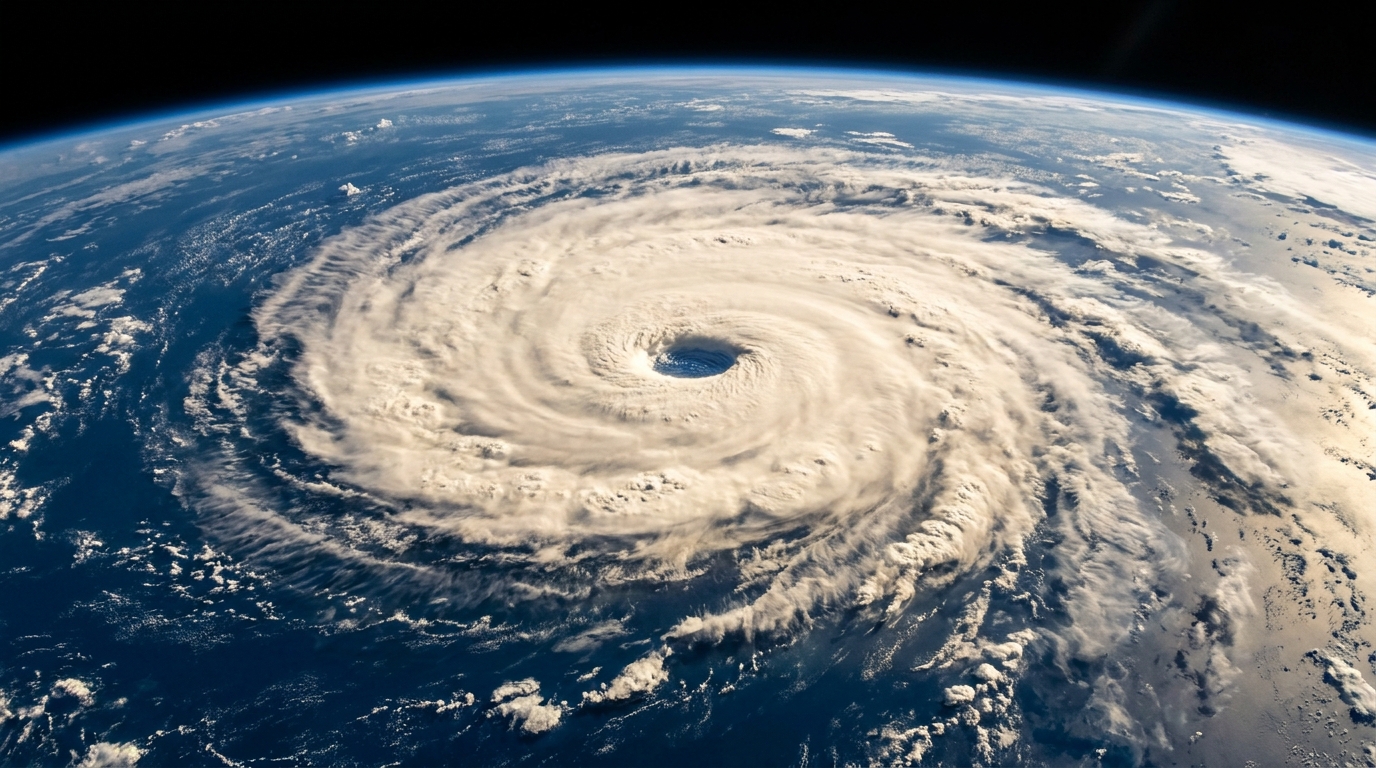
A research team has introduced TRGF-KG, a specialized dual-branch forecasting architecture that integrates continuous historical trajectory sequences with explicit relational structures derived from a knowledge graph to advance multi-step typhoon track prediction. Tropical cyclones, commonly designated as typhoons across the northwestern Pacific Ocean and the South China Sea, present severe natural hazards capable of inflicting catastrophic human casualties and widespread economic damage through violent winds, intense rainfall, and dangerous storm surges. While numerical weather prediction frameworks and global atmospheric deep learning models have made substantial strides in meteorological forecasting, tracking individual typhoon trajectories over extended forecast horizons remains fundamentally challenging due to complex, nonlinear interactions between evolving storm characteristics and atmospheric dynamics. The proposed framework directly models historical storm records without requiring gridded atmospheric data, addressing a complementary operational niche where comprehensive gridded meteorological fields may be inaccessible.
The central innovation of the TRGF-KG architecture lies in bridging two fundamentally distinct forms of historical typhoon information: continuous temporal trajectory measurements and structured relational associations among disaster events, observation sequences, and physical attributes. While temporal observation sequences record the evolving geographical coordinates and core intensity parameters of a storm, standard sequence models often struggle with error accumulation and recursive drift across extended forecast windows. Conversely, knowledge graphs explicitly represent typed relationships, event affiliations, and discrete attribute classifications, but their relational embeddings operate at different semantic granularities that do not naturally synchronize with dynamic, continuous motion vectors. The researchers resolved this structural mismatch by formulating a dual-branch neural framework equipped with temporal-relational alignment mechanisms and motion-aware adaptive feature fusion, ensuring that historical context remains dynamically responsive to recent changes in typhoon motion.
To filter high-frequency observational noise and preserve long-range dependencies, this branch divides consecutive historical observations into non-overlapping temporal blocks. Each block undergoes linear feature flattening, project mapping into a shared high-dimensional representation space, and learnable block-positional encoding before entering a Transformer encoder equipped with dropout regularization. This block-level dynamic temporal representation sequence effectively models local evolutionary variations alongside cross-block temporal dependencies, generating an organized sequence of hidden state vectors that encapsulate the continuous kinematic and barometric history of the storm over the input observation window.
Simultaneously, the relational representation branch constructs a domain-specific typhoon knowledge graph that formalizes storm events, data sources, time-indexed observations, disaster categories, and categorized attribute bins. In addition to temporal order links connecting consecutive observations, the knowledge graph discretizes continuous translation speeds and the radii of force-7 winds into distinct quartile-based bins, linking observation nodes to their respective attribute-bin entities. To encode these rich structural priors, a Relational Graph Convolutional Network (R-GCN) performs relation-specific message passing utilizing basis decomposition to bound parameter expansion. The R-GCN encoder is pretrained via self-supervised link prediction using a DistMult decoder on training-period typhoons from 2000 to 2018, and is subsequently frozen to prevent data leakage. During operational forecasting, isolated historical local graphs are constructed strictly within each retrospective sample window, recomputing structural representations inductively from observed historical properties.
To unite these disparate representations, TRGF-KG applies a meticulous temporal-relational alignment procedure that links observation nodes to their corresponding temporal blocks using typhoon identifiers, original observation indices, and shared block boundaries. Once structural prior embeddings are mapped into matching block-level dimensions, the model executes motion-aware adaptive fusion via sample-dependent branch weighting and bounded feature modulation. A shared linear projection and learnable scoring mechanism evaluate the relative information density of each sample to generate normalized scalar weights via softmax. Concurrently, a motion-conditioning network extracts relative trajectory displacement vectors and calculates bounded scale and shift modulations governed by hyperbolic tangent scaling, dynamically fine-tuning the relational features in direct response to the storm’s most recent directional acceleration and translation behavior.
Rather than attempting to predict unconstrained absolute geographic coordinates directly, the fused representations are directed to forecast multi-step eastward and northward position corrections in kilometers relative to an established climatology-and-persistence baseline known as T-CLIPER. The reference T-CLIPER forecast synthesizes recent storm persistence with training-period monthly climatological trajectory fields, establishing a physically grounded baseline track. The fused deep learning representations then pass through global average pooling and a linear prediction head to output standardized correction vectors across all future forecast steps. These standardized offsets are subsequently scaled, adjusted via a validation-tuned calibration coefficient, and converted into angular longitude and latitude increments using spherical geometry equations that incorporate latitude-dependent longitudinal distance scaling and coordinate wraparound corrections.
The researchers trained and evaluated the framework using the Chinese Coastal Typhoon Track Dataset compiled by the Marine Science Data Center of the Chinese Academy of Sciences, spanning typhoon records in the western Pacific from 2000 through 2022 recorded at 6-hour intervals. Each supervised learning sample utilized a historical window of 12 consecutive observations—equivalent to a 72-hour retrospective period—to forecast the precise positions of the subsequent 24 observation moments, representing a full 144-hour prediction horizon.
Experimental evaluations against an extensive suite of baseline models demonstrated that TRGF-KG consistently delivered superior forecasting accuracy across the multi-step horizon. When compared against pure persistence, T-CLIPER, Bayesian recurrent models (Bayesian LSTM and Bayesian RNN), and generic temporal architectures (LSTM, Transformer, TimesNet, SegRNN, and ETSformer), TRGF-KG achieved the lowest mean error across seven of eight primary evaluation metrics. Specifically, the framework attained an overall average displacement error (ADE) of 118.77 kilometers and a distance root mean square error (RMSE) of 182.85 kilometers over the complete 24-step horizon. Furthermore, the model recorded 90th and 95th percentile distance errors of 255.84 kilometers and 351.17 kilometers, respectively, confirming a significant reduction in the extreme error tails that typically plague long-range trajectory modeling.
Analysis of forecast accuracy across discrete lead times further highlighted the strengths of the hybrid architecture. At forecast step 6, step 12, and step 18, TRGF-KG posted mean position errors of 56.87 kilometers, 108.62 kilometers, and 167.19 kilometers, respectively, outperforming every evaluated benchmark at each interval. At the maximum 24th step, corresponding to a 144-hour lead time, the model yielded a mean position error of 247.10 kilometers, outperforming persistence, T-CLIPER, and all standalone generic deep learning baselines, while falling slightly behind Bayesian RNN’s mark of 242.80 kilometers. Relative to reference forecasts, TRGF-KG attained overall ADE skill scores of 9.81 percent over Persistence and 2.71 percent over T-CLIPER, leading all comparative methods across repeated experimental iterations.
Comprehensive ablation and replacement trials affirmed the distinct utility of each architectural component within TRGF-KG. Removing the knowledge graph branch entirely increased the overall ADE to 120.64 kilometers, while relying on naive feature concatenation instead of adaptive fusion resulted in an ADE of 120.22 kilometers. Eliminating motion-conditioned modulation while retaining adaptive branch weighting yielded an ADE of 119.35 kilometers, demonstrating that dynamic feature adjustment based on recent historical motion provides tangible predictive value. Similarly, simplifying the knowledge graph to a bare sequential chain graph elevated the ADE to 121.42 kilometers, verifying the specific advantage of encoding multi-relational attributes such as translation speed and gale-force wind radii. Permutation tests across the 23 test typhoons confirmed consistent directional gains across these key ablation comparisons.
Case analyses on specific historical storms illustrated how TRGF-KG adapts to divergent track geometries. For Typhoon Chanthu, a highly tortuous storm characterized by sharp directional shifts from westward to northward motion and substantial pressure variations, the proposed model tracked the northern curvature far more accurately than competing generic architectures, obtaining the lowest coordinate component errors. For Typhoon Muifa, a storm characterized by a relatively straight northward track, the framework successfully matched early observation steps and resisted premature westward displacement biases observed in baseline methods. Although the research authors acknowledge limitations including geographic restriction to the western Pacific and the current absence of multi-basin environmental reanalysis fields, the findings robustly substantiate that coupling relational knowledge graphs with continuous temporal dynamics creates a powerful, resilient methodology for multi-step cyclone trajectory forecasting.
Subject of Research: Deep learning and knowledge graph integration for multi-step typhoon track prediction
Article Title: A multi-step typhoon track prediction method integrating spatiotemporal trajectory dynamics and prior structural relations
Article References: Zhou, C., Cui, Z., Chen, H., & Zhang, X. (2026). A multi-step typhoon track prediction method integrating spatiotemporal trajectory dynamics and prior structural relations. Discover Computing, 29(1), Article 947. https://doi.org/10.1007/s10791-026-10906-3
Image Credits: AI Generated
DOI: 10.1007/s10791-026-10906-3
Keywords: Typhoon track prediction, Deep learning, Knowledge graphs, Transformer, Relational graph convolutional networks, Tropical cyclones, Spatiotemporal trajectory dynamics, Chinese Coastal Typhoon Track Dataset, Motion-aware adaptive fusion, Disaster preparedness, Meteorological forecasting, T-CLIPER baseline, Average displacement error, Western Pacific typhoons, DistMult pretraining, Feature modulation
News Source: Denise Maddox. (November 28, 2026). Dual Branch Model Blends Knowledge Graphs and Trajectories for Typhoon Tracking. Scienmag.