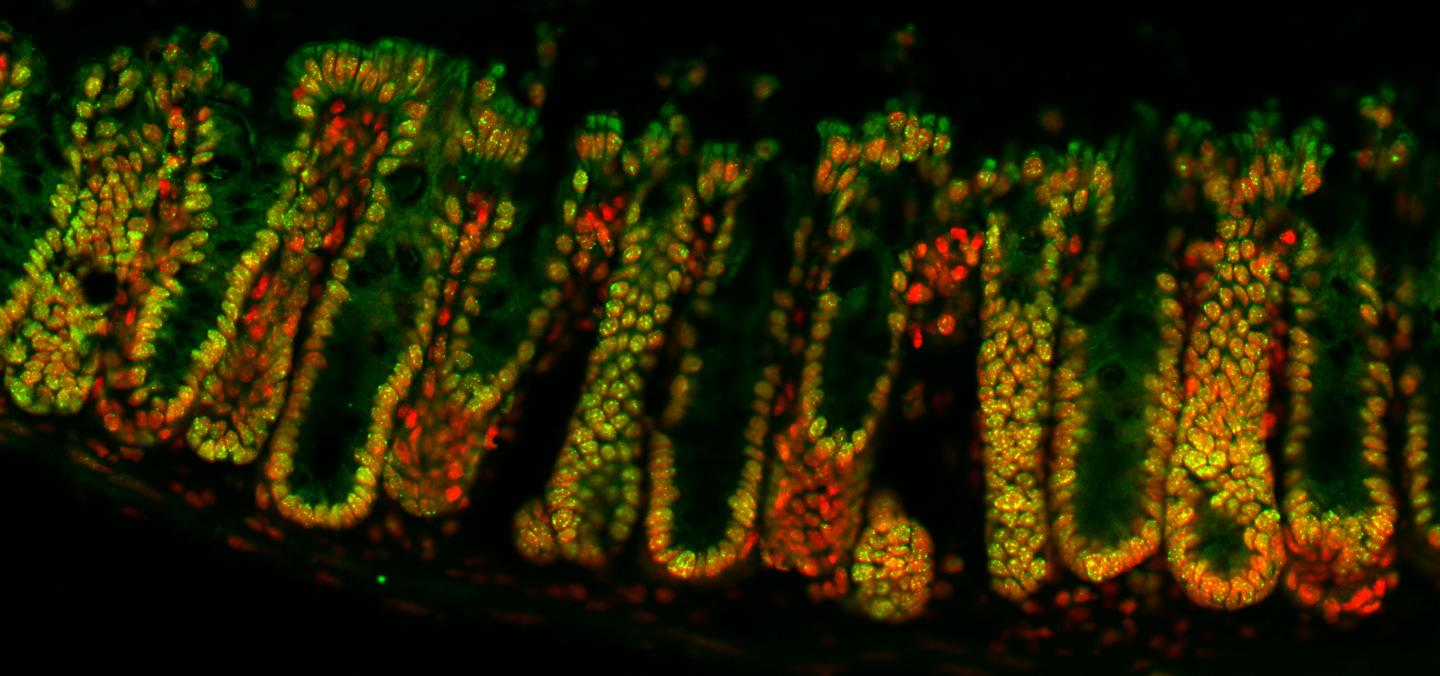
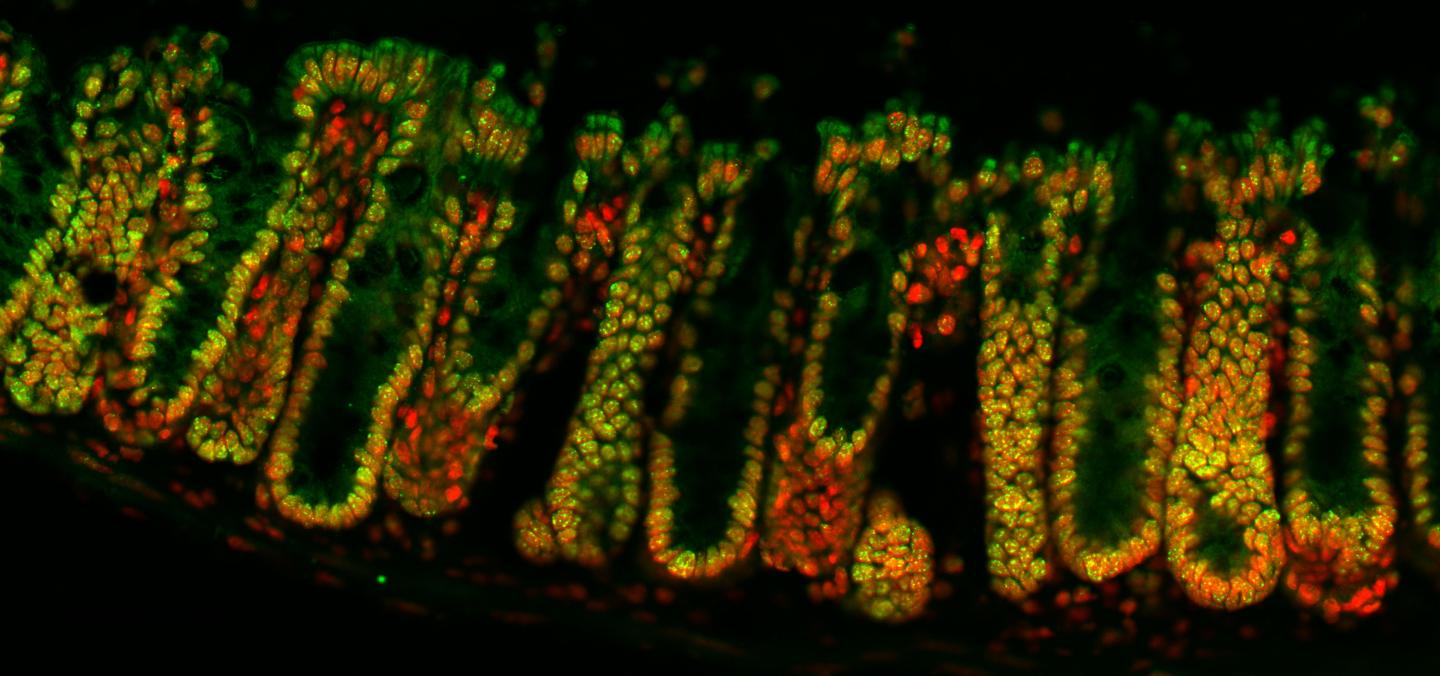
Credit: Dr Juri Kazakevych, Babraham Institute
Key Messages:
- Good bacteria in the gut can produce a chemical signal that affects the human genome
- The changes in the genome may help to fight infections and prevent cancer
- The chemical signal is produced by bacteria from the digestion of fruits and vegetables
Scientists from the Babraham Institute near Cambridge in collaboration with colleagues from Brazil (here and here) and Italy have discovered a way that good bacteria in the gut can control genes in our cells. The work, published today (9th January) in Nature Communications, shows that chemical messages from bacteria can change the location of key chemical markers throughout the human genome. By communicating in this way, the bacteria may help to fight infections and to prevent cancer.
This work, led by Dr Patrick Varga-Weisz shows how chemicals produced by bacteria in the gut from the digestion of fruit and vegetables can affect genes in the cells of the gut lining. These molecules, called short chain fatty acids, can move from the bacteria and into our own cells. Inside our cells, they can trigger processes that change gene activity and that ultimately affect how our cells behave.
This new research shows that the short chain fatty acids increase the number of chemical markers on our genes. These markers, called crotonylations, were only discovered recently and are a new addition to the chemical annotations in the genome that are collectively called epigenetic markers. The team showed that short chain fatty acids increase the number of crotonylations by shutting down a protein called HDAC2. Scientists think that changes in crotonylation can alter gene activity by turning genes on or off.
The team studied mice that had lost most of the bacteria in their gut and showed that their cells contained more of the HDAC2 protein than normal. Other research has shown that an increase in HDAC2 can be linked to an increased risk of colorectal cancer (here and here). This could mean that regulating crotonylation in the genome of gut cells is important for preventing cancer. It also highlights the important role of good bacteria and a healthy diet in this process.
This research was made possible by support from the bilateral BBSRC-Brazil fund established as part of an agreement between Research Councils UK (RCUK) and the State of Säo Paulo Research Foundation (FAPESP) to welcome, encourage and support collaborative research between the UK and Brazil.
First author, Rachel Fellows, said: "Short chain fatty acids are a key energy source for cells in the gut but we've also shown they affect crotonylation of the genome. Crotonylation is found in many cells but it's particularly common in the gut. Our study reveals why this is the case by identifying a new role for HDAC2. This, in turn, has been implicated in cancer and offers an interesting new drug target to be studied further."
Lead scientist Dr Patrick Varga-Weisz, said: "Our intestine is the home of countless bacteria that help in the digestion of foods such as plant fibres. They also act as a barrier to harmful bacteria and educate our immune system. How these bugs affect our cells is a key part of these processes. Our work illuminates how short chain fatty acids contribute to the regulation of proteins that package the genome and, thus, they affect gene activity."
###
Media Contact
Jonathan Lawson
[email protected]
01-223-496-230
@babrahaminst
http://www.babraham.ac.uk/
Original Source
https://www.babraham.ac.uk/news/2018/01/how-good-bacteria-control-your-genes http://dx.doi.org/10.1038/s41467-017-02651-5