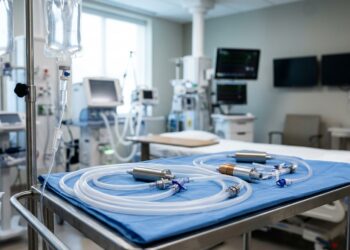
Portable metabolic gas analyzers can achieve acceptable relative validity and high reliability under controlled laboratory conditions, yet measurement accuracy fluctuates substantially across exercise intensities, operational modes, and applied field environments. A systematic review published in Sports Medicine – Open evaluated 56 empirical investigations spanning from 1992 to 2025 to determine how effectively wearable metabolic systems replicate criterion laboratory standards. While select high-tier systems closely mirrored stationary carts during steady-state exercise, precision degraded during transitional workloads, high-intensity intervals, and real-world testing. The authors emphasized that acceptable relative agreement with stationary carts must not be conflated with absolute technical accuracy, because reference metabolic carts themselves exhibit documented measurement bias.
Maximal oxygen uptake, commonly abbreviated as VO2max, represents the maximal rate at which the body can intake, transport, and utilize oxygen during exhausting physical exertion. In sports physiology and medicine, VO2max serves as an indispensable physiological benchmark for evaluating endurance capacity, prescribing training regimens, and monitoring therapeutic interventions. Beyond athletic testing, clinical research has established VO2max as one of the most potent predictors of all-cause mortality, surpassing traditional risk factors like hypertension, obesity, and smoking. For decades, accurate determination of this metric depended almost exclusively on open-circuit indirect calorimetry within specialized laboratories using stationary carts or Douglas bag systems. Although stationary systems like ParvoMedics TrueOne, Vyntus, and Oxycon Pro provide high precision, their bulk, cost, complex calibration demands, and requirement for trained technicians prevent routine deployment in real-world training venues, athletic competitions, or remote occupational settings.
To overcome these logistical constraints, manufacturers introduced portable metabolic gas analyzers to measure ventilatory volume and gas fractions during ambulatory movement. To rigorously assess the validity and reproducibility of these mobile systems, the systematic review team followed the PRISMA 2020 guidelines under a protocol prospectively registered on the Open Science Framework. The investigators searched four major electronic databases—PubMed, Web of Science, Scopus, and SPORTDiscus—from inception through June 7, 2025. Following dual independent screening of 191 initial database records and 34 citations identified through tracking, the authors selected 56 empirical validation studies for qualitative synthesis. The included investigations comprised 25 cross-sectional designs and 31 repeated-measures cohorts enrolling between 1 and 50 participants, with a median sample size of 14 participants and an interquartile range of 10 to 20.
Methodological quality across the reviewed corpus was appraised using Box B of the COSMIN risk of bias checklist adapted for physiological measurement instruments. Quality scores across the 56 investigations spanned from 3/11 to 11/11, with approximately sixty percent of studies achieving scores between 7/11 and 9/11, indicating acceptable methodological rigor with minor reporting omissions. Three investigations attained the maximum rating of 11/11, while six studies scored 6/11 or below due to vague protocol descriptions and inadequate sample characterization. To determine overall confidence in the evidence, the researchers applied a customized adaptation of the GRADE framework across five domains: risk of bias, inconsistency, imprecision, indirectness, and publication bias. Certainty ratings differed substantially across parameters, demonstrating moderate to high certainty for primary oxygen uptake variables but declining to low or moderate certainty for derived gas values and ventilatory thresholds.
Among evaluated hardware, the COSMED K5 and the Cortex MetaMax 3B demonstrated the strongest relative validity and reliability compared against criterion laboratory apparatus. In controlled human exercise trials, the COSMED K5 frequently exhibited Pearson correlation coefficients ranging from 0.98 to 0.99 and concordance correlation coefficients exceeding 0.95 against Douglas bags and calibrated carts. The MetaMax 3B similarly demonstrated excellent test-retest reproducibility, with intraclass correlation coefficients reaching 1.00 and typical percentage errors under two percent for primary oxygen uptake during steady exercise. However, the review illuminated critical architectural distinctions in how portable devices process expired air. For the COSMED K5, operating in Dynamic Mixing Chamber mode yielded superior precision and lower bias compared to Breath-by-Breath mode. In comparative human trials, Dynamic Mixing Chamber configurations produced oxygen uptake measurement errors as low as minus 2.05 percent and intraclass correlations above 0.92, whereas Breath-by-Breath sampling proved far more susceptible to transient ventilatory fluctuations.
A pivotal contribution of the systematic review is its conceptual distinction between relative validity derived from human exercise comparisons and absolute technical validity established through metabolic simulators and combustion methods. The authors underscored that comparing a portable device to a stationary cart during human exercise introduces biological variability and reference bias, because stationary carts demonstrate documented measurement errors between 1.1 percent and 13.3 percent. By contrast, mechanical simulators and alcohol combustion approaches provide known, reproducible gas concentrations and volumetric outputs independent of human breathing irregularities. In rigorous simulation trials by Guidetti and colleagues, two COSMED K5 units demonstrated absolute errors below two percent across 14 simulated metabolic rates. However, multi-device simulator evaluations by Van Hooren and colleagues evaluating 57 automated cardiopulmonary systems revealed that baseline technical errors across commercial models spanned from 3.29 percent to 10.6 percent, proving that passing standard manufacturer calibration routines does not ensure uniform absolute measurement accuracy.
Conversely, emerging compact and mask-integrated systems like the VO2 Master Pro and PNOĒ exhibited noticeably wider measurement variability, particularly during strenuous, dynamic, or transitional exercise bouts. Because these compact analyzers lack active physical mixing chambers and rely on miniature breath-by-breath sensors, they proved vulnerable to gas sampling delays, alignment errors, and software smoothing artifacts. Although the VO2 Master Pro demonstrated acceptable relative correlations with laboratory systems during human exercise, metabolic simulation testing of three units revealed individual oxygen uptake errors ranging from 0.53 percent to 21.8 percent. Similarly, investigations examining the wearable Calibre device revealed alarming performance divergences driven by firmware updates. While an early Calibre model showed acceptable simulator error rates below 5.5 percent, a subsequent evaluation of updated firmware documented mean absolute percentage errors exceeding 20 percent for both oxygen uptake and carbon dioxide production, alongside day-to-day variability up to seventeen times greater than that observed in stationary reference systems.
The synthesis also highlighted substantial technological challenges when portable analyzers are deployed outside sheltered laboratory settings into practical sports, military, or environmental testing grounds. Only five of the 56 included studies evaluated portable systems under authentic or simulated field conditions, such as outdoor walking, winter conditions, wind exposure, and simulated cycling courses. Although rugged systems like the Oxycon Mobile and COSMED K5 maintained reasonable tracking stability over prolonged walking protocols, fluctuating ambient temperatures, barometric shifts, humidity variations, and unstable airflow introduced sensor drift and mask seal degradation. Compounding these environmental vulnerabilities, recent simulator research revealed striking unit-to-unit variability among nominally identical devices produced by the same manufacturer. Across 57 tested cardiopulmonary units, inter-unit variability ranged from 1.98 percent to 12.7 percent for oxygen uptake, even though every analyzer had successfully passed required morning calibration routines. This unexpected divergence demonstrates that researchers cannot safely interchange different hardware units across longitudinal monitoring studies without establishing cross-unit calibration offsets.
Beyond primary oxygen consumption, the systematic review revealed that secondary gas exchange metrics and derived physiological parameters exhibit significantly poorer measurement consistency across almost all portable analyzers. Because energy expenditure calculations amplify underlying errors from both gas measurements, derived metabolic caloric costs demonstrated substantial uncertainty.
In synthesizing portable metabolic assessment research, the authors identified recurring methodological shortcomings that hinder direct comparability across the published sports science literature. A predominant limitation remains reliance on small, demographically restricted cohorts, with most validation trials enrolling fewer than twenty young, recreationally active male participants while largely overlooking females, children, aging adults, and clinical cohorts. To elevate future device validation standards, the authors recommend conducting large-scale multicenter trials employing standardized exercise protocols and automated metabolic simulation benchmarking. Clinicians, sports scientists, and athletic conditioning coaches are urged to select validated hardware tailored to their specific exercise demands, maintain rigorous environmental calibration records, and avoid treating portable metabolic analyzers as universally interchangeable substitutes for gold-standard laboratory calorimetry.
Subject of Research: Validity and reliability of portable metabolic gas analyzers for VO2max measurement
Article Title: Validity and Reliability of Portable VO2max Measurement Systems: A Systematic Review with GRADE
Article References: Bruno, J., Thapa, R. K., Santos, Â., Montoro-Bombú, R., & Sarmento, H. (2026). Validity and Reliability of Portable VO2max Measurement Systems: A Systematic Review with GRADE. Sports Medicine – Open, 12(1), Article 191. https://doi.org/10.1186/s40798-026-01157-z
Image Credits: AI Generated
DOI: 10.1186/s40798-026-01157-z
Keywords: portable gas analyzers, VO2max measurement, metabolic cart, cardiorespiratory fitness, COSMED K5, MetaMax 3B, VO2 Master Pro, PNOE, dynamic mixing chamber, breath by breath, metabolic simulator, systematic review, GRADE framework, COSMIN checklist, test retest reliability, respiratory exchange ratio, ventilatory threshold, indirect calorimetry
News Source: Ophelia Keating. (November 28, 2026). Portable VO2max Analyzers Show Reliable Laboratory Agreement but Variable Field Accuracy. Scienmag.