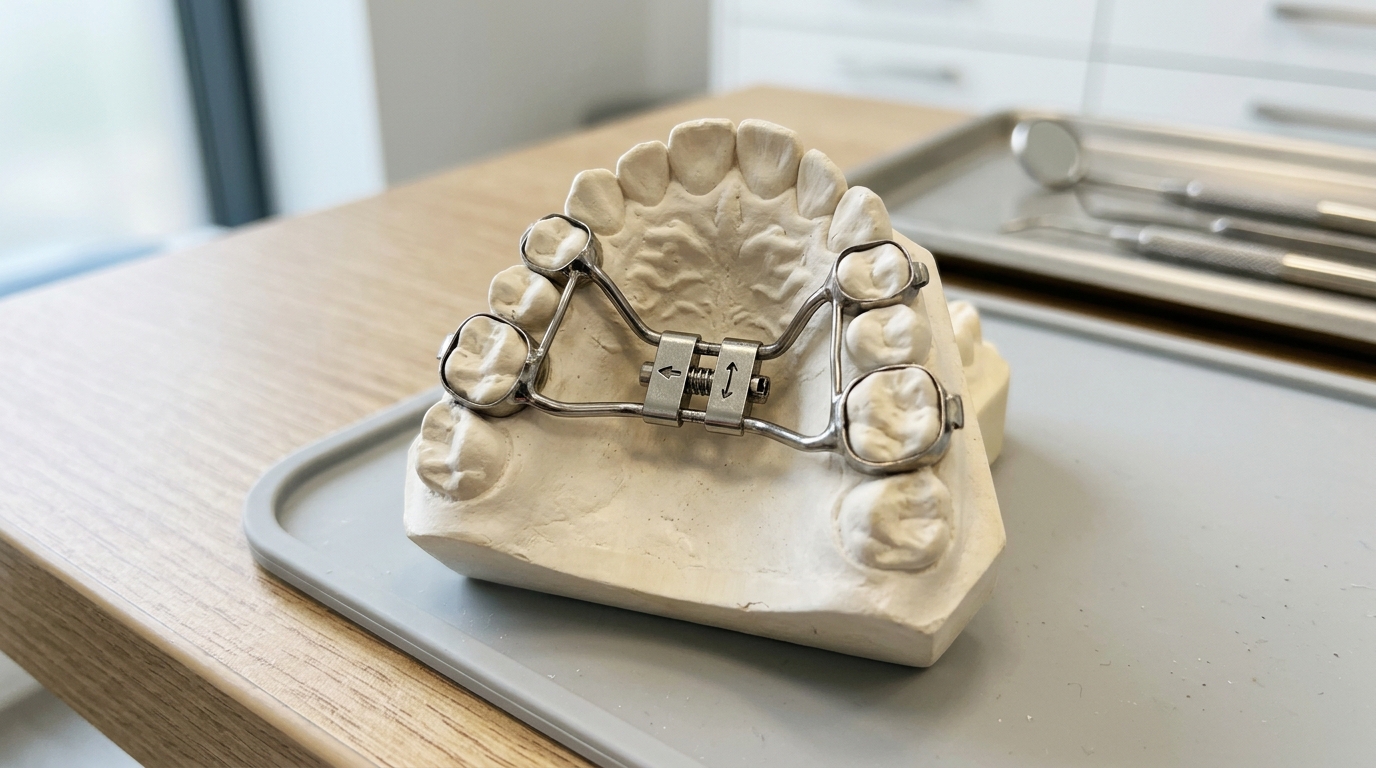
Large language models demonstrated question-specific and scale-specific differences when answering orthodontic queries regarding rapid maxillary expansion, with performance diverging between accuracy and completeness while overall readability remained statistically comparable across platforms. Researchers found that performance advantages displayed by individual artificial intelligence tools were confined to isolated clinical topics rather than reflecting consistent superiority across all evaluated parent and adolescent questions. Consequently, higher readability scores did not correspond to superior clinical quality across the tested systems.
The investigation, conducted by researchers Neslihan Ebru Şenışık, Burcu Aygün Akbulut, and Özgür Koşkan, examined how accurately, completely, and readably artificial intelligence systems responded to inquiries selected by young orthodontic patients and their families. Rapid maxillary expansion represents a specialized orthodontic intervention, prompting the research team to investigate whether popular free-tier conversational web interfaces could reliably answer questions originating directly from adolescent patients scheduled for treatment and their respective parents.
To construct an authentic assessment, the investigators first established a comprehensive question pool derived from structured clinical interviews with practicing orthodontic specialists. They subsequently administered this collection of questions to forty children aged ten to fourteen years who were scheduled to undergo McNamara-bonded rapid maxillary expansion treatment, alongside one corresponding parent for each participating child. The researchers then identified the ten most frequently selected inquiries within the child group and the parent group separately.
These selected queries were submitted in the Turkish language to the free-tier web interfaces of three major platforms: ChatGPT, Gemini, and Copilot. To eliminate bias during evaluation, five experienced orthodontists independently reviewed the anonymized and coded model responses. The expert evaluators scored clinical accuracy using a five-point Likert scale ranging from one to five, while clinical completeness was measured using a three-point Likert scale ranging from one to three.
The linguistic accessibility of the generated text was formally assessed using the Ateşman Readability Index. For analytical rigor, the authors evaluated differences among the three artificial intelligence platforms using the non-parametric Friedman test for expert-derived accuracy and completeness scores, while applying repeated-measures analysis of variance to analyze readability metrics, establishing statistical significance at a threshold of p less than or equal to 0.05.
In the child-directed inquiry category, statistically significant pairwise differences were limited to specific topics and varied between the accuracy and completeness scales. Within this adolescent question set, ChatGPT achieved significantly higher accuracy ratings than Copilot on questions concerning appliance duration and screw activation procedures. Meanwhile, Gemini demonstrated significantly higher accuracy, completeness, or both when compared directly against Copilot across several distinct child-oriented questions.
The parent-directed evaluations similarly revealed selective advantages rather than uniform excellence across the models. Gemini achieved higher accuracy and completeness scores than Copilot for selected parent questions, whereas ChatGPT surpassed Copilot in accuracy exclusively regarding appliance duration. Across both the child-directed and parent-directed question series, repeated-measures analysis of variance detected no statistically significant differences in readability among the three evaluated language models at the p greater than 0.05 level.
A descriptive clinical evaluation uncovered notable qualitative deficiencies, including instances where advice specific to rapid maxillary expansion was conflated with general fixed orthodontic treatment recommendations. Furthermore, some generated answers contained potentially misleading declarations, including phrasing implying that large language models could provide direct clinical care. Although Copilot achieved numerically higher mean readability scores, it lacked consistently higher accuracy or completeness, demonstrating that easier reading material should not be interpreted as evidence of better clinical content.
Subject of Research: Evaluation of large language model responses to orthodontic rapid maxillary expansion questions
Article Title: Accuracy, completeness, and readability of large language model responses to child- and parent-directed questions about rapid maxillary expansion
Article References: Şenışık, N. E., Akbulut, B. A., & Koşkan, Ö. (2026). Accuracy, completeness, and readability of large language model responses to child- and parent-directed questions about rapid maxillary expansion. BMC Oral Health. https://doi.org/10.1186/s12903-026-10535-8
Image Credits: AI Generated
DOI: 10.1186/s12903-026-10535-8
Keywords: rapid maxillary expansion, orthodontics, large language models, ChatGPT, Gemini, Copilot, McNamara-bonded RME, Ateşman Readability Index, clinical accuracy, clinical completeness, adolescent orthodontic patients, parent-directed health questions, screw activation, appliance duration, Friedman test, repeated-measures ANOVA
News Source: Ophelia Keating. (November 28, 2026). Language Models Show Inconsistent Accuracy in Answers About Rapid Maxillary Expansion. Scienmag.