Credit: University of Warwick
- Smallest microplastics in oceans – which go largely undetected – identified more effectively with innovative and cheap new method, developed by University of Warwick researchers
- New method can detect microplastics as small as the width of a human hair, using a fluorescent dye
- Previous scientific field work surveys report that only 1% of the plastic waste in the oceans has been found – this new research could lead to discovering the missing 99%
The smallest microplastics in our oceans – which go largely undetected and are potentially harmful – could be more effectively identified using an innovative and inexpensive new method, developed by researchers at the University of Warwick.
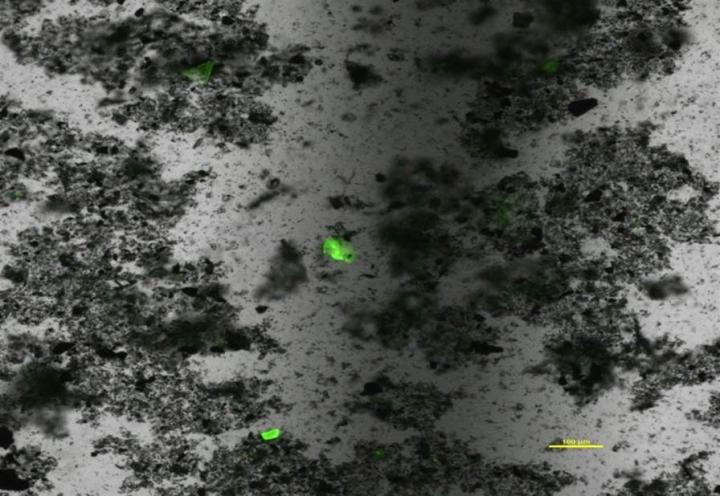
New research, led by Gabriel Erni-Cassola and Dr. Joseph A. Christie-Oleza from Warwick's School of Life Sciences, has established a pioneering way to detect the smaller fraction of microplastics – many as small as 20 micrometres (comparable to the width of a human hair or wool fibre) – using a fluorescent dye.
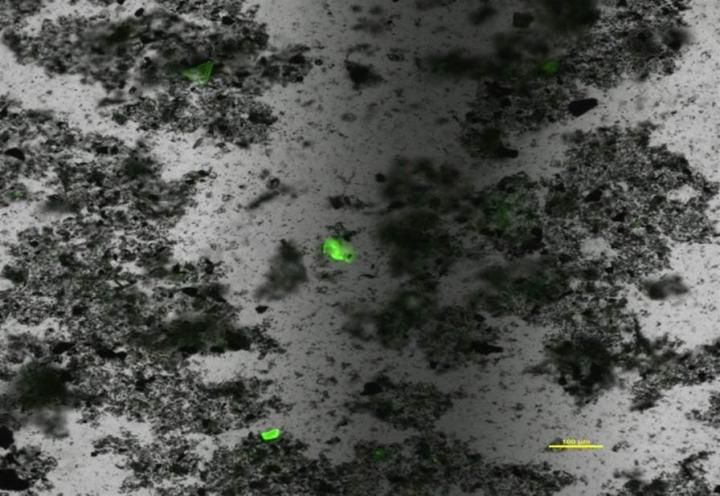
The dye specifically binds to plastic particles, and renders them easily visible under a fluorescence microscope. This allows scientists to distinguish microplastics amongst other natural materials and makes it easy to accurately quantify them.
To test their new method, the researchers took samples from surface sea water and beach sand from the English coast around Plymouth – and, after extracting the microplastics from these environmental samples, they applied their method and were able to quantify the smaller fraction of microplastics effectively.
The researchers detected a much larger amount of small microplastics (smaller than 1 mm) than was previously estimated – and significantly more than would have been identified previously with traditional methods.
These results challenge the current belief of the apparent loss of the smallest microplastics from surface seawater, and highlights the need of further research to understand the real fate of plastic waste in the oceans.
Interestingly, the researchers also discovered that the greatest abundance of microplastics of this small size was polypropylene, a common polymer which is used in packaging and food containers – demonstrating that our consumer habits are directly affecting the oceans.
Large plastic objects are known to fragment over time due to weathering processes, breaking down into smaller and smaller particles termed 'microplastics'. Microplastics are the most prevalent type of marine debris in our oceans, and their impact or potential harm to aquatic life is not yet fully understood.
Previous reports suggest that the amount of plastic waste found in the oceans only amounts to 1% of what was estimated, so new methods like this are desperately needed to find and identify the missing 99% of 'lost' plastic waste in our oceans.
Author Gabriel Erni-Cassola commented:
"Using this method, a huge series of samples can be viewed and analysed very quickly, to obtain large amounts of data on the quantities of small microplastics in seawater or, effectively, in any environmental sample.
"Current methods used to assess the amount of microplastics mostly consist in manually picking the microplastics out of samples one by one – demonstrating the great improvement of our method."
Co-author Dr Joseph A. Christie-Oleza commented:
"Have we found the lost 99% of missing plastic in surface oceans? Obviously this method needs to be implemented in future scientific surveys to confirm our preliminary findings. It is important to understand how plastic waste behaves in the environment to correctly assess future policies".
The research, 'Lost, but found with Nile red; a novel method to detect and quantify small microplastics (20 μm-1 mm) in environmental samples', is published in Environmental Science & Technology.
It is co-authored by Professor Matthew Gibson from the University of Warwick's Department of Chemistry and Warwick Medical School, and Professor Richard C. Thompson from Plymouth University.
###
Media Contact
Luke Walton
[email protected]
44-782-454-0863
@warwicknewsroom
http://www.warwick.ac.uk
Original Source
https://warwick.ac.uk/newsandevents/pressreleases/lost_99_of http://dx.doi.org/10.1021/acs.est.7b04512