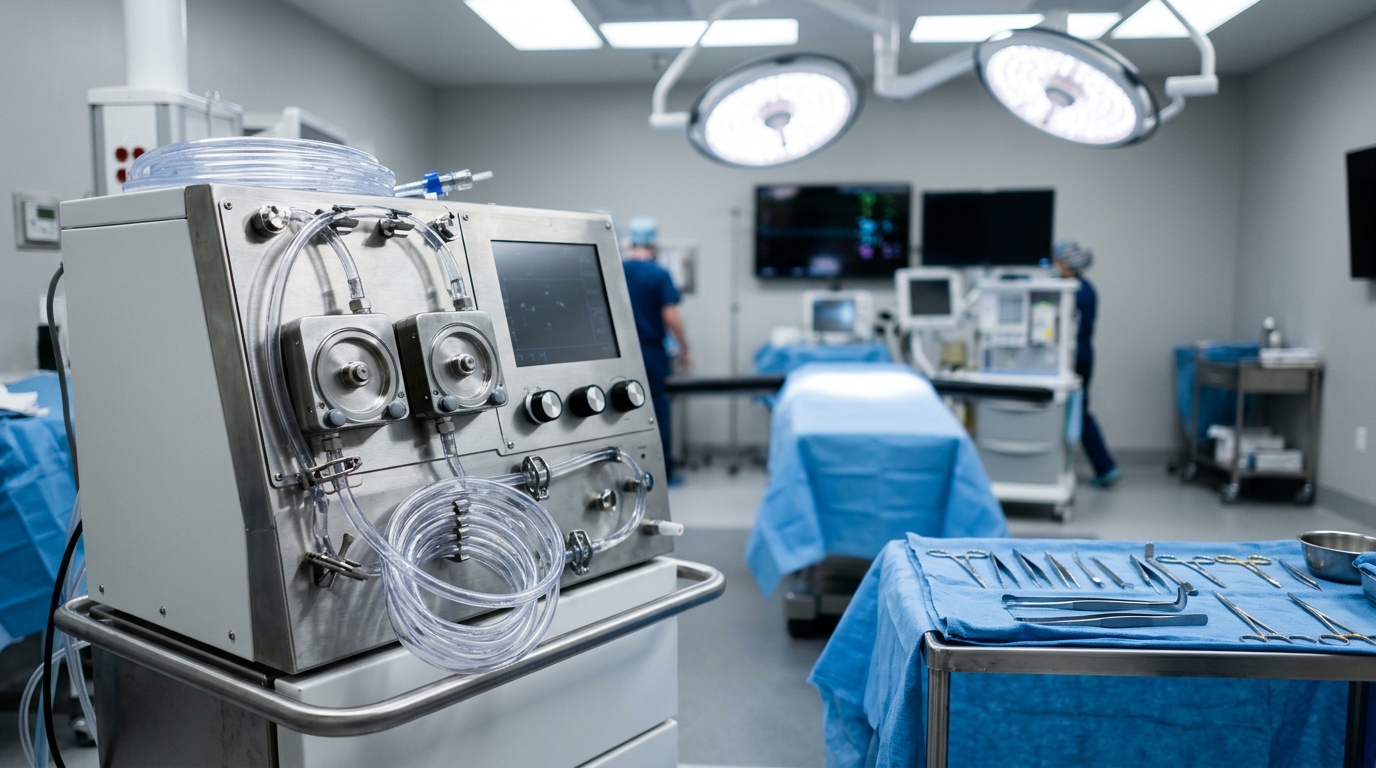
Administering hyperthermic intraperitoneal chemotherapy alongside cytoreductive surgery does not significantly increase the risk of anastomotic leakage in patients undergoing intestinal resections for peritoneal metastases, according to a systematic review and meta-analysis of 15 studies published in BJS Open. Peritoneal metastasis represents a formidable clinical progression frequently arising from ovarian and gastrointestinal malignancies, carrying a traditionally poor prognosis where median survival ranges from 5 to 11 months in advanced gastric cancer and 12 to 33 months in colorectal cancer, while five-year survival drops below 30 percent in metastatic ovarian cancer. To combat this spread, cytoreductive surgery combined with hyperthermic intraperitoneal chemotherapy has become a pivotal therapeutic modality incorporated into National Comprehensive Cancer Network guidelines, supported by randomized clinical trials demonstrating survival advantages in gastric and ovarian malignancies as well as improved locoregional disease control in selected colorectal cancer cases. However, maximum-effort surgical cytoreduction regularly demands extensive multivisceral resections involving the digestive tract, where intestinal reconstruction remains vulnerable to anastomotic leakage, one of the leading causes of severe postoperative morbidity and mortality.
Surgical oncologists have long harbored theoretical concerns that delivering hyperthermic chemotherapy directly into the peritoneal cavity could compromise the integrity of freshly constructed intestinal anastomoses. Hyperthermic perfusion maintained between 40°C and 43°C can disrupt local microvascular perfusion and impair collagen deposition at the anastomosis site, while direct cytostatic drug exposure inhibits the cellular proliferation necessary for primary tissue healing and wound repair. Across published surgical literature, baseline anastomotic leakage incidence varies widely, ranging from approximately 2.8 percent to 20 percent in colorectal cancer, 4.7 percent to 8.8 percent in ovarian cancer, and 2.1 percent to 14.6 percent in gastric cancer. Because the absolute incidence of leak events after cytoreductive procedures is relatively low, conducting prospective randomized clinical trials powered primarily to evaluate anastomotic dehiscence is practically challenging, leaving individual trials underpowered to detect meaningful differences. To resolve these ongoing clinical uncertainties, investigators conducted a pooled quantitative synthesis examining the association between hyperthermic intraperitoneal chemotherapy and anastomotic leakage rates specifically among patients who received gastrointestinal anastomoses during cytoreductive operations.
The systematic review was conducted and reported in strict accordance with Preferred Reporting Items for Systematic Reviews and Meta-Analyses guidelines and prospectively registered within the PROSPERO database under registration number CRD42024502106. In collaboration with a medical librarian, the investigators designed a comprehensive literature search strategy across the PubMed, Embase, and Web of Science databases from their inception through April 2026. The search incorporated specific key terms including hyperthermic intraperitoneal chemotherapy, cancer, carcinoma, neoplasm, tumour, ovarian, gastric, colon, and rectal. Peritoneal mesothelioma was deliberately excluded from the search scope due to unique biological characteristics, distinct operative patterns, and the current lack of Level I evidence supporting hyperthermic chemotherapy in that disease setting. The search was confined to English-language publications. Three reviewers independently screened titles and abstracts, eliminated duplicate records, systematically retrieved eligible articles, and extracted study metrics into standardized tables, resolving discrepancies through structured consensus discussions alongside manual searches of cited references.
Eligibility criteria were structured according to the PICO framework, requiring studies to evaluate patients with ovarian or gastrointestinal cancer who underwent gastrointestinal anastomoses during cytoreductive surgery, comparing those receiving hyperthermic intraperitoneal chemotherapy against those undergoing cytoreductive surgery alone. The primary outcome was strictly defined as the incidence of anastomotic leakage calculated among patients who underwent bowel resection with anastomosis. The protocol excluded case reports, commentaries, editorials, non-comparative series, review articles, and studies lacking anastomotic leak figures or failing to specify the exact denominator of patients undergoing intestinal reconstruction. Extracted study parameters included first author, publication year, study design, cohort size, patient demographics, surgical parameters, hyperthermic chemotherapy technical specifications such as temperature, perfusion duration, and delivery technique, specific antineoplastic regimens, and leak incidence. Because anastomotic leakage was universally tracked as a secondary endpoint in the primary trials, no included study supplied standardized diagnostic criteria, prompting comprehensive extraction across all main texts, appendices, and related secondary publications.
From an initial yield of 5,366 database records, the investigators removed 2,398 duplicates and screened 2,968 titles and abstracts, excluding 2,896 records and evaluating 72 full-text articles for eligibility. Ultimately, 15 studies published between 2011 and 2024 satisfied all criteria, incorporating 11 randomized clinical trials, one prospective cohort study, and three retrospective investigations. Across the 15 selected cohorts, five focused on ovarian cancer, four evaluated colorectal cancer, and six examined gastric cancer. Cisplatin represented the most frequent chemotherapeutic agent across nine studies, utilized as monotherapy or combined with paclitaxel or mitomycin C, while alternative regimens incorporated oxaliplatin or lobaplatin, and one study omitted the specific drug. Perfusion temperatures ranged from 40°C to 43°C, with treatment durations spanning 30 to 90 minutes. In total, the pooled data encompassed 1,906 patients who underwent bowel resection and anastomosis, of whom 936 patients, or 49.1 percent, received hyperthermic intraperitoneal chemotherapy following cytoreductive resection, while 970 patients underwent surgical cytoreduction alone.
Methodological quality and risk of bias were independently evaluated by two investigators using established instruments, with disagreements adjudicated by a third reviewer. Randomized clinical trials were appraised with the Cochrane Risk of Bias 2 tool, which determined that eight trials, or 73 percent, carried a low risk of bias across all evaluated domains, while three trials—authored by Beeharry and colleagues, Yang and colleagues, and Rau and colleagues—were judged to have some concerns due to incomplete reporting of missing outcome data. All randomized trials demonstrated low risk regarding randomization, deviations from intended interventions, outcome measurement, and selection of reported results. For the four observational investigations, quality was scored using a modified Newcastle-Ottawa Scale evaluating sample representativeness, selection criteria, exposure ascertainment, population description quality, and primary outcome reporting. Three observational studies achieved scores of four or five points, indicating high quality and low risk of bias, whereas one prospective study scored two points, reflecting fair quality due to incomplete outcome data and small sample size.
Across all 15 studies, reported anastomotic leak rates ranged from 0 to 13.2 percent, with the highest leak incidence observed in a platinum-sensitive recurrent ovarian cancer trial. Overall, 100 anastomotic leak events were documented across the entire 1,906-patient cohort, representing an aggregate rate of 5.2 percent. Among patients treated with hyperthermic intraperitoneal chemotherapy, 57 leaks occurred in 936 patients, reflecting a 6.1 percent incidence, compared with 43 leaks among 970 patients in the surgery-alone control group, representing a 4.4 percent incidence. Pooled synthesis utilizing a fixed-effects Mantel-Haenszel model demonstrated no statistically significant difference in the risk of anastomotic leakage between the two treatment groups, yielding a risk ratio of 1.29 with a 95 percent confidence interval of 0.89 to 1.87 and a P value of 0.19. Statistical heterogeneity across studies was completely absent, with an I-squared value of 0 percent and a heterogeneity P value of 0.85. Sensitivity analyses sequentially omitting individual studies confirmed stability, and publication bias assessments revealed symmetric funnel plots and a non-significant Egger test result of P equal to 0.606.
Prespecified subgroup meta-analyses demonstrated consistent safety profiles across varied clinical parameters, confirming that hyperthermic perfusion did not elevate anastomotic leakage risk regardless of tumor origin, trial methodology, pharmacological regimen, or exposure duration. When stratified by primary malignancy, colorectal cancer cohorts yielded a risk ratio of 1.28 with a 95 percent confidence interval of 0.76 to 2.14, gastric cancer cohorts showed a risk ratio of 0.96 with a 95 percent confidence interval of 0.37 to 2.49, and ovarian cancer cohorts produced a risk ratio of 1.52 with a 95 percent confidence interval of 0.78 to 2.98, all showing zero percent heterogeneity. Stratification by study design similarly found no significant difference within randomized trials, where the risk ratio was 1.40, or observational studies, where the risk ratio was 0.94. Analyzing chemotherapeutic regimens showed comparable leak risks between cisplatin-based protocols with a risk ratio of 1.48 and non-cisplatin regimens with a risk ratio of 1.26. Furthermore, dividing treatments by duration demonstrated that perfusion times under 60 minutes yielded a risk ratio of 1.65, whereas durations of 60 minutes or longer yielded a risk ratio of 1.07, maintaining zero percent statistical heterogeneity throughout.
The meta-analysis findings corroborate prior single-disease syntheses while offering broader reassurance across surgical oncology specialties. Previous work by Patel and colleagues in 853 gastric cancer patients identified an anastomotic leak risk ratio of 1.02, closely mirroring the gastric subgroup finding of 0.96 in the current analysis. In ovarian cancer, a meta-analysis of six randomized trials by Filis and colleagues demonstrated no increase in severe adverse events with a risk ratio of 1.08, while Navarro and colleagues reported a 6 percent leak rate across 4,928 ovarian cancer patients undergoing heated chemotherapy, closely matching the pooled 5.7 percent incidence reported here. The biological resilience of bowel anastomoses under hyperthermic perfusion may be explained by two central mechanisms. First, refined surgical techniques, including standardized stapling protocols, avoiding staple line overlap, and selectively reinforcing anastomoses with hand-sewn sutures, provide dependable leak prevention even without routine protective stomas, as shown in large series by Barrios and colleagues. Second, the transient duration of hyperthermic perfusion, typically lasting 30 to 90 minutes, limits chemotherapeutic penetration into deeper bowel wall layers, preventing sustained thermal or chemical disruption to healing anastomotic tissues.
Despite these reassuring outcomes, several methodological limitations warrant cautious clinical application. The analysis relied upon aggregate study-level data, preventing individual patient-level adjustments or meta-regression for confounding variables such as nutritional status, post-treatment neutropenia, anatomical anastomosis level, protective ostomy construction, or perioperative systemic therapy. Target perfusion temperatures were tightly clustered between 40°C and 43°C, precluding evaluation of temperature-dependent injury thresholds. Furthermore, diagnostic criteria for anastomotic leakage varied across studies, and some trials recorded only grade 3 or higher complications, potentially underestimating mild leaks equally in both cohorts. Importantly, the authors highlighted the possibility of a type II statistical error, noting that while the pooled risk ratio of 1.29 was non-significant, the analysis might have possessed limited power to detect small risk increments given the low overall event rate. Consequently, while heated intraperitoneal chemotherapy should not trigger routine fecal diversion solely due to drug administration, diversion remains indicated for patients with independent surgical vulnerabilities, and potential benefits must always be weighed against systemic drug toxicities such as nephrotoxicity and hematological suppression within a multidisciplinary framework.
Subject of Research: Anastomotic leakage risk following cytoreductive surgery with hyperthermic intraperitoneal chemotherapy
Article Title: Effect of hyperthermic intraperitoneal chemotherapy on the risk of anastomotic leakage: meta-analysis
Article References: Lu, Y.-N., Xie, D., Lai, Y.-T., Xing, Y.-C., Lan, J., Ye, Y.-F., Wu, M.-F., Lin, S.-D., Zhang, B.-Z., Lin, Z.-Q., Wang, D.-Y., & Li, J. (2026). Effect of hyperthermic intraperitoneal chemotherapy on the risk of anastomotic leakage: meta-analysis. BJS Open, 10(6), Article zrag161. https://doi.org/10.1093/bjsopen/zrag161
Image Credits: AI Generated
Keywords: hyperthermic intraperitoneal chemotherapy, cytoreductive surgery, anastomotic leakage, peritoneal metastasis, ovarian cancer, gastric cancer, colorectal cancer, systematic review, meta-analysis, surgical oncology, cisplatin, oxaliplatin, gastrointestinal anastomosis, Mantel-Haenszel method, postoperative morbidity, PROSPERO, Cochrane RoB 2
News Source: Ophelia Keating. (November 27, 2026). Adding HIPEC to Cytoreductive Surgery Does Not Increase Anastomotic Leak Risk. Scienmag.