Endomembrane damage in mammalian cells rapidly induces the formation of intraluminal protein condensates within endolysosomes, according to research published by Xu Li, Haibo Jiang, and colleagues in Nature Cell Biology. While membrane injury to endolysosomes is known to be a detrimental cellular event that leads to the leakage of luminal contents into the surrounding cytosol, the fundamental nature and quantitative extent of this leakage during injury have remained poorly understood.
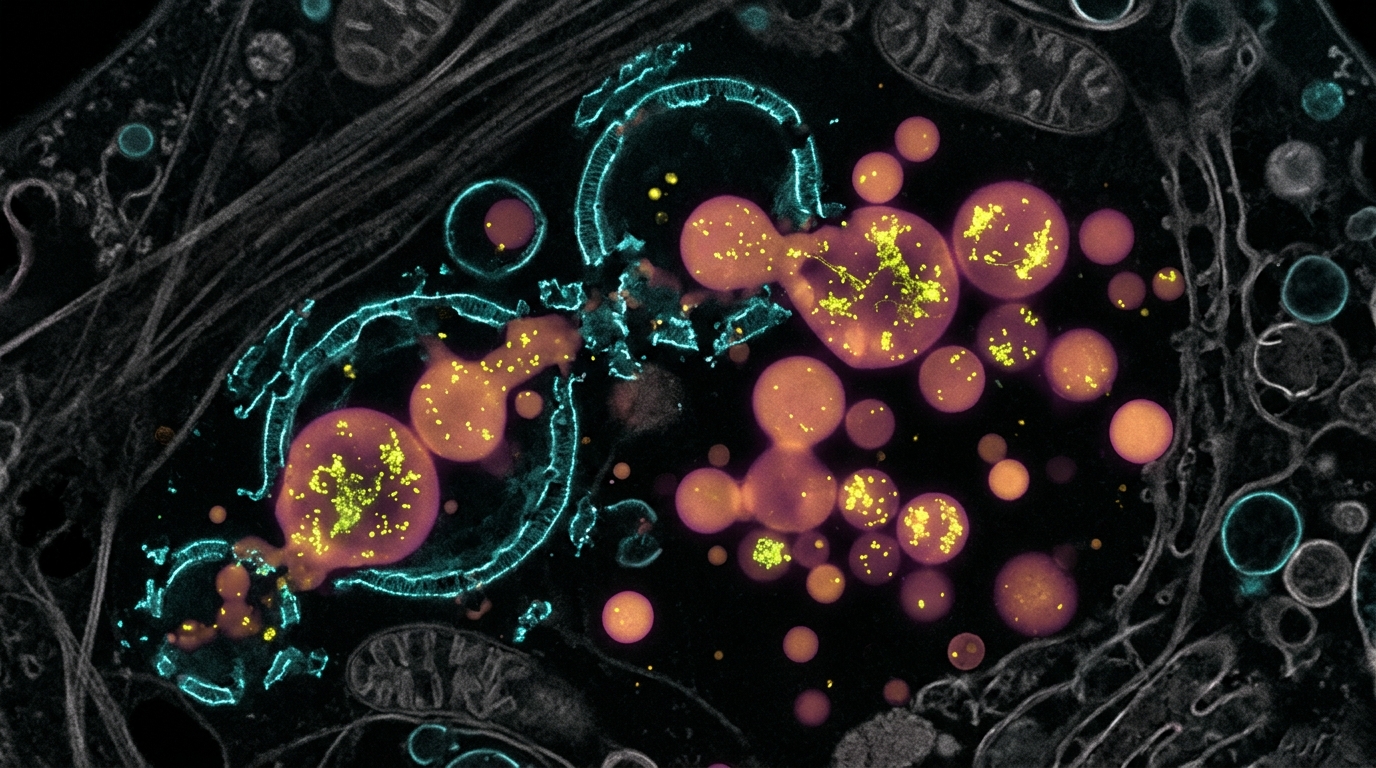
The investigators found that when endomembrane damage occurs, a specific subset of resident luminal proteins undergoes a process of spatially coordinated condensation. This coordinated response drives the assembly of solid-like protein condensates directly within the lumen of the damaged endolysosomes, altering the internal organization of the organelles upon rupture.
To examine the architectural characteristics of the assemblies, the research team employed advanced imaging methodologies. Conventional electron microscopy revealed a distinct luminal morphology within the injured compartments, while cryo-electron tomography verified the compact, dense ultrastructure of these intraluminal protein condensates preserved in their native cellular state.
The study determined that this condensation phenomenon is not restricted to a single trigger; rather, intraluminal condensate formation occurs consistently across mechanistically distinct modes of endolysosomal membrane injury. The researchers also established that the condensation process is reversible, demonstrating that the solid-like assemblies dissociate upon lysosomal recovery, with luminal lysosomal pH serving as a required factor for both condensate formation and dissociation.
Functionally, the intraluminal condensates act as a substantial barrier that impedes the release of therapeutic molecules into the cytoplasm. Despite the presence of physical damage and leakage across the endolysosomal membrane, luminal oligonucleotide therapeutics such as antisense oligonucleotides remain sequestered within the damaged compartments due to condensate-mediated biophysical immobilization.
These findings identify a previously unrecognized biological mechanism that actively prevents antisense oligonucleotides from escaping damaged endolysosomes into the cytosol. The authors conclude that biophysical immobilization within these protein condensates limits oligonucleotide availability, suggesting that therapeutic strategies designed to target and disrupt condensate sequestration could help improve the delivery efficiency of oligonucleotide-based drugs.
Subject of Research: Intraluminal protein condensate formation and oligonucleotide sequestration in damaged endolysosomes
Article Title: Endolysosomal damage promotes intraluminal protein condensate formation that limits cytosolic leakage
Article References: Li, X., Zhang, Y., Zhao, K., Chen, G., Cui, D., Nikan, M., Young, S. G., Li, X., Bennett, C. F., Seth, P. P., Ni, T., Gutierrez, M. G., & Jiang, H. (2026). Endolysosomal damage promotes intraluminal protein condensate formation that limits cytosolic leakage. Nature Cell Biology. https://doi.org/10.1038/s41556-026-02119-z
Image Credits: AI Generated
DOI: 10.1038/s41556-026-02119-z
Keywords: endolysosomes, protein condensates, membrane damage, intraluminal condensates, cytosolic leakage, antisense oligonucleotides, cryo-electron tomography, electron microscopy, lysosomal pH, lysosomal recovery, oligonucleotide therapeutics, biophysical immobilization, mammalian cells, endomembrane injury, luminal proteins, therapeutic delivery
News Source: Drew Townsend. (November 27, 2026). Damaged Endolysosomes Form Protein Condensates That Sequester Therapeutic Oligonucleotides. Scienmag.