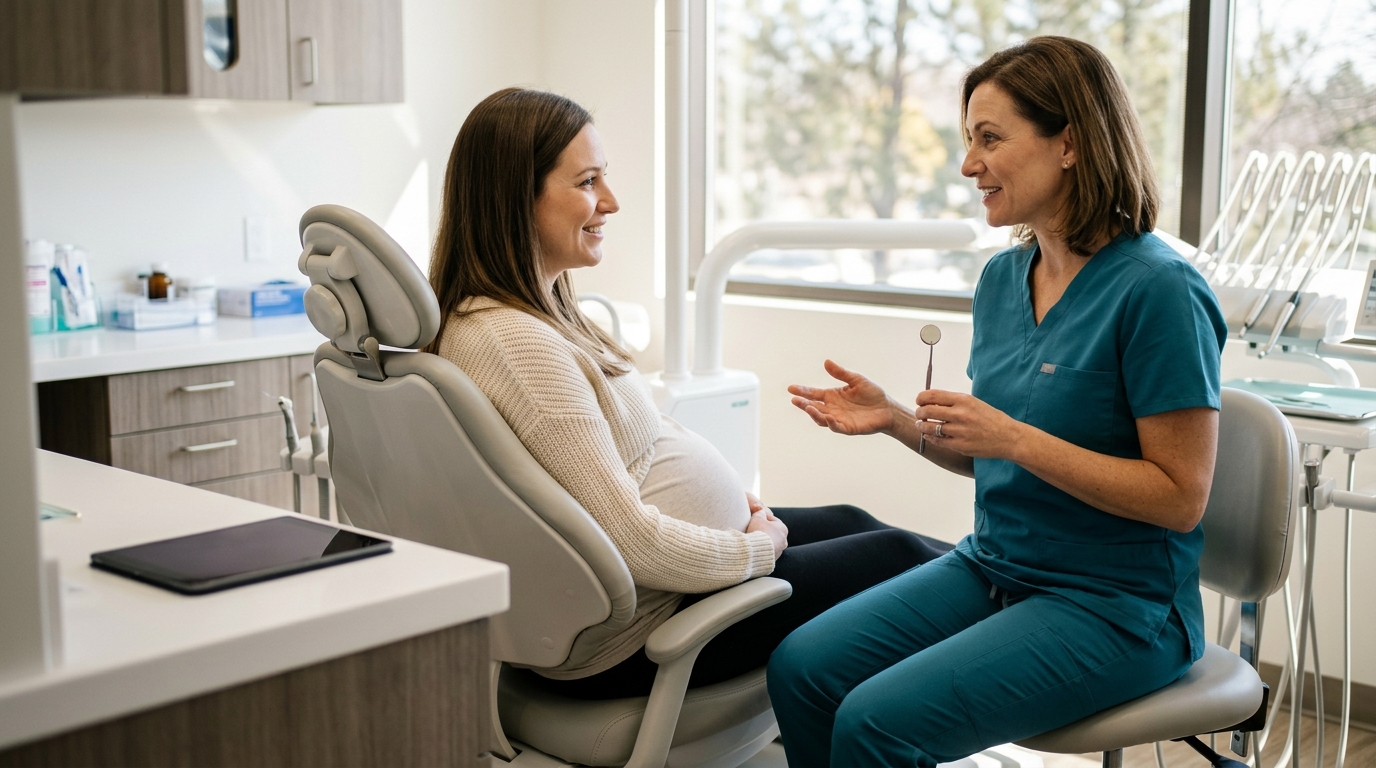
A comprehensive narrative review in Frontiers in Oral Health indicates that emerging generative artificial intelligence tools and digital platforms cannot replace professional dental guidance during pregnancy, despite their expanding accessibility. Synthesizing evidence from 1997 through September 2026, lead author Liliana Sachelarie and colleagues evaluated how digital media and large language models influence maternal oral health education. The researchers determined that while digital resources offer interactive educational opportunities, publicly accessible online materials exhibit substantial variability in scientific reliability, completeness, and clinical accuracy across platforms. Pregnancy induces critical physiological, hormonal, and behavioral shifts that heighten oral disease vulnerability, making reliable patient guidance vital. Nevertheless, popular digital channels frequently promote unsupported dental advice and omit clinical caveats. The review highlights that high public visibility, conversational fluency, and audience engagement metrics do not guarantee scientific veracity, warning that unsupervised artificial intelligence advice remains clinically unvalidated for pregnant patients seeking maternal healthcare.
Biological changes during gestation alter maternal susceptibility to oral pathology across multiple physiological pathways. Elevated circulating concentrations of estrogen and progesterone enhance gingival vascular permeability and amplify the inflammatory response of oral tissues to dental plaque, frequently contributing to pregnancy-associated gingivitis and exacerbating existing periodontal disease. Concurrently, altered dietary patterns, increased snacking frequency, cravings for fermentable carbohydrates, and modified salivary characteristics combine to heighten susceptibility to cariogenic activity. Recurrent nausea, vomiting, and gastroesophageal reflux repeatedly expose enamel to acidic gastric secretions, accelerating erosive tooth wear. The synthesis emphasizes that pregnancy does not inherently cause dental caries or spontaneous tooth loss. Rather, pathology develops through altered oral hygiene habits, dietary shifts, and deferred preventive care. Maintaining rigorous daily plaque control through regular brushing with fluoride toothpaste, interdental cleaning, dietary discipline, and timely professional dental monitoring remains an essential preventive foundation throughout gestation.
Despite clear biological needs, dental care remains heavily underused among pregnant individuals due to pervasive misconceptions regarding fetal harm. Systematic appraisals of maternal beliefs reveal widespread fallacies, including convictions that dental interventions harm the unborn child, that clinical visits must be deferred until after birth, and that the developing fetus leaches calcium directly from maternal dentition. In contrast, authoritative consensus guidance from the American Dental Association and the American College of Obstetricians and Gynecologists confirms that routine evaluations, cleanings, diagnostic radiography, and indicated restorative procedures can be safely administered across all gestational stages. Standard oral local anesthetics, including lidocaine formulated with epinephrine, are safe when administered at clinical dosages. The review authors note that unwarranted treatment avoidance represents a severe health threat, permitting localized periodontal inflammation or untreated caries to escalate into acute infections, persistent maternal pain, and complex dental emergencies that compromise general maternal wellbeing.
To prevent severe enamel loss from recurrent nausea and vomiting, clinical evidence outlines specific post-emetic hygiene behaviors that challenge intuitive patient habits. Mechanical toothbrushing immediately following an emetic episode causes significant surface damage, as abrasive bristles abrade enamel softened by contact with gastric acid. Nutritional education must likewise emphasize the frequency of acid exposure and carbohydrate intake rather than total volume alone. Unfortunately, maternal awareness regarding these protective strategies remains deficient across evaluated populations. Educational gaps encompass periodontal pathology, caries prevention, and the safety of dental local anesthesia. Traditional clinical encounters frequently fail to bridge these knowledge deficits due to restricted consultation times, variable baseline health literacy, and limited patient retention, driving many pregnant women toward online platforms for reassurance.
The migration of pregnant individuals toward digital channels has transformed health communication, yet visual platforms frequently fail to deliver reliable guidance. Video repositories like YouTube feature extensive content regarding pregnancy oral health, but formal analyses show severe qualitative deficiencies. Investigations by Çardakcı Bahar and colleagues, along with research by Yegül and associates, established that pregnancy-related dental videos exhibit profound variability in scientific accuracy, completeness, and educational merit. Consequently, highly viewed and heavily shared media often promote inaccurate dental advice. The researchers stress that high visibility and engagement metrics do not signify educational validity, presenting serious challenges for pregnant users seeking credible maternal healthcare information.
Structured mobile health interventions provide more targeted educational support, though their clinical superiority remains unproven. Empirical studies examining mobile text-messaging programs during pregnancy demonstrate measurable gains in maternal oral health knowledge, self-care attitudes, personal self-efficacy, and dental plaque scores. However, comparative investigations indicate that altering message-framing strategies produces no meaningful difference in patient outcomes, and text messaging has not demonstrated global superiority over conventional clinical education. Similarly, prototype mobile applications tailored to maternal oral health demonstrate favorable usability and acceptability scores among pregnant participants and expert dental reviewers. Nonetheless, the review highlights that high usability ratings do not equate to demonstrated clinical effectiveness. These observations underscore that while mHealth provides valuable communication channels, technological delivery alone does not ensure clinical efficacy.
Evaluating the scientific integrity of digital health content requires distinct methodological tools, as structural quality and factual accuracy represent separate constructs. Standardized instruments such as the DISCERN tool appraise consumer health information regarding treatment alternatives, while the four JAMA benchmarks evaluate publication transparency through authorship, attribution, disclosure, and currency. Readability formulas, including Flesch Reading Ease and Flesch-Kincaid Grade Level metrics, assess linguistic complexity, demonstrating marked reading difficulty across online dental literature. In addition, the Global Quality Score evaluates overall educational utility and presentation flow. However, a cited scoping review emphasizes that these instruments measure presentational attributes rather than detecting false clinical claims without substituting for thorough clinical review. Misinformation must be identified through direct comparison against established clinical evidence and professional consensus guidelines. Differentiating between readability, presentation quality, and factual accuracy is essential to determine whether digital health educational materials safely support maternal decision-making.
Conversational artificial intelligence introduces interactive dialogue into maternal health education, yet its clinical precision remains inconsistent across models and languages. In pregnancy-specific evaluations by Khromchenko and colleagues, ChatGPT-3.5 and Google Bard showed varying response acceptability, with ChatGPT-3.5 frequently generating hallucinated scientific references. Although ChatGPT demonstrates high accuracy when answering general inquiries regarding perinatal nutrition and obstetric warning signs, response quality fluctuates significantly with prompt framing, context, and language, often omitting crucial recommendations to seek human clinical care. Within general dentistry, a systematic review and meta-analysis of large language models reported an aggregate accuracy of 81.87 percent, with approximately 70 percent of responses rated clinically acceptable. Crucially, the authors caution that general dental performance cannot establish safety in pregnancy. A study evaluating ChatGPT-4o mini across 50 patient-derived pregnancy oral health questions identified critical errors requiring clinical correction, proving that consumer models require professional supervision.
The practical impact of digital oral health communication depends heavily on maternal health literacy and calibrated patient trust. An observational study by Kim and Lee revealed that eHealth literacy and maternal attitudes toward online health information accounted for 46.3 percent of the variance in shared clinical decision-making. Generative artificial intelligence systems generate fluent, reassuring explanations that may engender uncritical patient trust, obscuring unsupported statements or absent clinical caveats. Furthermore, socioeconomic disparities, digital literacy gaps, and linguistic barriers substantially restrict equitable access to reliable digital guidance. Ensuring educational equity requires plain-language adaptations, culturally sensitive examples, and accessible non-digital communication channels, so that digital innovations do not inadvertently widen maternal health disparities or exclude vulnerable pregnant populations from receiving verified care.
To address safety challenges, the review authors propose a conceptual framework coupling retrieval-augmented generative artificial intelligence with clinician-supervised knowledge repositories. Rather than functioning as an autonomous diagnostic agent, the system retrieves vetted evidence from current dental and obstetric guidelines to generate accessible, plain-language educational explanations and prevent harmful clinical omissions. Predefined escalation protocols automatically direct users reporting severe pain, acute facial swelling, fever, or medication dilemmas to professional healthcare services, while multidisciplinary clinical teams conduct scheduled three-month content reviews. However, the authors stress that this conceptual model has not been clinically trialed. Future research must prioritize pregnancy-specific prospective trials evaluating objective patient comprehension through teach-back methods, verifiable oral hygiene improvements, and appropriate care-seeking behaviors before artificial intelligence can safely assist maternal care. Unsupervised consumer systems cannot guarantee patient safety, underscoring that validated digital tools must complement rather than replace professional prenatal and dental consultations.
Subject of Research: Digital media and artificial intelligence reliability in pregnancy oral health education
Article Title: Artificial intelligence and digital media in oral health education during pregnancy: reliability, challenges, and future perspectives
Article References: Sachelarie, L., Stefanescu, C. L., Popa, M.-F., Grigorian, M., Murineanu, R.-M., Ghilea (Seleș), L., Maghiar, L., & Huniadi, C. A. (2026). Artificial intelligence and digital media in oral health education during pregnancy: reliability, challenges, and future perspectives. Frontiers in Oral Health, 7, Article 2030794. https://doi.org/10.3389/froh.2026.2030794
Image Credits: AI Generated
DOI: 10.3389/froh.2026.2030794
Keywords: maternal oral health, pregnancy gingivitis, generative artificial intelligence, large language models, digital health literacy, preventive dentistry, retrieval-augmented generation, dental erosion, post-emetic oral care, local anesthesia safety, dental radiography, DISCERN instrument, JAMA benchmarks, patient engagement, shared decision-making, clinical escalation protocols, online health misinformation, prenatal dental care
News Source: Blake Davidson. (November 27, 2026). Review Finds Digital Media and Artificial Intelligence Cannot Replace Maternal Dental Consultations. Scienmag.