Credit: GlycoNet
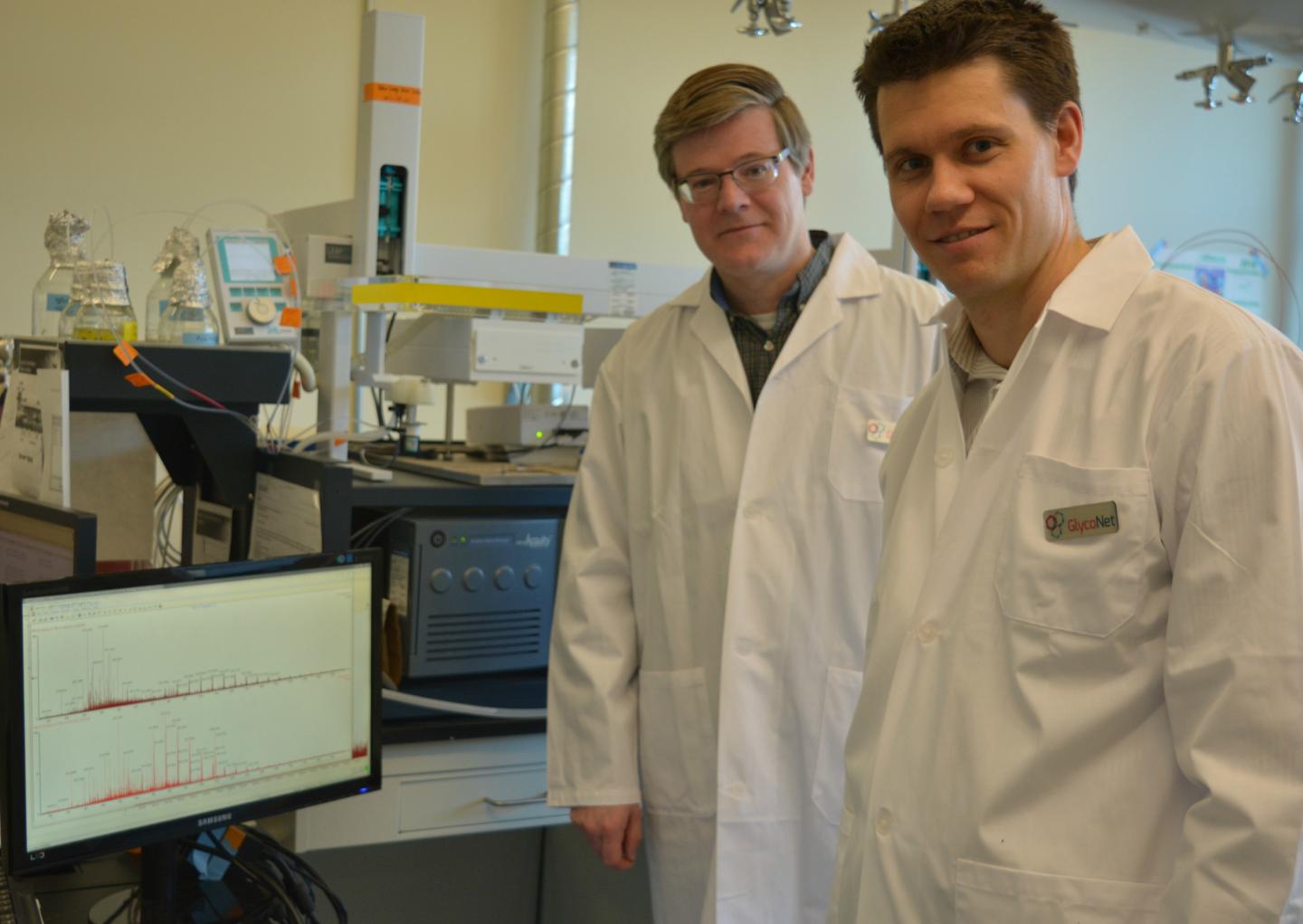
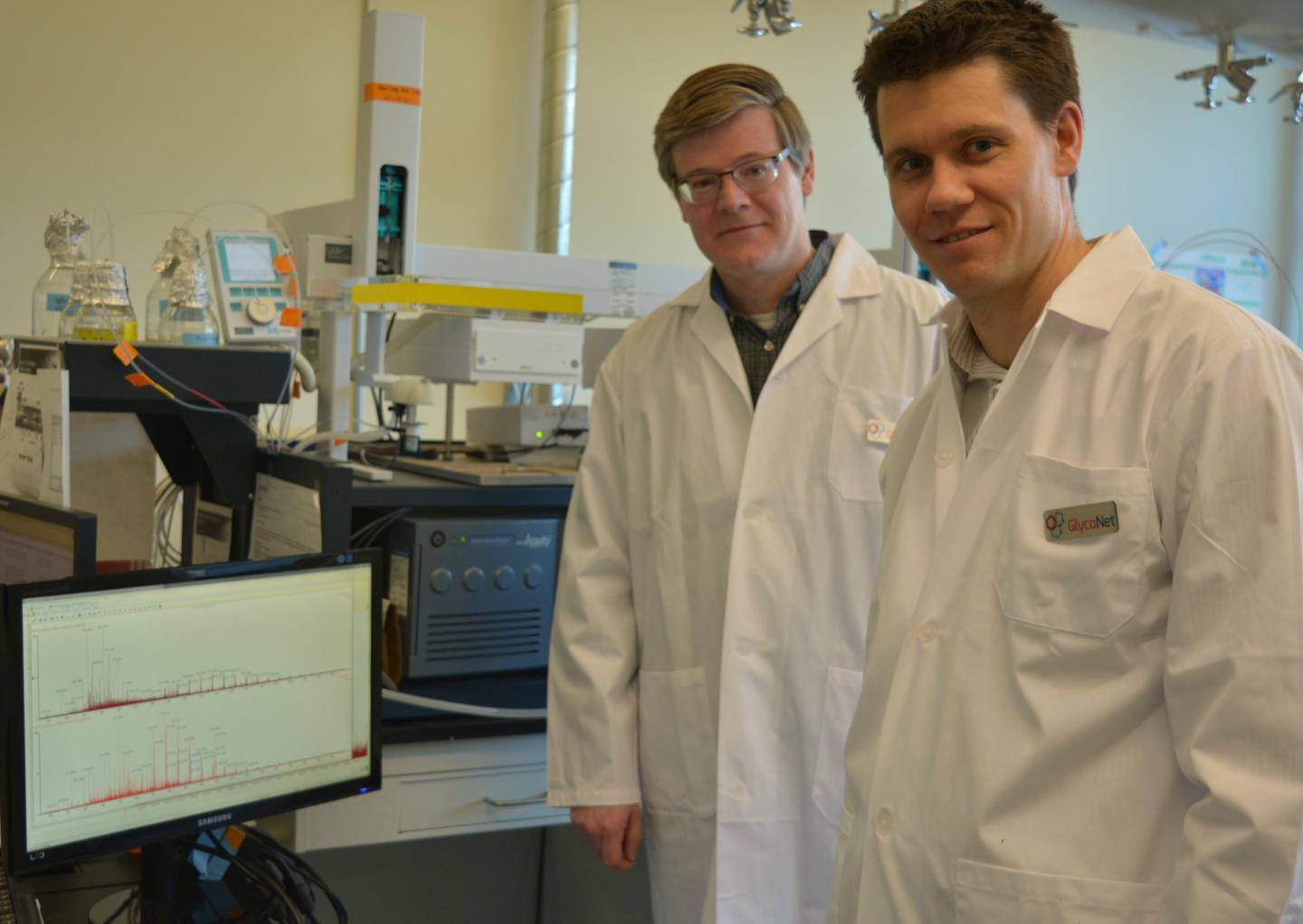
(February 9, 2018 – EDMONTON) Two GlycoNet Investigators are using technology to better understand how sugars in the human body are connected to Alzheimer's disease.
Matthew Macauley and John Klassen, professors at the University of Alberta, are combining glycomics, the study of carbohydrates (sugars) and a mass spectrometer in a unique research project funded by GlycoNet.
"If we can better understand the correlation between sugars and Alzheimer's, then changing or altering the sugars could potentially alter the disease," Macauley says.
The one-year research grant funded through the Canadian Glycomics Network (GlycoNet) Networks of Centres of Excellence is looking to unlock clues about how Alzheimer's arises and point to potential good targets for developing therapeutics to treat the disease.
The two GlycoNet investigators will study glycans (sugars) that interact with an important protein known as CD33, which is strongly implicated in Alzheimer's disease. The primary goal is to develop a strategy to more clearly identify the molecular identity of these sugars.
"I'm very excited about the research project because while there is plenty of interest in this topic, no one is using the approach John and I are using," says Macauley. "The specialized equipment and approach that the Klassen lab uses makes this research transformative."
Macauley explains that receptors for sugars present in microglia, a specific type of white blood cell found in the brain, can serve as an indicator of who gets Alzheimer's and who doesn't.
"There are different forms of this receptor, called protein isoforms, that have been linked to whether people are protected from the disease or not," Macauley explains. "People who are protected from getting Alzheimer's have a version of that isoform that does not bind to sugars – this is the key."
"It's a challenging receptor to study because its glycan ligands have remained somewhat elusive," says Macauley. He explains that some sugars bind to isoforms in such a weak way that they are hard to detect using regular biochemical assays.
Klassen's research laboratory uses highly sophisticated mass spectrometers, which will allow the team to detect these glycan-receptor complexes with greater sensitivity and resolution.
"John has a method that is very precise in picking up on very weak binding interactions through this mass spectrometry method," says Macauley. Klassen's approach, called Catch-and-Release Electrospray Ionization Mass Spectrometry (CaR-ESI-MS), is unique worldwide.
"No one else is currently using this approach," says Macauley. "With John's high end mass spectrometer, we will be able to see how the sugars bind to this Alzheimer's related protein CD33 at levels that we simply cannot see right now with standard equipment and assays."
Macauley already sees a therapeutic or diagnostic potential to help or even prevent people from suffering from Alzheimer's.
He also sees other applications for this approach to his project. "The immune system is involved in so many diseases, so if this new approach works, there could be a lot of work to do beyond the link of this one receptor to Alzheimer's," he says.
"This is exactly the kind of research that we hope will translate into tangible benefits for people worldwide," says Todd Lowary, Scientific Director, GlycoNet. "Funding research to address health issues and improve quality of life is making our organization worldwide leaders in the field of glycomics."
###
The project is made possible through a Catalyst grant and falls within one of GlycoNet's five themes of research – chronic diseases. The grant is one of 11 recently awarded to researchers across Canada totalling $1.6 million.
About GlycoNet
GlycoNet is a pan-Canadian, multidisciplinary research network aiming to deliver solutions to important health issues and improve the quality of life of Canadians through the study of glycomics. GlycoNet is funded by the Networks of Centres of Excellence, a Government of Canada program that supports large-scale, academic-led research networks to build research capacity and accelerate the creation of new knowledge in a specific research area.
Media Contact
B Poitras
[email protected]
780-492-4355
@glyconet_nce
Home
Original Source
Why studying sugars matters in the fight against Alzheimer’s disease