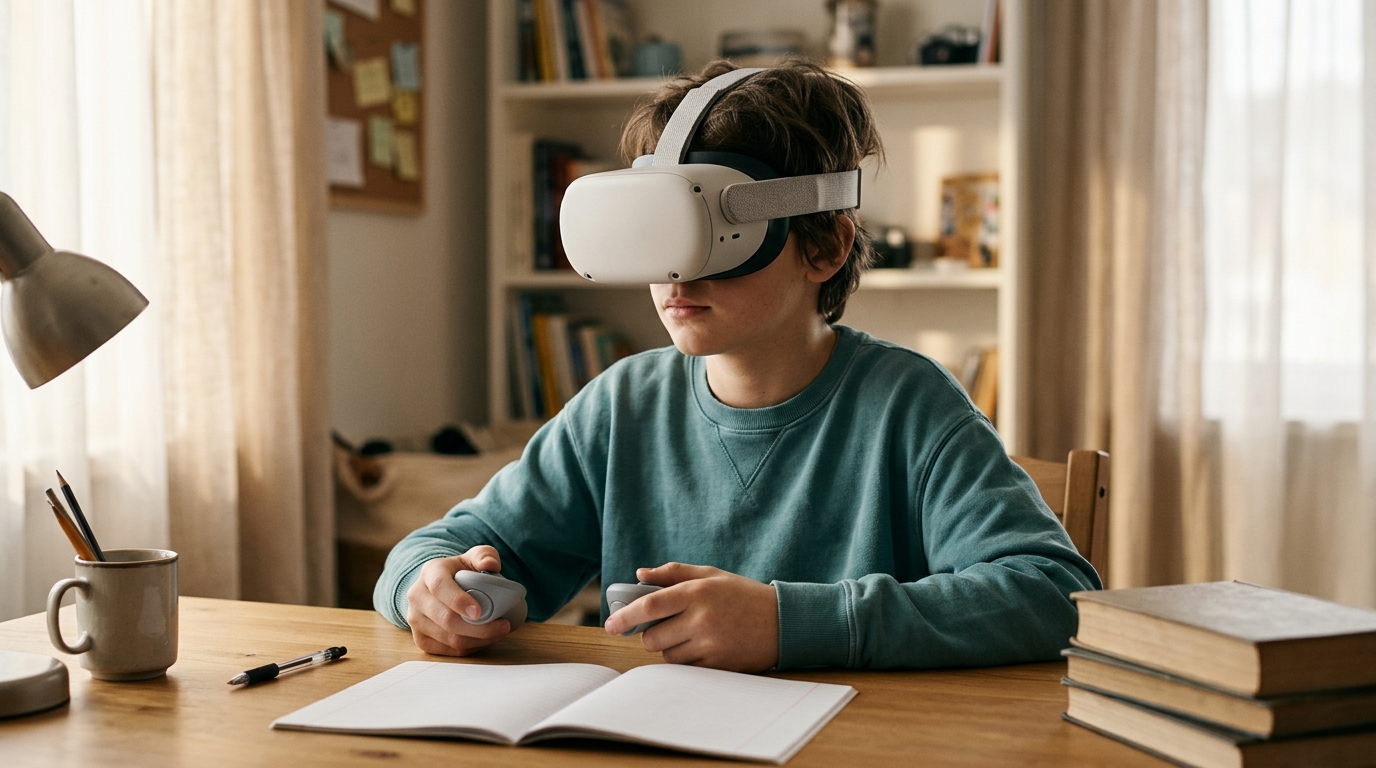
A preliminary randomized controlled trial evaluating a novel virtual reality software program called Focus&Calm has found that the digital intervention achieved a high treatment adherence rate of 91 percent among children diagnosed with attention-deficit/hyperactivity disorder, though it did not yield statistically significant advantages in symptom reduction over standard adapted behavioral care.
Attention-deficit/hyperactivity disorder represents an important clinical challenge in Poland, where epidemiological estimates indicate a childhood prevalence of approximately 5 percent. The study authors note that the timely recognition and clinical treatment of ADHD during childhood may help prevent adverse outcomes in adulthood. However, mental health services across Poland remain under-resourced to address the needs of affected young people, creating a substantial demand for novel interventions that can help close this therapeutic gap. Digital health tools, including virtual reality, have emerged as promising options to help address these service deficits.
Data on virtual reality interventions for children and adolescents diagnosed with ADHD remain limited across the international medical literature. To address this specific gap in care and clinical evidence, the Focus&Calm software application was developed specifically for Polish-speaking children. The program provides digital sessions designed to target behavioral and neurocognitive symptoms within an engaging digital environment.
The Focus&Calm application delivers its therapeutic virtual reality sessions within a gamified magical academy setting. Inside this immersive environment, an interactive wizard guide assigns structured interactive tasks that require users to apply attention and behavioral regulation.
To evaluate the feasibility and preliminary efficacy of the application, investigators conducted a trial involving children aged 6 to 14 years with a confirmed ADHD diagnosis. Participants were randomly assigned to either the experimental virtual reality intervention group or an active control group. Children in the intervention arm completed eight Focus&Calm virtual reality sessions, while those in the active comparison group completed eight sessions based on an adapted cognitive-behavioral treatment protocol, providing an established therapeutic comparator.
Participant outcomes were evaluated at baseline and at study completion using a standardized assessment battery.
The study findings demonstrated a high treatment adherence rate of 91 percent across the protocol. Following the completion of the eight sessions, improvements in parent-rated parameters were observed across the overall study sample. However, comparative analyses showed no statistically significant between-group differences in ADHD symptom reduction between children who completed the Focus&Calm virtual reality sessions and those who received the adapted cognitive-behavioral treatment.
Although the virtual reality program did not outperform the active behavioral control in reducing core ADHD symptoms, distinct differences in motivation were observed between the two study groups upon completion of the trial. The investigators concluded that while these preliminary findings are promising, further clinical studies are necessary to evaluate future development and broader implementation of the application.
Subject of Research: Feasibility and preliminary efficacy of a Polish-language virtual reality intervention for pediatric ADHD
Article Title: Focus&Calm VR application for the treatment of ADHD: feasibility and preliminary efficacy data
Article References: Remberk, B., Kreft, W., Weker, M., Sostakiewicz, Ł., Konior, K., Bardadin, K., Youssef-Khalil, M., Gozdanek, A., Matras-Nowicka, K., Donvil, U., Brzóska-Konkol, E., & Osak, W. (2026). Focus&Calm VR application for the treatment of ADHD: feasibility and preliminary efficacy data. Frontiers in Psychiatry, 17, 1908545. https://doi.org/10.3389/fpsyt.2026.1908545
Image Credits: AI Generated
DOI: 10.3389/fpsyt.2026.1908545
Keywords: attention-deficit/hyperactivity disorder, Focus&Calm, virtual reality therapy, pediatric ADHD, digital therapeutics, cognitive-behavioral treatment, treatment adherence, Conners 3, d2 Test of Attention, Situational Motivation Scale, CSQ-8, child mental health, neurocognitive symptoms, psychiatric rehabilitation, active control trial, feasibility study, pediatric psychiatry
News Source: Glenn Wilkins. (November 27, 2026). Virtual Reality ADHD App Shows High Adherence Without Superior Symptom Reduction. Scienmag.