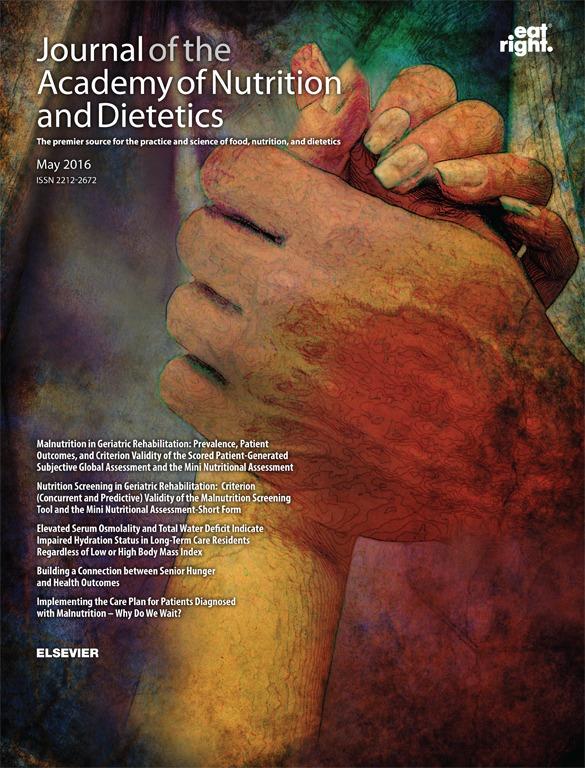
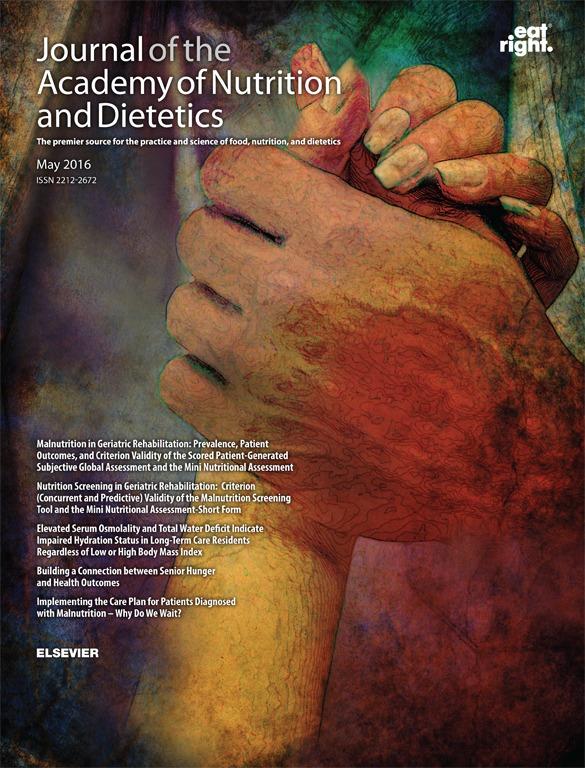
Philadelphia, PA, April 27, 2016 – As we better understand the role food plays in our overall health and wellbeing, the closer the connection becomes between nutrition and medicine. Malnutrition is a critical public health problem, affecting many people across the United States and around the world. Unfortunately, the modern day manifestations of hunger are increasingly complex. In an effort to explore this evolving landscape, the May issue of the Journal of the Academy of Nutrition and Dietetics offers insights from leading registered dietitian nutritionists and other health professionals, providing a comprehensive look at malnutrition.
While traditionally thought of as starvation or famine, malnutrition in the modern world is much more complicated and often affects the most vulnerable populations: children, the elderly, and the sick. With this new issue, the Academy of Nutrition and Dietetics hopes to inform its professional community and the public about the changing face of malnutrition.
"In the community in the United States it's clear that there are plenty of food deserts where availability of quality food and nutrition is a concern," comments Gordon Jenson, PhD, MD, Department Head and Professor of Nutritional Sciences at Penn State University in an interview conducted by Journal of the Academy of Nutrition and Dietetics Editor-in-Chief Linda G. Snetselaar, PhD, RDN, LD. We're dealing with a challenging continuum of malnutrition within the community setting today that is far more than classic undernutrition and starvation. It really is a continuum of individuals afflicted with disease, with injuries, in social isolation, or with limited resources. Ultimately this is all about how we get the appropriate resources and interventions to the individuals who need them. An integrated approach is critical with support from social services, mental health professionals, and medical care whenever appropriate."
The issue includes original research reports and accompanying editorials focusing on different facets of modern malnutrition including establishing evidence-based nutrition practices, malnutrition in hospitals, malnutrition in a rapidly increasing elderly population, inflammation and its relationship to malnutrition, and developing workflows for the identification of malnutrition in a clinical setting.
An interview with past Academy president Susan Finn, PhD, RD, FAND, who served on the National Hunger Commission, provides a behind-the-scenes look at the National Commission on Hunger Report to Congress from the perspective of a registered dietitian nutritionist on the Commission. Dr. Finn and her colleagues delivered their final report to Congress in January 2016 and their findings will help guide policy makers on how to improve government programs. In the interview, Dr. Finn offered several findings from the report that can help Academy members in the fight against malnutrition:
- Focus special attention on nutrition outreach for people with disabilities, seniors, military family, and families with small children.
- Support nutrition pilot programs that can yield innovative solutions.
- Engage with members of Congress by responding to Action Alerts.
- Become active in advocacy efforts to reduce food insecurity at the community level.
- Share information on nutrition programs available in your area and encourage partnerships to improve food security.
Nutrition is now an integral part of medical treatment of disease. For example, within the last decade enteral feeding has become more routine than parenteral feeding for nutrition support among hospital patients and there is growing evidence for the effective modulation of inflammatory response with nutrients.
Addressing malnutrition in hospitals, the issue offers several resources for ameliorating the problem. The article "Building a Connection between Senior Hunger and Health Outcomes" highlights the challenges presented by the hospitalization of malnourished elderly patients. Lead investigator Stefanie Winston Rinehard, JD, MPH, Director, Department of Health and Human Services Legislation and Policy, explains, "Malnutrition affects an estimated 30% to 50% of adult hospitalized patients in the United States, but only 3.2% of these patients are discharged with a diagnosis of malnutrition. Malnourished patients have worse health outcomes when compared with well-nourished patients, including increased physician visits, longer hospital stays and readmissions, decreased function and quality of life, and increased health care costs."
Other articles focus on the task of diagnosing malnutrition in hospital patients. "Diagnosing Malnutrition: Where Are We and Where Do We Need to Go?" discusses how accurate nutritional assessments are not always successfully integrated into clinical workflows. "Malnutrition is the skeleton in the hospital closet that continues to haunt us," notes author Charlene Compher, PhD, RD, LDN, FADA, FASPEN. "Following decades of reports describing the prevalence and influence of malnutrition on hospital outcomes, we have seen a renewed interest in defining and classifying malnutrition."
As the relationship between nutrition and medicine continues to develop, the Academy hopes that this collection of articles can renew the conversation about malnutrition and help practitioners better understand ways to combat hunger in their professional lives. "In past years, the ethical debate involving nutrition was primarily related to terminal or irreversible illness and the withdrawal of artificial nutrition," emphasizes Louise Merriman, MS, RD, CDN, Director, Clinical Nutrition, New York Presbyterian Hospital, co-author of "Implementing the Care Plan for Patients Diagnosed with Malnutrition–Why Do We Wait." "Now, with malnutrition finally recognized to be prevalent and problematic in hospitalized patient populations, the ethical debate is shifting as we ask ourselves and our team members: Why do we wait?"
###
Media Contact
Eileen Leahy
[email protected]
732-238-3628
@elseviernews
http://www.elsevierhealth.com