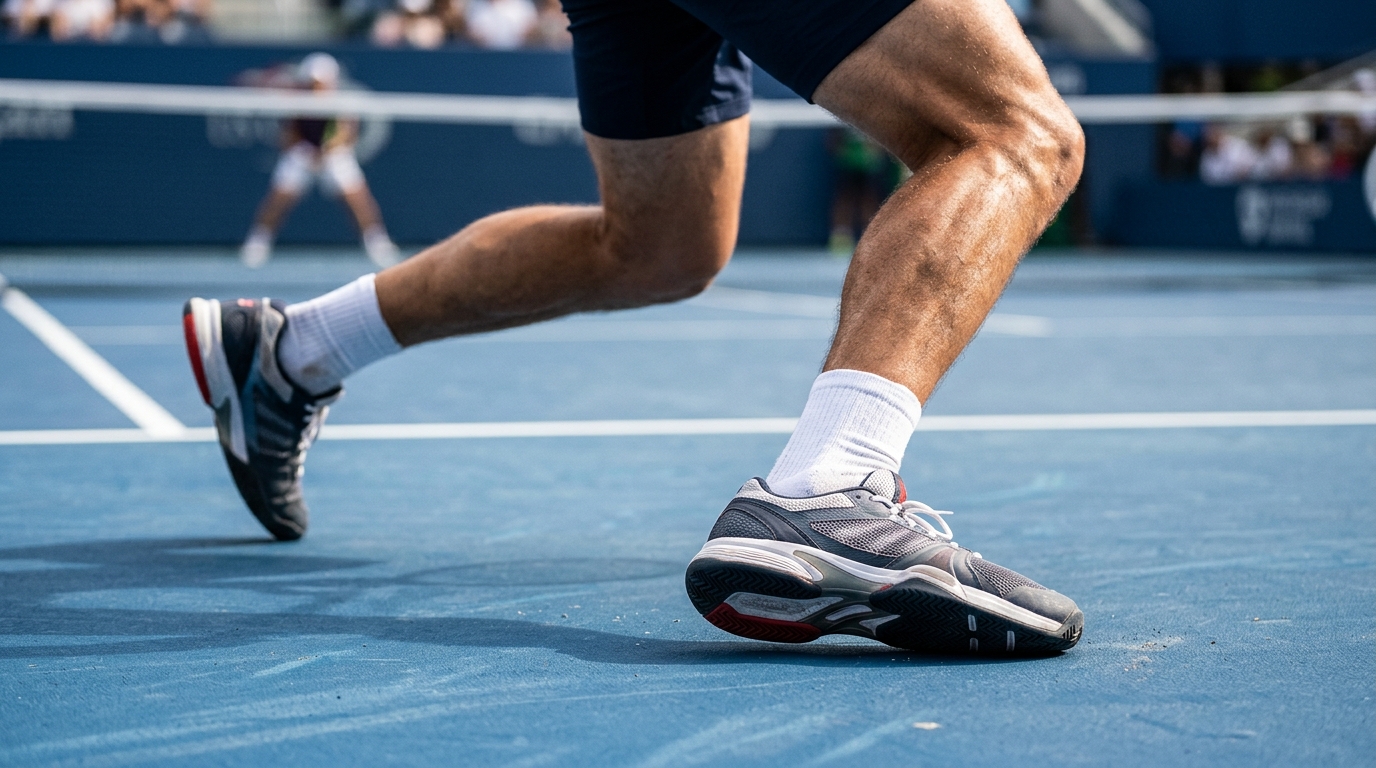
A systematic review and meta-analysis of racket sports revealed that footwork patterns are associated with differences in lower-limb mechanical demands, showing a small but statistically significant overall difference in lower-limb loading compared with reference conditions. The pooled quantitative analysis across the investigated movement patterns demonstrated a standardized mean difference of 0.25, with a 95 percent confidence interval ranging from 0.01 to 0.49.
As noted in the background of the study, racket sports require rapid starts, sudden stops, lunges, and multidirectional footwork, all of which place considerable mechanical demands on the lower limbs. While previous biomechanical evidence regarding how footwork patterns influence ground reaction forces, joint motion, and joint loading had remained inconsistent across sports, experimental task designs, and participant skill levels, this review was designed to assess these effects to provide evidence for sport-specific training and injury prevention.
To conduct the synthesis, the authors searched Chinese and English databases from their inception through March 21, 2026, including CNKI, Wanfang, VIP, PubMed, Embase, Web of Science, Scopus, and SPORTDiscus. The systematic review and meta-analysis was prospectively registered in PROSPERO under the registration number CRD420261345175, and the methodological quality of the included literature was evaluated using the Joanna Briggs Institute Critical Appraisal Checklist for Quasi-Experimental Studies.
A total of 11 studies involving 156 participants were included in the final review, focusing primarily on badminton, table tennis, and tennis. The analyzed footwork patterns were categorized as side-to-side steps, crossover steps, shuffling, and variations in lunge or stride direction, distance, and repetition. Across these investigations, outcome measures included ground reaction forces, joint angles, and joint moments, with ground reaction forces serving as the primary outcome measure for the quantitative meta-analysis.
Subgroup analyses indicated that the magnitude of lower-limb loading varied notably across specific movement patterns and athletic disciplines. In the footwork subgroup analysis, the hop-step pattern showed a statistically significant effect, yielding a standardized mean difference of 0.73 with a 95 percent confidence interval of 0.30 to 1.16. When examining sports, the tennis subgroup showed a statistically significant positive pooled effect with a standardized mean difference of 0.93 and a 95 percent confidence interval of 0.25 to 1.62, although the authors noted that this estimate was derived from only two studies.
The authors concluded that footwork pattern is an important factor associated with lower-limb mechanical demands in racket sports. Because hop steps were specifically linked to greater lower-limb loading, the researchers highlighted that this movement pattern may require particular attention during load management in training and return-to-sport programmes. Consequently, the study emphasizes that footwork selection and progression should account for sport-specific movement demands, individual athlete capacity, and injury history.
Subject of Research: Biomechanical effects of footwork patterns on lower limb loading in racket sports
Article Title: The effect of different footwork patterns on lower limb load in racket sports: a systematic review and meta-analysis
Article References: Cai, W., Hou, X., Wu, J., Takeshita, D., Loh, P. Y., Hu, G., & He, Y. (2026). The effect of different footwork patterns on lower limb load in racket sports: a systematic review and meta-analysis. BMC Sports Science, Medicine and Rehabilitation. https://doi.org/10.1186/s13102-026-02279-3
Image Credits: AI Generated
DOI: 10.1186/s13102-026-02279-3
Keywords: racket sports, footwork patterns, lower-limb loading, ground reaction forces, hop steps, badminton, tennis, table tennis, crossover steps, shuffling, joint moments, joint angles, meta-analysis, systematic review, injury prevention, load management
News Source: Ophelia Keating. (November 27, 2026). Footwork Patterns in Racket Sports Are Associated With Lower-Limb Loading. Scienmag.