Credit: MPI for Plant Breeding Research
Some plants can meet their nitrogen requirements by obtaining it from the atmosphere. To do this, they use bacteria in their roots, with which they establish a symbiotic relationship. Paul Schulze-Lefert's Research Group at the Max Planck Institute for Plant Breeding Research in Cologne and Simona Radutoiu from Aarhus University in Denmark have investigated the microbial communities in and around the roots of these plants. They discovered that the absence of legume-rhizobia symbiosis causes drastic changes in the composition of the microbial communities present in the root. These changes also remain stable under conditions that prevent the formation of any nodules because the plant obtains sufficient bound nitrogen from the soil. A set of genes in the host plant is necessary to establish a functioning symbiosis and the same genes are needed to form extraordinarily stable and characteristic microbial communities in the nodules, root and area around the root. Thus, these plant genes have a direct influence on the composition of the root microbiome.
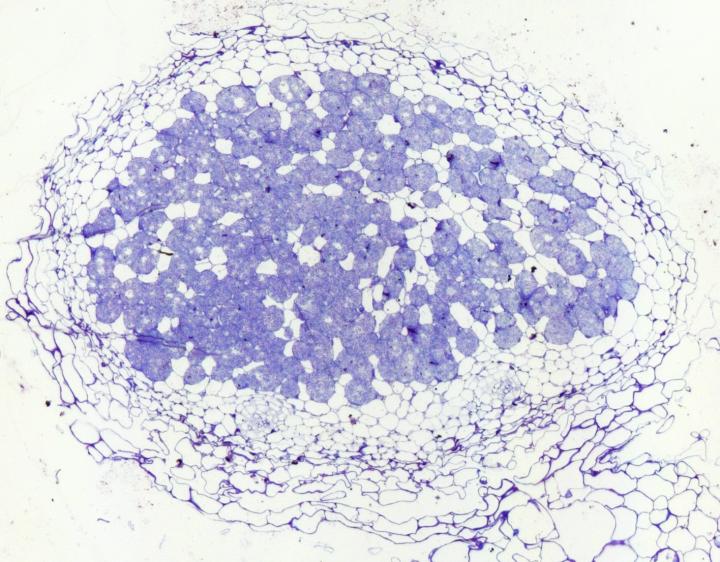
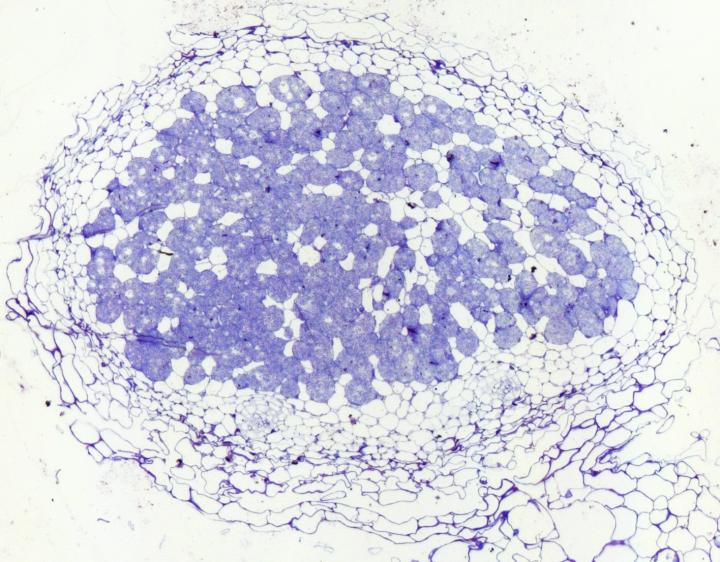
All plants need nitrogen for their growth; however, they are unable to obtain it directly from the atmosphere. They can only use nitrogen in the bound form of nitrate or ammonium ions, which they obtain either from the soil or through the addition of nitrogen fertiliser to agricultural soil. Yet one plant family, the legumes, has developed the ability to obtain nitrogen through a symbiotic relationship with naturally occurring soil bacteria. To accommodate these bacteria, the legumes create specialized root organs known as nodules. The symbionts, which are known as rhizobia, transform atmospheric nitrogen in the nodules into nitrogenous compounds which are then available to the plant.
Schulze-Lefert, Radutoiu and their colleagues Rafal Zgadzaj and Ruben Garrido-Oter used a form of legume native to Japan (Lotus japonicus) as a model plant and compiled an inventory of the root-associated microbiomes in the wild type and four mutants. "We were able to show that when symbiosis is lost, at least six different abundant bacterial orders become almost undetectable in the root," says Garrido-Oter. "The loss of the symbiosis results instead in the accumulation of some of these bacterial orders in the rhizosphere, that is the area outside the root. It would appear that these bacteria no longer hold a molecular ticket that would enable them to enter the root," he explains.
The scientists do not currently know which of the signals associated with symbiosis acts as a molecular ticket for root entry, however the dramatic and stable changes in the microbiome clearly result from the fact that the symbiosis no longer functions. Moreover, the scientists were able to show that nodules and roots are not populated sequentially by the bacteria but simultaneously. Thus, the bacteria do not migrate from one area to the other but deliberately seek out the roots and nodules and without making any detours.
The team of scientists working with Schulze-Lefert and Radutoiu have two possible explanations for these findings. It is possible that the rhizobia are accompanied by an entire entourage of helper bacteria when they migrate to the roots and nodules in the course of the symbiosis. However, it is also possible that the signalling molecules, with which the roots attract the nodule bacteria from the soil, also attract other bacteria that have nothing to do with the actual symbiosis but use the same signal to gain admission to the plant.
The findings are remarkable for two reasons: "Because Lotus japonicus remains smaller and paler than the wild type in the absence of symbiosis, and because this stunted growth cannot be adequately compensated through nitrogen fertilisation, it is likely that this phenotype is directly linked with the microbial community typical of the mutants," says Garrido-Oter. "Without the genes and genetic products for intact symbiosis, a microbiome becomes established that fails to support maximum plant growth."
As legumes are frequently used in agriculture as intermediate crops for improving the nitrogen content of the soil, the significance of these findings exceeds the boundaries of basic research. Up to now it was assumed that symbiosis was merely mediated by the rhizobia inside legume nodules. It would now appear, however, that the symbiosis also engages the characteristic microbial communities found in the root and rhizosphere. Based on this, it would not be sufficient to inoculate legume seeds with the rhizobacteria alone, as is the current practice: they should also be inoculated with the relevant bacteria from the root microbiome.
###
Original publication: Rafal Zgadzaj, Ruben Garrido-Oter et al.
Root nodule symbiosis in Lotus japonicus drives the establishment of distinctive rhizophere, root, and nodule bacterial communities
PNAS: 10.1073/pnas.1616564113
Media Contact
Dr. Paul Schulze-Lefert
[email protected]
49-221-506-2350
@maxplanckpress
http://www.mpg.de