BOSTON – Researchers from Massachusetts Eye and Ear/Harvard Medical School have conducted a clinical trial comparing the safety and efficacy of topical tacrolimus, an immunosuppressive therapy, and topical methylprednisolone, a steroid medication, in patients with ocular graft-versus-host-disease (GVHD) — a complication associated with allogeneic bone marrow transplants in which the transplanted immune system's cells attack certain parts of the recipient's body, including the cornea and ocular surface. The researchers found that patients treated with tacrolimus experienced equal relief of ocular symptoms as those treated with methylprednisolone, with fewer negative serious side effects. The findings from the clinical trial, published today in Ophthalmology, suggest that tacrolimus is an effective therapeutic option for ocular GVHD without the known hypertensive effects of steroids.
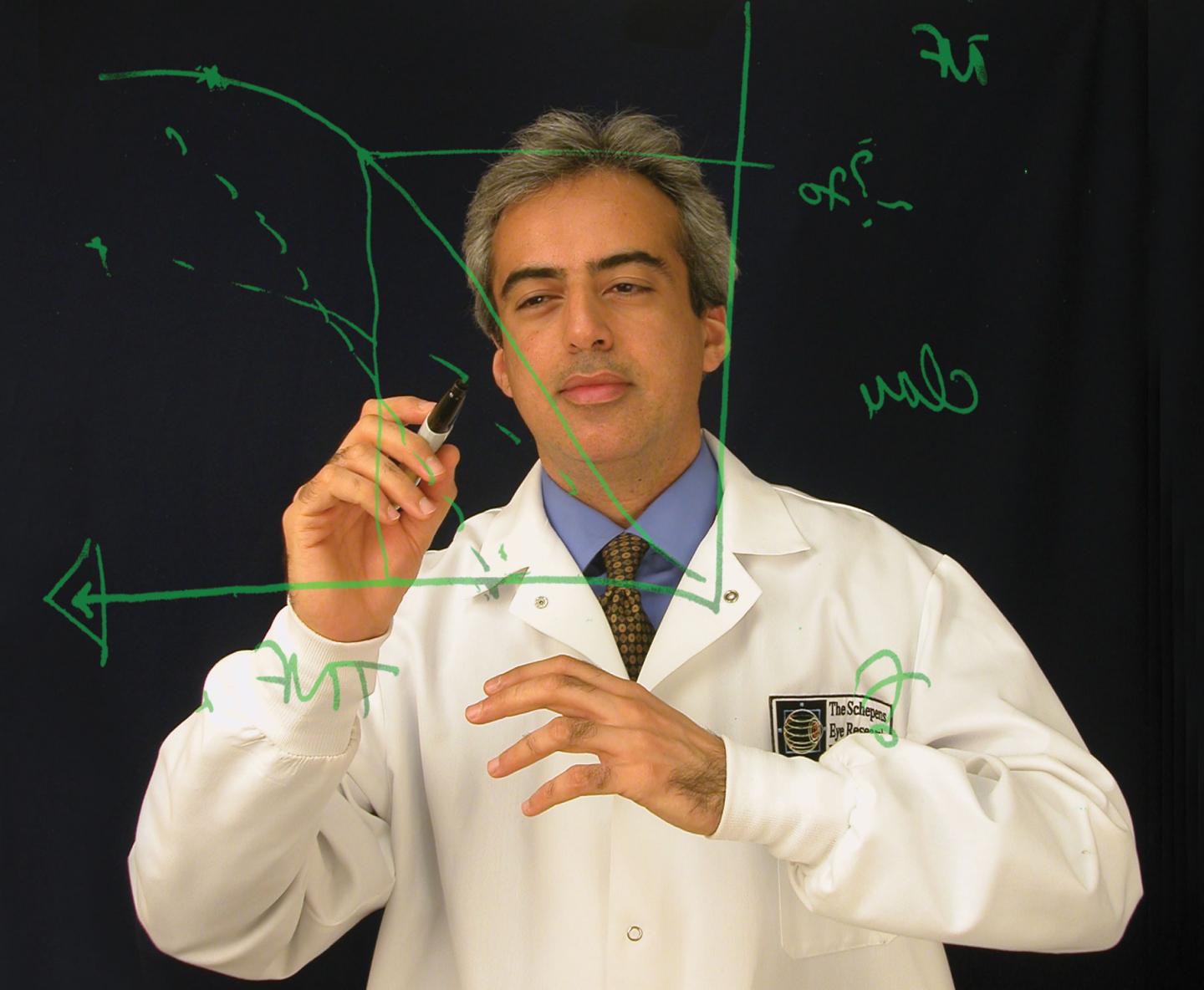
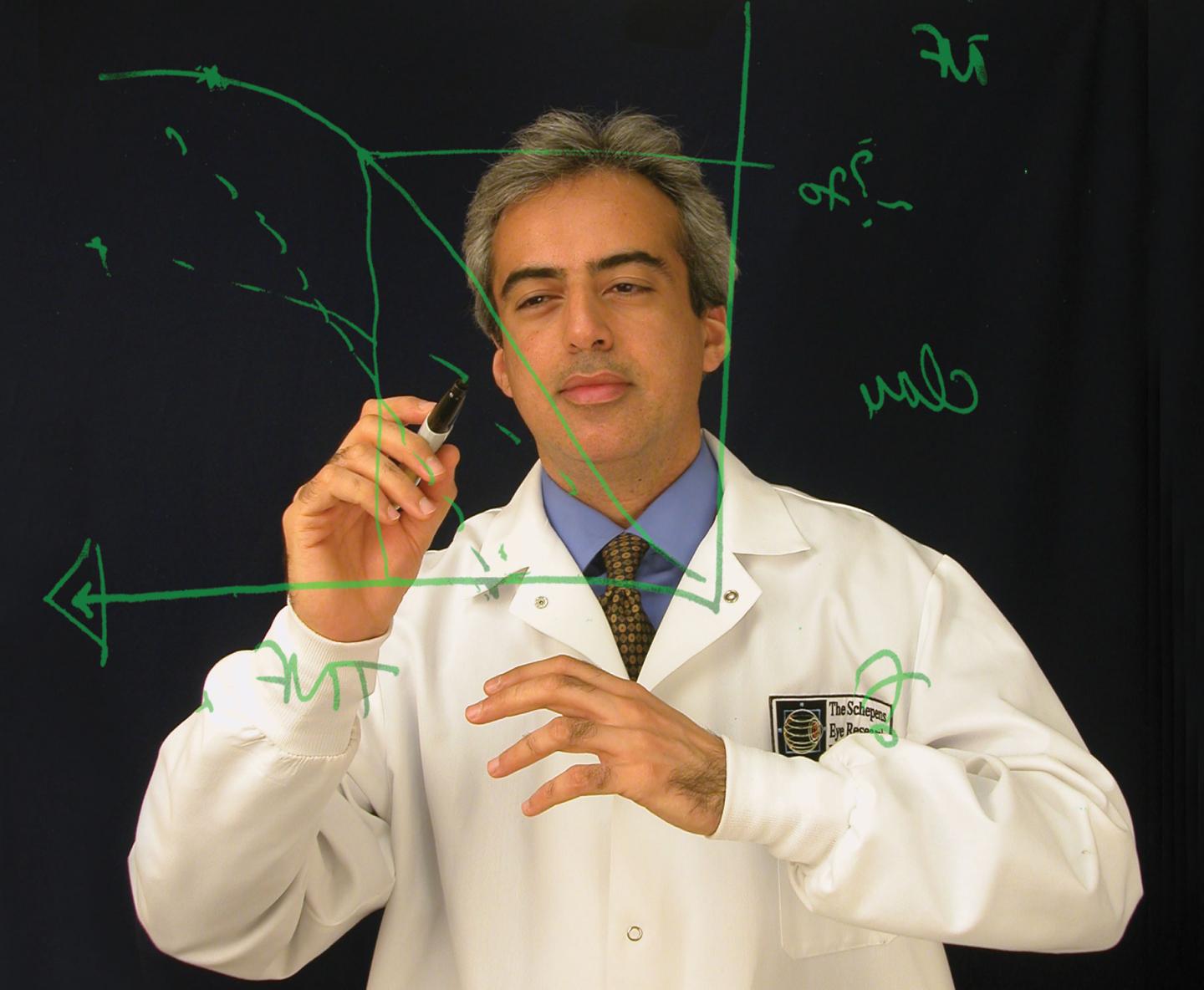
"We found tacrolimus to be very effective — just as good as the steroid, in the reduction of ocular symptoms of GVHD," said principal investigator Reza Dana, M.D., M.Sc., MPH, Director of the Cornea and Refractive Surgery Service at Massachusetts Eye and Ear and the Claes H. Dohlman Professor of Ophthalmology at Harvard Medical School. "We saw this improvement without any of the negative effects, such as a rise in pressure in the eye, as we saw with the steroid."
A total of 40 patients with ocular GHVD participated in the randomized, prospective clinical trial, in which 24 of those patients were treated with topical tacrolimus and 16 were treated with topical methylprednisolone twice a day for 10 weeks. The researchers observed no adverse events in either set of patients; however, intraocular pressure increased in patients treated with steroids following the completion of those 10 weeks.
A complication associated with allogeneic bone marrow transplantation, GVHD occurs when the transplanted immune system's cells attack certain parts of the recipient's body, including the corneas, which results in severe dry eye symptoms and other ocular complications.
"The problem with steroid treatment for ocular GVHD is that it can cause the pressure in the eye to rise, and it can also cause cataracts," Dr. Dana said. "The results of this trial give us reassurance that this is another effective treatment for GVHD, without the negative side effects of steroids. This is a game changer in terms of managing their care."
###
Authors on the Ophthalmology paper include last author Reza Dana, M.D., M.Sc., MPH, Francisco Amparo, M.D., Ujwala S. Saboo, M.D., Antonio Di Zazzo, Ph.D., Thomas H. Dohlman, M.D., and Joseph B. Ciolino, M.D., of Mass. Eye and Ear/Harvard Medical School, first author Tulio B. Abud, of Mass. Eye and Ear/Harvard Medical School and the Federal University of Sao Paulo in Brazil, and Pedram Hamrah, of Mass. Eye and Ear/Harvard Medical School and Tufts University School of Medicine.
This research study was supported by the National Eye Institute, National Institutes of Health and Research to Prevent Blindness.
About Massachusetts Eye and Ear
Mass. Eye and Ear clinicians and scientists are driven by a mission to find cures for blindness, deafness and diseases of the head and neck. Now united with Schepens Eye Research Institute, Mass. Eye and Ear is the world's largest vision and hearing research center, developing new treatments and cures through discovery and innovation. Mass. Eye and Ear is a Harvard Medical School teaching hospital and trains future medical leaders in ophthalmology and otolaryngology, through residency as well as clinical and research fellowships. Internationally acclaimed since its founding in 1824, Mass. Eye and Ear employs full-time, board-certified physicians who offer high-quality and affordable specialty care that ranges from the routine to the very complex. U.S. News & World Report's "Best Hospitals Survey" has consistently ranked the Mass. Eye and Ear Departments of Otolaryngology and Ophthalmology as top in the nation. For more information about life-changing care and research, or to learn how you can help, please visit http://MassEyeAndEar.org.
About Harvard Medical School Department of Ophthalmology
The Harvard Medical School (HMS) Department of Ophthalmology is one of the leading and largest academic departments of ophthalmology in the nation. More than 350 full-time faculty and trainees work at nine HMS affiliate institutions, including Massachusetts Eye and Ear, Schepens Eye Research Institute of Massachusetts Eye and Ear, Massachusetts General Hospital, Brigham and Women's Hospital, Boston Children's Hospital, Beth Israel Deaconess Medical Center, Joslin Diabetes Center/Beetham Eye Institute, Veterans Affairs Boston Healthcare System, VA Maine Healthcare System, and Cambridge Health Alliance. Formally established in 1871, the department has been built upon a strong and rich foundation in medical education, research, and clinical care. Through the years, faculty and alumni have profoundly influenced ophthalmic science, medicine, and literature–helping to transform the field of ophthalmology from a branch of surgery into an independent medical specialty at the forefront of science.
Media Contact
Suzanne Day
[email protected]
617-573-3897
@MassEyeAndEar
http://www.meei.harvard.edu